History of the Flight
On 11 July 2014, a student pilot was practicing glide approaches from the downwind leg at Sleap Airfield, Shropshire, in preparation for a forthcoming Licence Skill Test. The weather was fine with a light northerly wind, and Runway 36 was in use. Earlier, the pilot had completed a 40-minute flight with an instructor practicing forced landings. He then took off solo for the glide approach exercise.
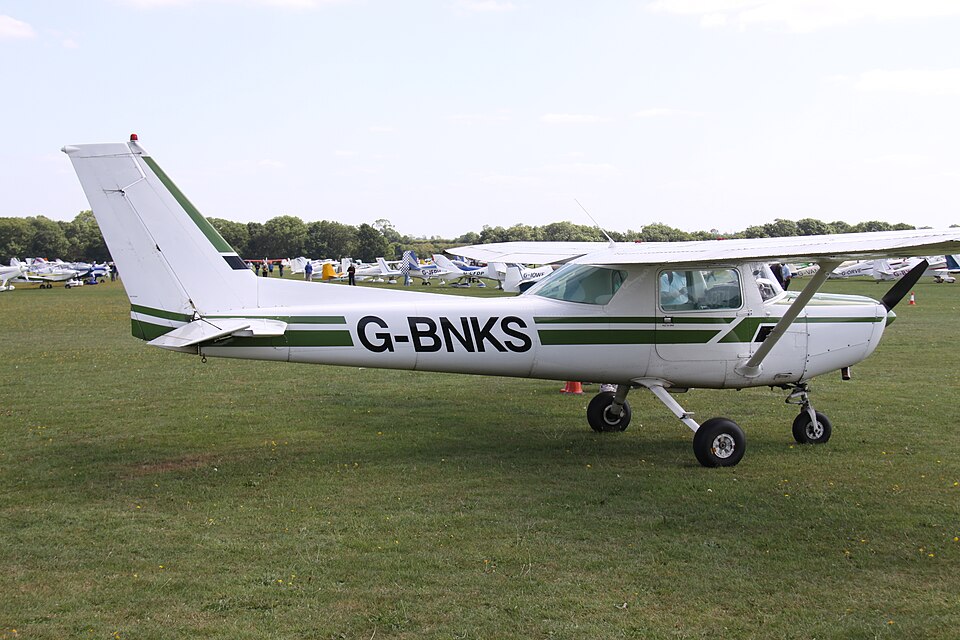
The pilot flew a go-around on the first circuit due to another aircraft landing ahead. The second glide approach was successfully flown as a touch-and-go. The third glide approach was normal until the late stages. As the pilot flared, the aircraft touched down and bounced. A second, firmer bounce occurred, after which the aircraft pitched nose down and struck the runway nosewheel first, causing the nose landing gear assembly to collapse. The pilot brought the aircraft to a stop on the runway and was uninjured.
Aircraft Information
The aircraft was a Cessna 152, registration G-BNKS, serial number 152-83186, manufactured in 1979. It was powered by a single Lycoming O-235-L2C piston engine. The aircraft was on a training flight with only the pilot on board.
Pilot Experience
The pilot, aged 64, held a student pilot licence with a total flying experience of 120 hours, all on type. In the last 90 days, he had flown 11 hours, and in the last 28 days, 3 hours.
Damage and Injuries
The accident resulted in damage to the engine, propeller, and nose landing gear. The pilot was uninjured.
Observations
After the accident, the pilot noted that he should have flared earlier and allowed excess airspeed to reduce before touchdown. He also considered that a go-around might have been an option after the initial bounce. The instructor, who observed the landing, reported that the aircraft touched down on all three wheels simultaneously at a speed slightly higher than normal, and that a pilot-induced oscillation may have occurred afterward.