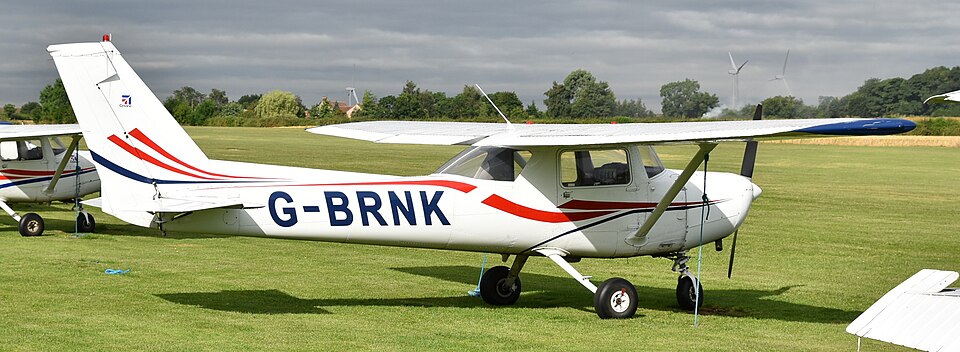
History of the Flight
On 1 April 2014, a student pilot was conducting solo circuit practice at Netherthorpe Airfield, South Yorkshire, following a dual training session. The weather was fine with a surface wind of 5 kt from 100°, and Runway 06 was in use. After a stable approach, the aircraft bounced twice on landing. The pilot, feeling the need to land within the remaining runway length, moved the control column forward to expedite touchdown. The aircraft then landed heavily on its nose landing gear, causing the nose leg to collapse. The aircraft came to rest on the runway, and the pilot secured the switches and vacated via the left door.
Aircraft Information
The aircraft was a Cessna 152, registration G-BRNK, year of manufacture 1977, serial number 152-80479. It was powered by one Lycoming O-235-L2C piston engine. The flight was a training solo flight, with no passengers on board. The pilot held a student pilot license, was 33 years old, and had a total flying experience of 28 hours, all on type.
Injuries and Damage
The pilot reported no injuries. The aircraft sustained damage to the nosewheel and propeller, and the engine was shock-loaded.
Pilot Comments
The pilot stated that the control inputs were made in an attempt to land the aircraft due to reducing runway length. The instructor later noted that selecting and holding a landing attitude or executing a go-around could have prevented the accident.