Introduction
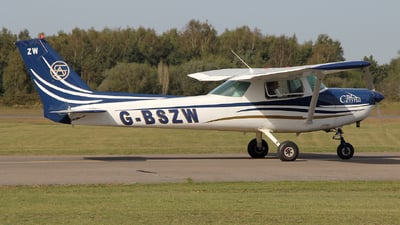
On 24 February 2024, a Cessna 152 (registration G-BSZW) was conducting an instructional flight at Blackbushe Airport, Surrey. During the initial climb, the instructor observed what he perceived as a lack of right rudder control. Despite the student pilot's application of right rudder, no corresponding effect was noted. The instructor assumed control and confirmed that right rudder input produced no response, while left rudder authority remained intact. The aircraft completed an uneventful circuit and landed without further issues.
History of the Flight
The flight began as a normal takeoff. Shortly after departure, the instructor prompted the student to apply right rudder based on the aircraft's heading. The student indicated he had right rudder applied, but the external visual picture did not change. The instructor then took control and pressed the right rudder pedal, again without response. Full left rudder was available. The instructor levelled the aircraft at circuit height on the crosswind leg, briefed the student, and subsequently landed without incident. No injuries occurred to the crew or passenger.
Examination Findings
Post-flight inspection revealed that the right rudder cable linkage had separated at its attachment to the rudder bellcrank. The bellcrank had fractured completely across its width at the attachment point for the right rudder cable, with the tip missing. Metallurgical examination identified stress corrosion cracking (SCC) as the predominant failure mode. The crack initiated on the inboard edge of the bellcrank, where mechanical wear and paint transfer indicated fouling against the fuselage rub-plate. The wear had exposed bare metal, removing corrosion protection. The inboard edge also showed extensive material removal and smearing, though progression appeared to have ceased, possibly due to rudder bumper stops limiting further contact.
Additionally, the bolt stack securing the right rudder cable to the bellcrank did not conform to the Cessna 152 Illustrated Parts Catalogue. It included an extra washer and a top-hat style bush instead of a plain bush. The top-hat bush had an outer diameter of 12.71 mm, while the bellcrank attachment hole measured 12.80 mm; the left side used a 9.41 mm bush. The aircraft manufacturer stated that both bushings should be identical and the hole centered. This non-conforming installation indicated that the bellcrank attachment hole had been oversized at some point, reducing the cross-section of the component.
Discussion
The failure resulted from stress corrosion cracking that originated at the inboard edge of the rudder bellcrank, where it had been fouling against the fuselage rub-plate. The fouling caused mechanical wear, stripping away protective paint and exposing bare metal to corrosion. The resultant material loss reduced the bellcrank's cross-section, increasing stress in that area. Stress corrosion cracking then propagated until the remaining material could no longer sustain the loads, leading to overload failure. A secondary, smaller SCC initiation site was also present on the outboard edge, where surface protection was likewise compromised.
The non-conforming bolt stack likely further reduced the bellcrank's structural margin. The exact cause of the fouling condition was not determined, but possibilities considered included a tailstrike shifting the tail fin, incorrect re-assembly of the fin or rudder, or incorrectly set rudder stops allowing over-travel. G-BSZW was equipped with larger rudder stops per Airworthiness Directive 2009-10-09, but the supplemental inspection 27-20-02 (which could have identified developing cracks) was not performed, as the aircraft was maintained under an owner-declared program. The rudder had last been disturbed during repainting in April 2023, suggesting the fouling condition developed between then and February 2024.