History of the Flight
The pilot, accompanied by a passenger who also held a private pilot's licence, departed from North Weald Airfield for a VFR flight to Retford Gamston Airfield. Approximately six minutes into the flight, while cruising at 1,500 ft agl, the engine oil low pressure warning light illuminated. The oil pressure gauge, normally indicating 45-50 psi, read approximately 9 psi. The pilot reduced power, slowing from 130 kt to 90 kt, and began a turn to return to North Weald.
After notifying Farnborough Radar of the issue, the engine began running rough, with grey smoke and oil emanating from the cowlings. The pilot entered a shallow descent. The engine then experienced severe banging, further power loss, and denser smoke that obscured forward visibility. At 1,100 ft agl, the pilot deemed a forced landing unsafe due to smoke and concern about a potential engine fire. The passenger made a MAYDAY call, and at approximately 800 ft agl, the pilot deployed the Cirrus Aircraft Parachute System (CAPS).
The parachute operated normally, and the aircraft descended into a field near Benington, Hertfordshire. Both occupants were uninjured.
Aircraft and Engine Information
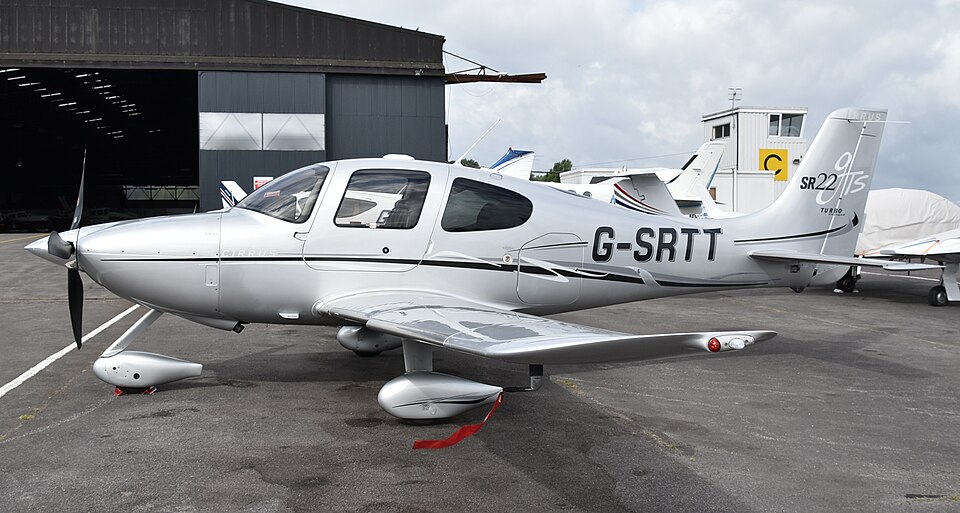
The aircraft was a 2007 Cirrus SR22 (registration G-SRTT), equipped with a single Teledyne Continental IO-550-N46 piston engine (1,280 hours since new). The engine had been modified with intercoolers and turbochargers under a Supplementary Type Certificate. The pilot reported checking the oil level at 8 US quarts during pre-flight, with no visible leaks. The Pilot's Operating Handbook cautions against operating with less than 6 quarts and recommends 7 quarts for extended flight.
Engine Data and Examination
Flight data logging showed that after takeoff, oil temperature rose to 198°F while oil pressure dropped. Approximately six minutes after takeoff, oil pressure fell to 30 psi (yellow warning) and two minutes later to 10 psi (red warning). The engine stopped rotating about 13 minutes after takeoff. Examination revealed minor fuselage damage near the lower left engine mount and where CAPS cables pulled out; the engine was severely damaged.
Probable Cause
The engine failure most probably occurred because of an insufficient quantity of oil.