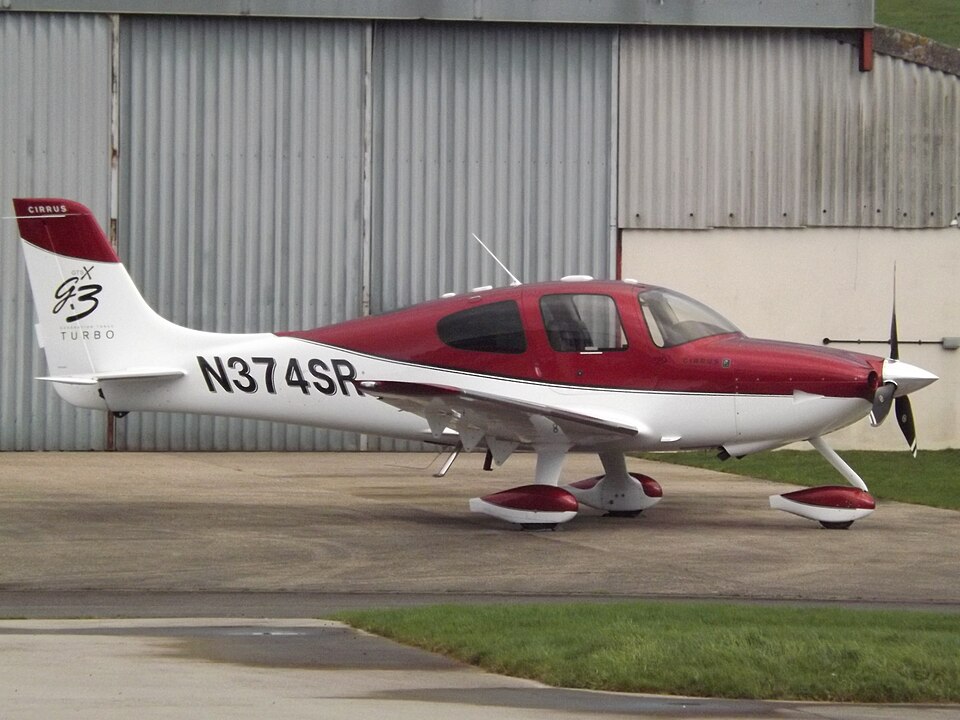
Accident Overview
On 26 May 2020 at 1400 UTC, a Cirrus SR22 (registration N374SR) operated on a private flight from Gloucester Airport to Fairoaks Airport, Surrey. The aircraft overran Runway 24 after landing, departing the paved surface, crossing the airfield boundary fence and a public footpath, and colliding with trees. The sole pilot was uninjured and exited the cockpit unaided.
Flight History
Witnesses reported a hot day with good weather and a light, variable north-westerly breeze. The pilot followed another aircraft and positioned for landing on Runway 24. The approach was uneventful; the pilot crossed the runway threshold and flared at standard approach speed. After selecting idle power, the aircraft did not settle onto the runway but continued to float, eventually touching down at what an eyewitness described as "a considerable distance along the runway." The pilot realized insufficient runway remained and judged it too late to go around due to trees in the overshoot path. Full braking was applied, but the aircraft overran.
Aircraft Information
The pilot reported that when he selected idle in the flare, the engine stabilized at approximately 1,000 rpm, higher than expected. Reviewing technical logs, the engine idle speed had been consistently at or above 960 rpm during power checks in preceding months. A normal idle speed would be 625 to 650 rpm. The pilot also noted that at Gloucester Airport his landing roll had been longer than expected and more frequent braking was needed during taxi.
Airfield Information
Public footpaths cross through the undershoot at both ends of Runway 06/24 at Fairoaks. Signs are positioned to alert passers-by to the hazard of aircraft taking off and landing.
Analysis
The runway overrun occurred because the aircraft landed too far down the runway for it to be stopped in the remaining landing distance. A higher-than-normal engine idle speed may have contributed to the floating. The north-westerly wind provided little or no headwind component to reduce groundspeed. A go-around likely would have been successful if initiated before trees became a limiting factor.