Background
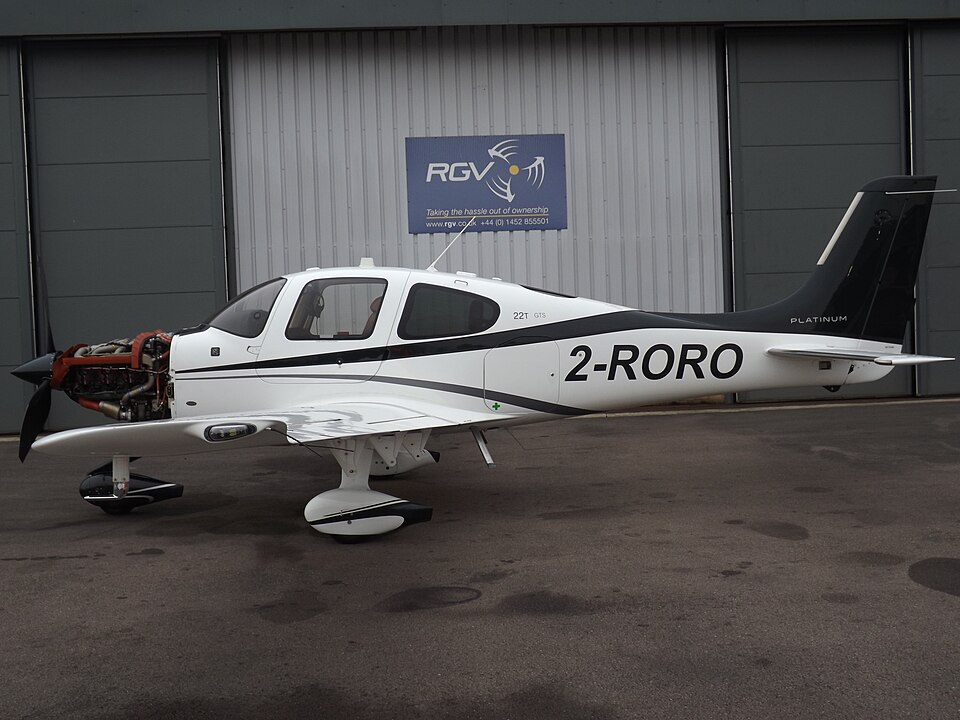
The aircraft, a Cirrus SR22T registered 2-RORO, was a four-seat composite aircraft with a single Continental TSIO-550-K1B engine. It was manufactured in 2014 and operated on a private flight. The pilot held a Commercial Pilot's Licence and had 1,600 hours total flying experience, with 700 hours on type.
History of the Flight
On 12 May 2019, the pilot flew from Denham Aerodrome to Abergavenny Airfield to collect two passengers for a flight to Manchester. The aircraft was not refuelled at Abergavenny. After pre-takeoff checks, including selecting the electric fuel booster pump to boost, the pilot commenced takeoff at approximately 0950 hrs. The aircraft accelerated normally and lifted off at about 75 kt. Immediately after liftoff, the pilot noticed the engine was not delivering expected power; the sound of the engine rose and fell, described as "surging". Witnesses at the airfield confirmed the surging sound.
Accident Sequence
Unable to land on the remaining runway, the pilot decided to continue the departure and attempt a forced landing. He aimed for the A40 dual carriageway running parallel to the airfield, but the aircraft struck trees and a power cable with its landing gear. This pitched the aircraft down, causing it to strike the road heavily. The aircraft inverted and came to rest against the central barriers. A fire started during the sequence. The pilot estimated the flight time from liftoff to impact was less than 30 seconds.
Survival
All three occupants were trapped inverted with jammed doors. Despite the aircraft being equipped with an emergency hammer, it could not be located in the confusion. A passenger and a passerby broke a window, and the passerby helped all three occupants escape before the fire intensified. The occupants suffered only minor injuries. The aircraft was destroyed by fire, and an oxygen bottle on board exploded after the occupants were clear.
Investigation
The AAIB investigation found that the loss of engine power was probably caused by too much fuel being delivered to the cylinders (over-fuelling). However, due to significant damage to the aircraft and engine, the cause of the over-fuelling could not be determined. The aircraft was within weight and balance limits, and the runway was adequate for a normal takeoff. The ballistic recovery system was not deployed as the aircraft did not reach sufficient altitude.
The aircraft was fitted with a recoverable data module, but it was not located, possibly due to fire or wreckage movement. The transponder data was not received as the aircraft remained below reception altitude.