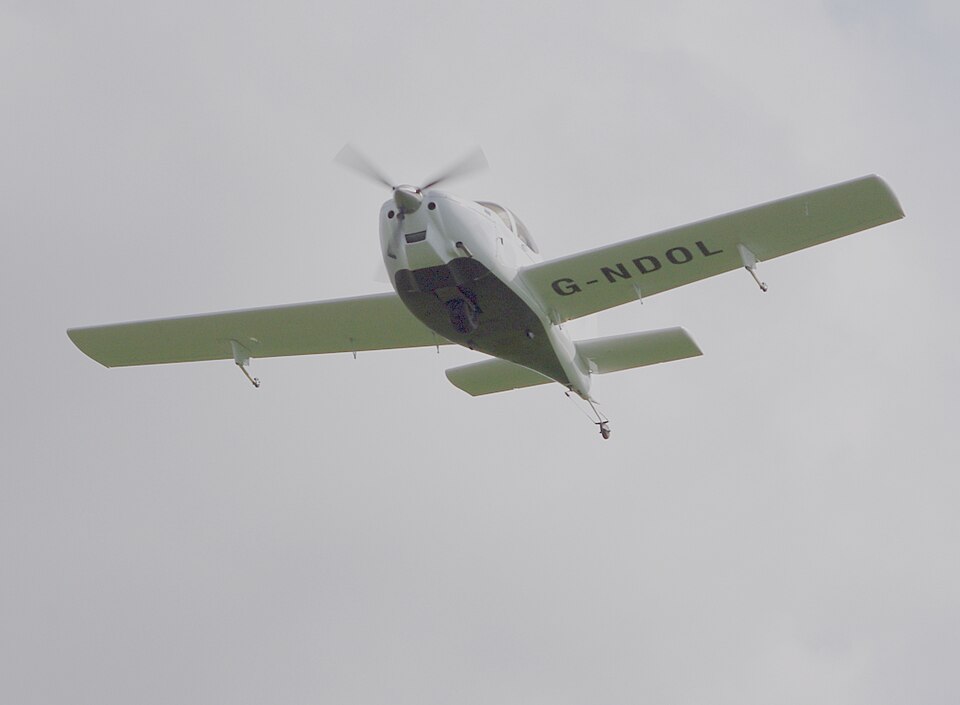
Accident Overview
On 28 May 2017 at 1200 UTC, a homebuilt Europa aircraft, registration G-NDOL, crashed in a field near Apperknowle, Derbyshire, shortly after takeoff from Coal Aston Airfield. The single pilot, the sole occupant, was fatally injured and the aircraft was destroyed. The accident was not survivable.
Aircraft and Pilot
The aircraft was a Europa mono-wheel version, built in 1995 (serial number PFA 247-12594), powered by a single Rotax 912ULS engine producing 73.5 kW. The pilot, aged 79, held a Light Aircraft Pilot's Licence and had 1,146 total flying hours, with 880 hours on type. He had flown only 7 hours in the last 90 days and 1 hour in the last 28 days. The pilot had modified the aircraft with a landing gear warning system and was testing it on the accident day.
Engine and Fuel System
The Rotax 912ULS engine was fitted with an optional carburettor heat system. The fuel system included a saddle-shaped tank with main (60 L) and reserve (9 L) sections, a selector valve, an electric pump, a fine filter, and a fuel vapour return line designed to route vapours back to the tank for dissipation. However, investigation revealed that the vapour return line had been incorrectly connected to the inlet of the fuel selector valve instead of the tank, causing any vapour to be routed back to the engine.
Accident Sequence
The pilot conducted two earlier flights that morning. On the first, he landed at 1120 hrs and commented it was an "awful" landing. A second short flight occurred where the aircraft flew 10-15 ft above the runway before landing again. At about 1156 hrs, he began a takeoff on Runway 29. Witnesses observed the aircraft lift off but climb poorly, remaining at 100-150 ft at the runway end. Engine noise reduced, with one witness estimating rpm dropped to about 4,000, another describing "sputtering." The aircraft entered a left turn, then descended steeply nose-down, striking the ground inverted. The wreckage trail showed a steep impact angle; a propeller blade fragment was found 39 m away.
Investigation
Examination of the wreckage confirmed flight controls were intact. The elevator trim was in a normal position. The landing gear and flaps were likely retracted. The rpm indicator was stuck at 4,100 rpm, and the fuel pressure gauge at 0.14 bar (below the manufacturer's minimum of 0.15 bar). The fuel selector was set to main. Witnesses noted clear weather with a westerly wind of 10 kt and scattered clouds; temperature at a nearby airport was 20°C. The engine had likely suffered a partial loss of power, with evidence pointing to fuel vapour disrupting supply. The incorrect connection of the vapour return line meant vapour could not dissipate in the tank, instead feeding back to the engine. The pilot may have been attempting to return to the airfield.
Probable Cause
The probable cause was a partial loss of engine power due to fuel vapour disrupting the fuel supply, which resulted from the fuel vapour return line being connected to the inlet of the fuel selector valve instead of the fuel tank.