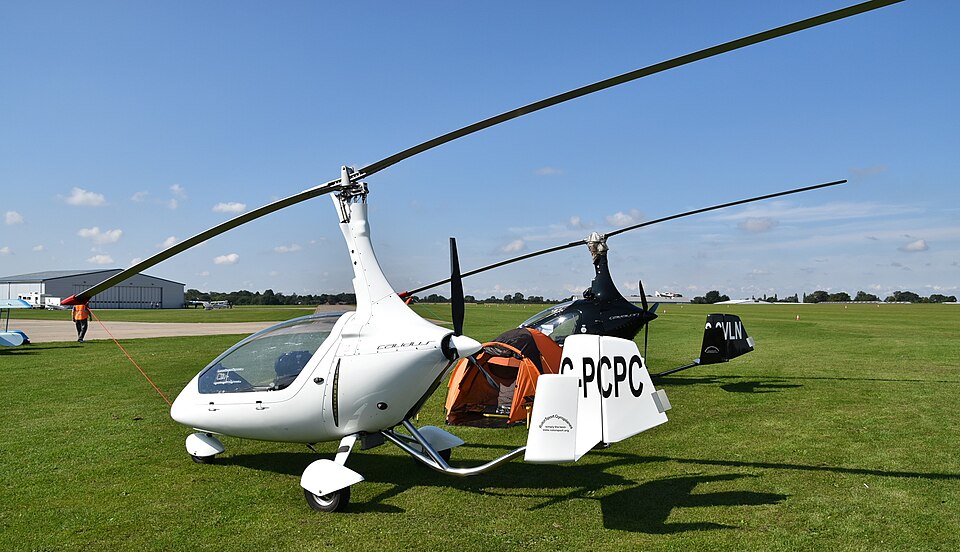
Accident Summary
On 8 April 2015 at 0959 UTC, a Rotorsport UK Calidus gyroplane, registered G-PCPC, was involved in a ground accident at Damyns Hall Aerodrome, Essex. The aircraft, powered by a single Rotax 912 piston engine, sustained damage to its rotor blades, propeller, tailplane, right landing gear, and possibly the engine. The sole occupant, a 56-year-old private pilot holding a Private Pilot's Licence, was uninjured.
Aircraft and Pilot Information
The gyroplane was manufactured in 2015 with serial number RSUK/CALS/026. The pilot had accumulated 240 total flying hours, of which 9 were on type. In the last 90 days, he had flown 12 hours, and in the last 28 days, 8 hours. Most of his flying experience was in a Rotorsport MT-03 gyroplane. He had recently acquired G-PCPC, which featured an enclosed cockpit and a variable pitch propeller.
History of the Flight
The pilot planned to remain in the circuit at Damyns Hall. Weather conditions were excellent with no wind, and little circuit traffic existed. Pre-flight checks were completed at the holding point of grass Runway 03. After lining up, he began rotor pre-rotation, holding the control stick fully forward and applying brakes. He aimed for a rotor speed of at least 200 rpm but could not accelerate beyond 150 rpm despite increasing engine speed. The gyroplane began to move forward against the brakes.
Deciding not to take off, the pilot opted to run along the runway to practice rotor management and wheel balancing. He released the pre-rotator, set the propeller to fine, reduced engine power, and moved the control stick fully aft. After releasing the brakes, the gyroplane accelerated. Shortly after, a loud series of bangs and severe vibration occurred as the rotor struck the tailplane, detaching a piece of the fin.
The gyroplane veered left and ran off the runway despite the pilot applying right pedal. He reduced engine power to idle and moved the control stick fully forward. The right wheel then caught in a shallow furrow adjacent to the runway, causing the wheel to snap off. The gyroplane tipped onto its right side, and propeller blades struck the ground. Smelling petrol, the pilot turned off the ignition but had difficulty opening the canopy. Others helped him vacate the aircraft; he was uninjured.
Discussion
The pilot considered that the accident occurred because he moved the control stick fully aft when the gyroplane started moving forward before sufficient rotor rpm had been achieved. He believed he had been too gentle with the pre-engagement process and that a more positive increase in engine rpm would have allowed higher rotor speed. He noted that, when the gyroplane began moving, he should have reduced engine rpm and allowed rotor rpm to slow to around 50 while keeping the stick forward. He also suggested that, during the rotor strike, he should have been quicker to reduce power and move the stick forward. The noise and vibration disorientated him, and he did not use all available right rudder, which might have helped regain directional control.