Ultralight Crash in Chonburi Kills Pilot Due to Wing Fabric Failure
An X-AIR HAWK ultralight crashed in Chonburi, Thailand, killing the pilot and injuring a passenger. The accident was caused by deteriorated wing fabric and…
On May 16, 1977, a Sikorsky S-61L (registration N619PA) operated by New York Airways was involved in an aviation accident near New York, New York. Investigators recorded the probable cause as: The National Transportation Safety Board determined that the probable cause of the accident was "the fatigue failure of the upper right forward fitting of the right main landing gear tube assembly. This summary draws on records from the U.S. National Transportation Safety Board (NTSB) Aircraft Accident Reports; 3 related events involving the same aircraft type or operator are linked below.
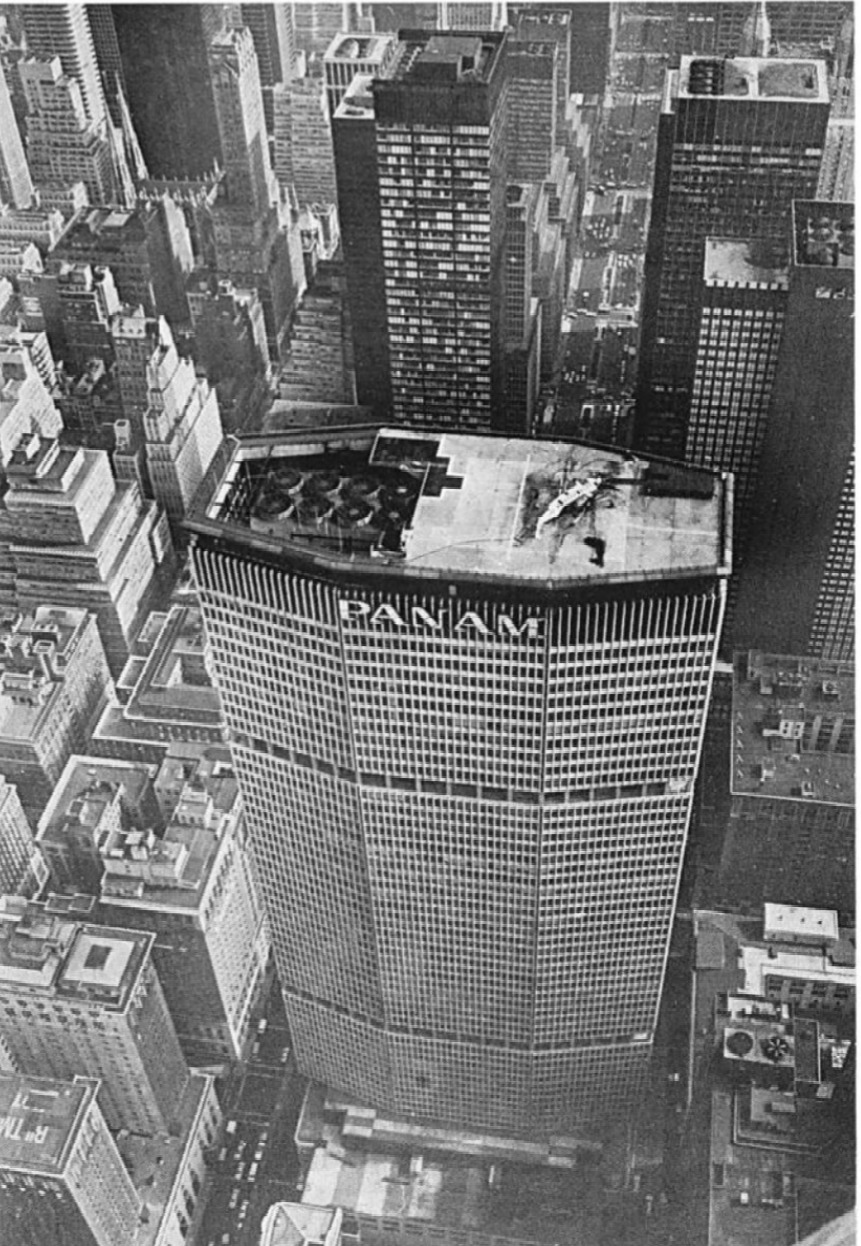
The National Transportation Safety Board determined that the probable cause of the accident was "the fatigue failure of the upper right forward fitting of the right main landing gear tube assembly. Fatigue originated from a small surface pit of undetermined source. All fatalities were caused by the operating rotor blades as a result of the collapse of the landing gear."
— NTSB Determination
On May 16, 1977, about 1735 e.d.t., the right landing gear of a New York Airways Sikorsky S-61L helicopter, registration N619PA, failed while parked with its rotors turning on the rooftop heliport of the Pan Am Building in New York, New York. The aircraft rolled over onto its right side. Four passengers waiting to board and one pedestrian on the street below were killed when they were struck by the operating main rotor blades or separated blade portions. One waiting passenger and one pedestrian were seriously injured. The three crewmembers and the passengers onboard received minor or no injuries.
### The flight
The aircraft was operating as Flight 972, a regularly scheduled passenger flight to John F. Kennedy International Airport. It had arrived at the heliport from JFK at about 1732 with 20 passengers and a crew of three.
The captain had accumulated about 11,721 total flight hours, including about 2,200 hours in S-61 helicopters. The first officer had 1,768.4 total flying hours, with 61 hours in the S-61.
### The accident
According to witnesses and passengers, the landing on the heliport was smooth and gentle. The aircraft was taxied to the boarding gate, which required a 180-degree left turn and a short taxi to position the helicopter properly. The captain used the tail rotor instead of his brakes to assist in taxiing. He set his brakes, left the tail wheel unlocked, and the aircraft was chocked. Inbound passengers deplaned, and outbound passengers began to board.
The captain remained in his seat with his hands on the controls. The collective was bottomed, and torque was about 18 percent on each engine. The engine speed controls (ESC) were positioned to maintain 100 percent rotor speed, and the automatic flight control system was on with all controls centered. The first officer stated that he rested his knee against the collective to ensure it was bottomed.
After sitting on the heliport for one to two minutes, the captain heard a faint noise he believed came from the rotor system, followed immediately by a crumpling, crunching noise and a buckling sound. The aircraft settled, yawed, and began to roll to the right.
As he heard the first noise, the captain reached for the ESCs to shut the engines down. He pulled them back to ground idle and then into the engine shutoff position before the aircraft rolled beyond 45 degrees. The first officer felt the settling, heard the crunching noise, and saw a gentle smooth roll. He noted that the blade tip path plane rotated with the aircraft, remaining constant in relation to the fuselage, and reached to help pull the ESCs, but the captain already had his hands on them.
The aircraft continued its roll, and the main rotor blades struck the concrete surface. The captain heard plexiglass breaking as the blades struck the first officer's overhead window. The captain stated that it did not occur to him to use the rotor brake; events developed too rapidly for it to be effective.
A flight attendant positioned inside the entrance door heard a loud metallic crumbling sound from the right underside, felt a vibration, and braced herself as the aircraft tilted to the right. A passenger approaching the first step of the airstair heard a loud noise like an engine backfire, stepped back as the helicopter tilted toward him, and moved toward the front of the aircraft.
### Evacuation and rescue
The first officer exited by pushing his emergency window free and climbing out onto the top of the aircraft. He went around the tail section, saw transmission fluid on the ground, and told cargo personnel to put foam down. The captain exited through his left emergency exit, walked back along the horizontal left side of the aircraft, and opened the left rear emergency door to assist the passengers and flight attendant out of the cabin.
New York Fire Department and Police Department units responded. Initial confusion existed because the building's elevators remained in automatic operation, delaying access to the roof. Heliport cargo handlers, acting as primary firefighters, deployed foam hoses immediately.
### What the investigation found
The aircraft was substantially damaged. The five main rotor blades bent upward along their span and sustained heavy surface contact smears. Outboard sections of the blades separated and were thrown up to four blocks north and one block west of the building. These sections damaged two automobiles on the streets below, penetrated a 36th-floor office window in the Pan Am Building, and shattered windows in the heliport waiting area.
The left main landing gear was intact. The right main landing gear had separated from its upper and lower fuselage attachment fittings. The forward upper tube assembly had separated at the main oleo strut attachment fitting, and the fitting itself (P/N S6125-50333-22) had fractured.
Metallurgical examination of the fractured fitting showed that a fatigue crack had begun along a 0.12-inch radius near the bottom of a hole drilled to accommodate the tube. The fatigue propagated down and through the bottom of the fitting, cracking approximately 40 percent of the cross-sectional area. The remaining fracture was typical of an overload separation.
Detailed examination disclosed two origin sites at discontinuities in the radius. A substance found in the cavities of the discontinuities contained foreign elements, including sulfur, calcium, potassium, and silicon. The Board believed this substance was an adhesive (EC-2214) used during fabrication, though it was not known whether it entered the cavity before or after the fracture. Hardness and electrical conductivity measurements were normal for the specified 7075-T73 aluminum alloy.
The Board concluded that the failure of the gear was not the result of a pilot input. The captain's actions to close the ESCs were correct, and the Board noted that applying the rotor brake at 100 percent rotor speed would have caused the brake to heat up and possibly burn out, creating a fire hazard. The Board also concluded that continued rotor rotation during enplaning and deplaning operations is generally safer than frequent rotor shutdowns, which shorten component service life and introduce potential safety hazards.
### Probable cause
The National Transportation Safety Board determined that the probable cause of the accident was "the fatigue failure of the upper right forward fitting of the right main landing gear tube assembly. Fatigue originated from a small surface pit of undetermined source. All fatalities were caused by the operating rotor blades as a result of the collapse of the landing gear."
An X-AIR HAWK ultralight crashed in Chonburi, Thailand, killing the pilot and injuring a passenger. The accident was caused by deteriorated wing fabric and…
A Challenger II Special ultralight aircraft (U-B23) landed off-runway at Pai Airport, Mae Hong Son, on September 17, 2024, due to a gust of wind. No injuries…
The Polish aviation safety authority is investigating a serious incident involving an AT-3R100 aircraft that occurred on September 2, 2024. The investigation…
A SZD-48-3 glider suffered damage when its left wing struck a ground obstacle during a low final approach at EPWK on June 20, 2025. The pilot was uninjured.
A 39-year-old skydiver died after a hard landing near Leszno on May 1, 2026. The PKBWL preliminary report indicates the fatal impact resulted from a late,…
A student pilot crashed an SZD-50-3 Puchacz glider into the airfield fence during a solo training flight on June 6, 2026. The pilot was uninjured, but the…