History of the Flight
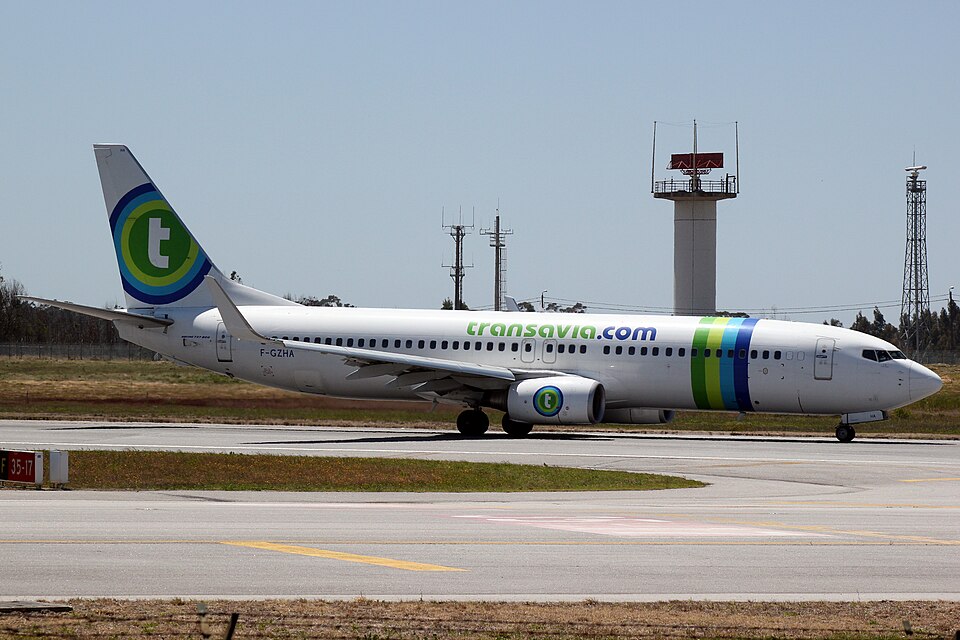
The accident involved flight TO3943 from Djerba, Tunisia, to Nantes-Atlantique, France, operated by Transavia France. The aircraft was a Boeing 737-800, registered F-GZHA. The flight crew consisted of a captain acting as an instructor (TRI) and a co-pilot undergoing Line Flying Under Supervision (LIFUS). The captain was the pilot monitoring (PM), and the co-pilot was the pilot flying (PF). The co-pilot had resumed flying the day before after a three-month break.
During cruise, the co-pilot expressed lack of confidence about landing, referencing a previous landing at Nantes that reached 1.7 g. The crew discussed the non-precision RNP approach to runway 21, noting the offset and the runway's hump as threats. They did not repeat mitigation strategies for the flare.
At 11:03, the co-pilot disconnected the autopilot and autothrottle at 2,000 ft for manual flying. The approach was stabilised with a Vapp of 156 kt. At approximately 1,000 ft, the co-pilot declared the aircraft stabilised. The instructor called out corrections for runway alignment between 500 ft and 100 ft.
Touchdown and Bounce
Crossing the threshold at 50 ft and 158 kt, the aircraft had a 4° drift and slight left bank. The rate of descent was about 800 ft/min. After the "forty" callout, the co-pilot applied a slight nose-up input, then increased it considerably. Shortly after the "thirty" callout, the instructor warned "Attention". At the "twenty" callout, the co-pilot moved thrust levers to idle. The main landing gear touched down on the upward-sloping part of the runway at a pitch attitude of 5° and a normal load factor of 2.95 g. Spoilers deployed. The crew was surprised by the violent contact. The aircraft bounced; the instructor applied a nose-down input without announcing control takeover. During the bounce, normal load factor dropped to 0.2 g. The right and nose landing gears contacted the runway at 2.17 g, bursting the two nose gear tyres. The left main gear then contacted. The instructor applied full nose-down input. The co-pilot deployed thrust reversers. The aircraft ran along the runway and was stopped on taxiway B. No injuries were reported among passengers or crew.
Aircraft Information
F-GZHA was a Boeing 737-800 that joined Transavia France on 18 May 2007. Its last major maintenance was on 25 February 2022, and last minor inspection on 22 June 2022. At the time, it had 50,263 flight hours.