History of the Flight
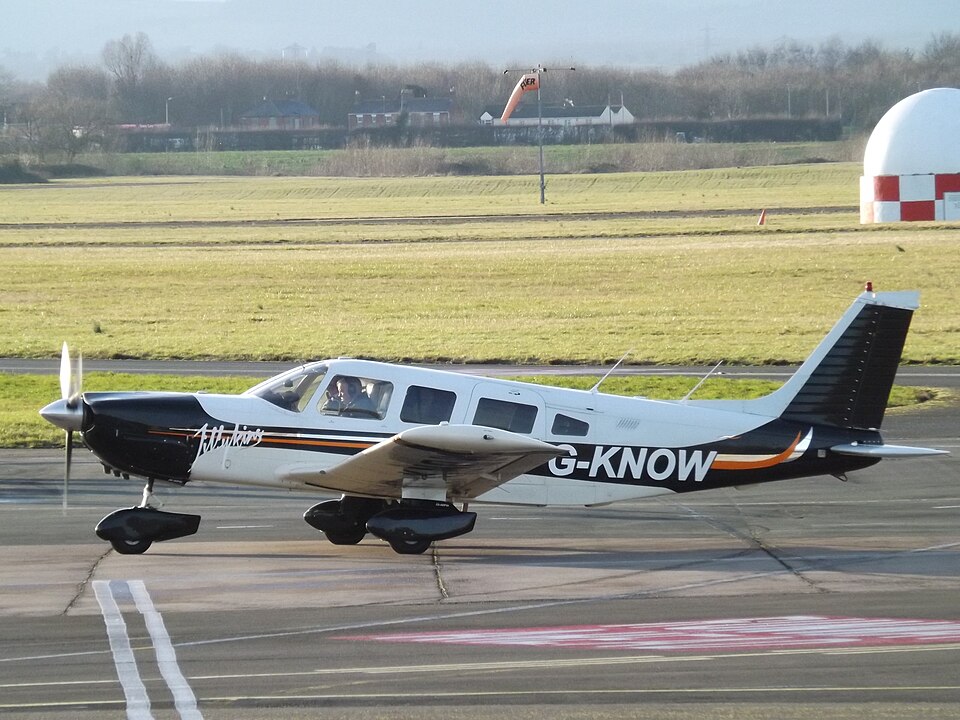
Around 11:15 local time, the pilot and three passengers departed from Lydd aerodrome (United Kingdom) for Le Touquet Côte d’Opale aerodrome. Upon arrival, the pilot contacted the tower controller and was authorized for a straight-in approach to runway 13. Initially, the controller advised that the aircraft was number three in the landing sequence behind a Piper PA-28. When G-KNOW was approximately 2 nautical miles on final, the controller updated the sequence to number two and issued a late landing clearance. The wind was reported from 050° at 14 knots, gusting to 22 knots.
The pilot reported having the preceding aircraft in sight. After the PA-28 exited the runway, the controller cleared G-KNOW to land. Shortly thereafter, the aircraft struck the runway hard. Following three bounces, the nose gear collapsed, and the aircraft came to rest on the left edge of the runway, heavily damaged.
Aircraft and Pilot Information
The aircraft was a Piper PA-32-300 equipped with fixed landing gear. The flight manual recommended an approach speed of 80 knots with flaps at 40° for landing, though adjustments could be made for wind, load, and runway surface. The maximum demonstrated crosswind component was 17 knots, including gusts.
The pilot, a 59-year-old British national, held a private pilot license since June 2018. He had logged 134 flight hours, of which 44 were on G-KNOW, and nine hours in the preceding three months, all on this aircraft.
Statements
The tower controller stated that the two preceding aircraft cleared the runway via taxiway T2 without needing to make a U-turn. He asked the PA-28 pilot to clear the runway quickly. After the runway was clear, he cleared G-KNOW to land. The controller observed G-KNOW adopt a nose-down trajectory, touch down nose gear first, and then bounce to a height of five to six meters. On the second bounce, the nose gear collapsed. The controller noted no particular stress in the pilot's voice before the incident.
The pilot explained that on final approach, he set flaps to the second notch and maintained 85 knots. He received his first landing clearance when 2 NM from the threshold but was distracted by a taxiing aircraft on the runway. Uncertain if it was taking off or landing, he briefly doubted his approach direction but continued. He focused on that aircraft as it performed a U-turn and then exited via taxiway T2. After being cleared to land a second time, his attention remained on the other aircraft, and G-KNOW hit the ground hard without a proper flare.
Conclusions
The investigation concluded that on final approach, the pilot's attention was focused on the movements of the aircraft ahead, leading to a misconception and consideration of a go-around. However, he did not request clarification from the controller and decided to continue. When cleared to land on very short final, he was still fixated on the other aircraft. He did not flare, causing the nose gear to strike the runway hard, followed by bounces that collapsed the nose gear.
Contributing factors identified were the pilot's attention being focused on the ground aircraft to the detriment of trajectory management, and his decision not to go around despite concerns about the runway occupation.