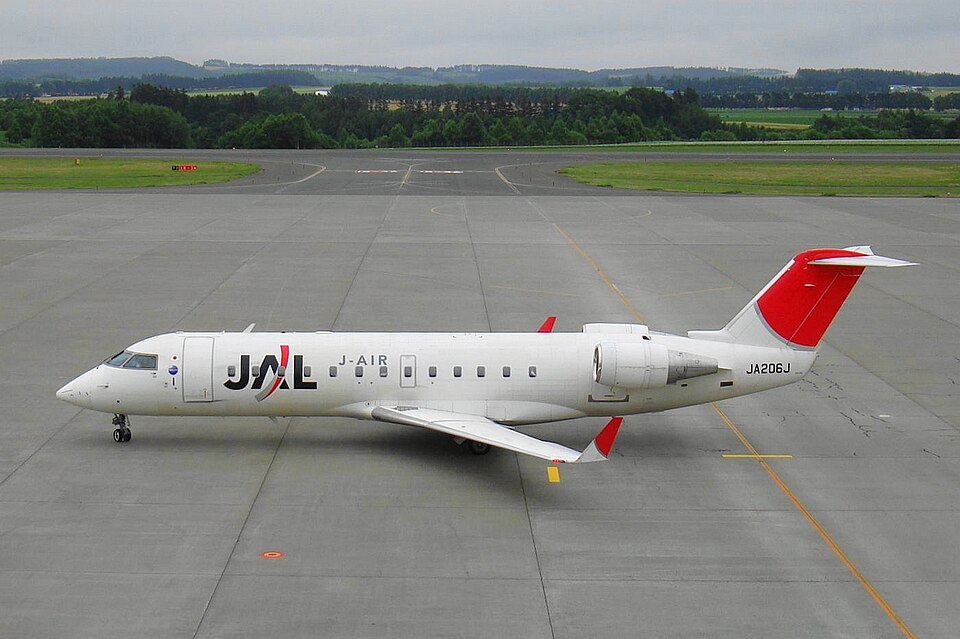
Engine Fire Incident Involving J-Air Bombardier CL-600-2B19 at Osaka

Casualties unknown • On the taxiway A4 at Osaka International Airport, JP

A fuel leak caused by a loose coupling nut led to an engine fire in the fire zone of a J-Air Corporation aircraft during taxiing at Osaka International Airport.

What happened

On May 6, 2013, a Bombardier CL-600-2B19, registered JA206J, operated by J-Air Corporation, arrived at Osaka International Airport from Oita Airport. The flight, operating as a code-share for Japan Airlines, landed on runway 30R at approximately 12:14 JST.

While taxiing toward the parking stand, the flight crew received a caution message indicating a failure in the right engine fire detection system. Shortly thereafter, the situation escalated to a warning message for an active right engine fire. The crew proceeded to taxi the aircraft to the parking spot, during which time they eventually discharged the engine fire extinguishing agent. Upon arrival and subsequent maintenance inspection, investigators discovered physical evidence of fire within the engine's fire-prevention zone.

There were 55 persons on board the aircraft, including 52 passengers and 3 crew members; no injuries were reported.

The investigation

The Japan Transport Safety Board (JTSB) examined the aircraft's flight data recorder, cockpit voice recorder, and maintenance history. Investigators also conducted engine inspections and laboratory tests involving the Japan Aerospace Exploration Agency.

Technical examinations of the engine revealed that fuel had leaked from the area of the fuel injector No. 14. Specifically, the investigation identified that the coupling nut (also known as a B-nut) connecting the fuel manifold to the injector was loose. Testing confirmed that fuel leakage occurred at this junction, and the heat from the engine subsequently ignited the escaping fuel.

Findings

  • The primary cause of the fire was a loose coupling nut connecting the right engine fuel manifold to injector No. 14, which allowed fuel to escape and ignite.
  • While the exact reason for the nut's looseness could not be definitively determined, it is possible that insufficient tightening during a previous overhaul, combined with engine vibrations, led to the gradual loosening of the component.
  • The flight crew's response to the fire warning was delayed, likely because they initially suspected the warning might be a false alarm due to the preceding detection system failure message.

Safety action

Following the investigation, the JTSB issued recommendations to the engine manufacturer, IHI Corporation, to implement a triple torque procedure and improve verification of B-nut tightening during overhauls. Additionally, J-Air Corporation was advised to enhance pilot training regarding fire detection system functions and emergency response procedures.

Probable cause

The fire was caused by fuel leaking from a loose coupling nut at the fuel injector No. 14, which ignited due to engine heat. The loosening may have resulted from insufficient initial tightening or subsequent engine vibration.

Frequently asked questions

What happened in the 2013-05-06 Bombardier CL-600-2B19 accident near On the taxiway A4 at Osaka International Airport, JP?

A fuel leak caused by a loose coupling nut led to an engine fire in the fire zone of a J-Air Corporation aircraft during taxiing at Osaka International Airport.

What aircraft was involved and where did it happen?

The accident on 2013-05-06 involved a Bombardier CL-600-2B19, registration JA206J, operated by J-AIR Corporation, at On the taxiway A4 at Osaka International Airport, JP.

What was the probable cause of the accident?

The fire was caused by fuel leaking from a loose coupling nut at the fuel injector No. 14, which ignited due to engine heat. The loosening may have resulted from insufficient initial tightening or subsequent engine vibration.

Investigation report by the Japan Transport Safety Board (JTSB). Original record: https://jtsb.mlit.go.jp/eng-air_report/JA206J.pdf. This page is a structured re-presentation; facts and quotes are in the Japan Transport Safety Board (JTSB) - Ministry of Land, Infrastructure, Transport and Tourism.

Loading the flight search…