Flight History
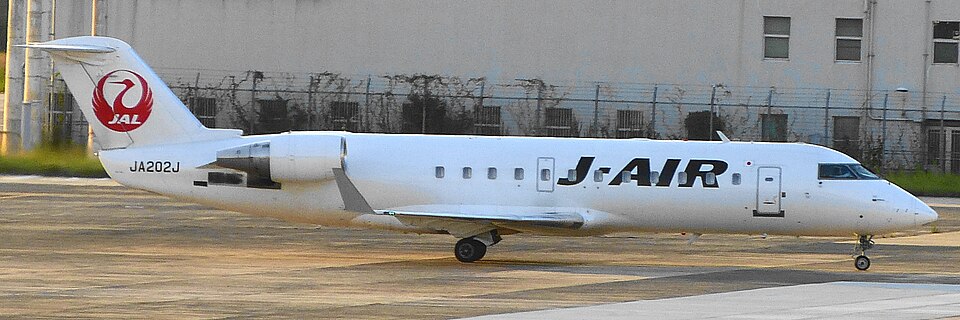
On December 25, 2012, at 16:26 Japan Standard Time, a Bombardier CL600-2B19, registered JA202J and operated by J-AIR Corporation, departed from New Chitose Airport for Hanamaki Airport as scheduled flight 2837. The aircraft carried 42 passengers, a captain, a first officer, and one additional crew member. The captain was the pilot flying (PF) and the first officer was the pilot monitoring (PM).
Weather and Runway Conditions
At 16:44, the captain received an aerodrome special meteorological report and runway surface condition data (as of 16:18) from company flight operations staff. At approximately 17:08, the captain obtained updated weather information and runway condition data from Hanamaki RADIO, but did not verify the time of the runway condition check, assuming it was newer than the earlier report. Light snow showers had been falling since 16:18 and continued at the time of landing at 17:20. The 16:18 runway check reported wet snow, 10 mm depth, 100% coverage, and braking action POOR. No reports of deteriorating conditions came from the two aircraft that operated between 16:18 and the landing.
The Landing
At about 17:20, the aircraft landed on Runway 20. The captain applied full reverse thrust and full brakes, but the braking effect felt weaker than usual. After reaching 80 kt, the captain reduced reverse from full to idle while maintaining brakes. Around the 60 kt call, deceleration decreased. DFDR data showed the nose deflected to the right as the captain applied left rudder pedals to maximum. The captain then re-applied idle reverse, stopping the right deflection and causing a significant left deflection. As the nose aligned with the runway, the rudder pedals were switched from maximum left to maximum right, but the nose continued left. The aircraft departed the side of the runway, with its nose gear ending up approximately 7 meters off the pavement surface, sunk into the ground, rendering the aircraft unable to taxi.
Crew Information
The captain, aged 37, held an airline transport pilot certificate with a type rating for the Canadair CL-65 (corresponding to CL-600-2B19). He had 7,247 total flight hours, including 6,204 on type. The first officer, aged 28, held a commercial pilot certificate and a type rating for the Canadair CL-65, with 1,710 total flight hours, including 1,360 on type. Both held valid medical certificates.
Aircraft Information
The Bombardier CL-600-2B19 (serial number 7484, manufactured November 22, 2002) had a valid certificate of airworthiness. At the time of the incident, its weight and center of gravity were within allowable limits. The aircraft was equipped with a DFDR and CVR.
Additional Information
The runway at the incident location had a downward transverse gradient of approximately 1.4% from the centerline. No injuries to persons or damage to the aircraft were reported.