Incident Overview
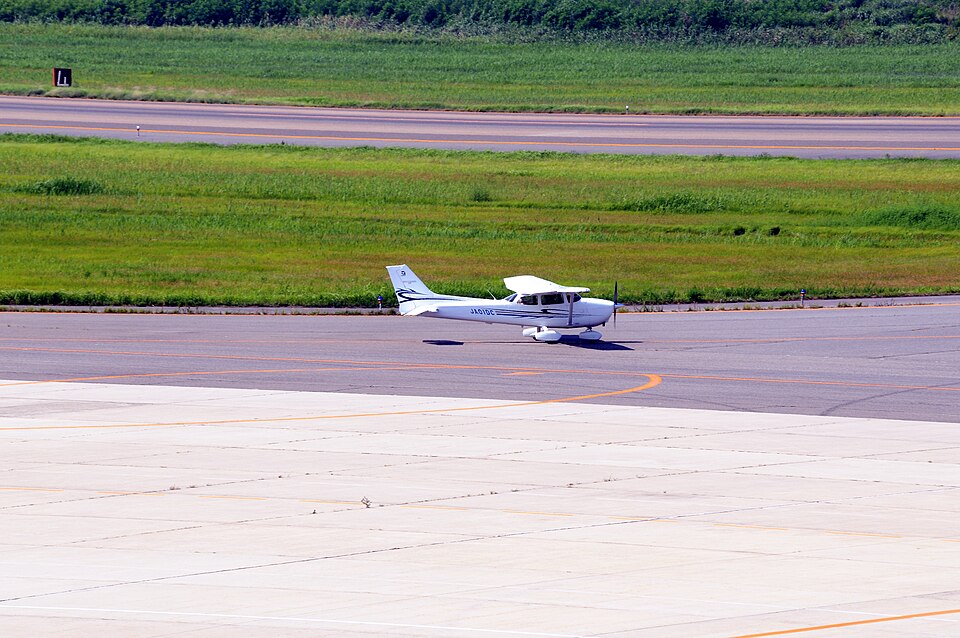
On August 5, 2024, at approximately 15:33 Japan Standard Time, a Cessna 172S (registration JA01DC) experienced a deviation from the runway during a touch-and-go training exercise at Ryugasaki Airfield in Ibaraki Prefecture. The aircraft veered off the runway and came to a stop in a grassy area on the left side. The sole occupant, a student pilot, was not injured.
Aircraft and Personnel
The aircraft, a Cessna 172S serial number 172S11022, was manufactured on January 19, 2010, and held a valid airworthiness certificate. At the time of the incident, its weight and center of gravity were within allowable limits.
The flight instructor, aged 64, held a commercial pilot certificate and a flight instructor rating, with a total flight time of 5,439 hours. The student pilot, aged 49, held a flight training certificate and had accumulated 58 hours and 26 minutes of flight time, including 9 hours and 21 minutes in the preceding 30 days. This was the student pilot's second solo flight after transferring to the training organization.
Meteorological Conditions
Weather observations at the airfield around the time of the incident indicated a wind direction of 080° at 5 knots, as measured by the anemometer. The windsock indicated a direction of 090°.
Sequence of Events
The student pilot had been conducting solo touch-and-go training on Runway 08. After the third touch-and-go, the student pilot noticed that the elevator trim had been inadvertently set to a nose-up position instead of the "TAKE OFF" position during the previous take-off. Determined to correct this, the student pilot decided to set the elevator trim firmly to "TAKE OFF" before raising the flaps on the next landing.
Following the landing of the fourth touch-and-go, the student pilot visually confirmed the elevator trim was set to "TAKE OFF" and then moved the flap lever from the full down position to the full up position. However, the student pilot did not check the flap position after operating the lever. Subsequently, the student pilot pressed the right rudder pedal and advanced the throttle lever to full power.
As the aircraft accelerated, the student pilot monitored the airspeed indicator but did not operate the control wheel. The aircraft became airborne unintentionally at 50 to 51 knots indicated airspeed (KIAS), which is below the normal nose-up speed of 55 KIAS. Shortly after becoming airborne, the nose veered to the left. The student pilot applied right rudder but was unable to correct the deviation. Still, the student pilot did not manipulate the control wheel.
When the aircraft passed the halfway marker while still airborne, the student pilot decided to abort the take-off. The throttle was reduced to idle, and the aircraft touched down with the nose pointing left relative to the runway centerline. After touchdown, the student pilot attempted to reduce speed by applying the brakes but did not use the rudder pedals to correct direction. The aircraft continued forward, deviated from the runway, and came to a halt in a grassy area. The student pilot then communicated with the airfield administrator, shut down the electrical power, and exited the aircraft.
Post-Incident Inspection
Examination of the aircraft revealed that the flap lever in the cockpit was in the full up position, but the flap position indicator and the actual flap position were both at 10°. When electrical power was applied, the flaps moved to the full up position. Subsequent checks showed that the flaps operated correctly following the lever, with a delay of six seconds when moving from full down to 10°. The elevator trim was found set to a nose-up (trim down) position. No anomalies were detected in the rudder pedals or brakes.
Damage to the aircraft included scratch marks on both propeller blades, one blade bent backwards, scratch marks on the leading edge of the left main wing, the right main wing shield plate bent inwards, and broken outer skin and shock mount on the fuselage.
Training Background
The student pilot had begun training for a private pilot certificate with another organization and transferred to the current training company in May 2024. After the transfer, the student pilot completed approximately 17 hours of training. The flight instructor, who was monitoring the flight from the ground, observed the aircraft's behavior and visually confirmed the sequence of events.