Overview
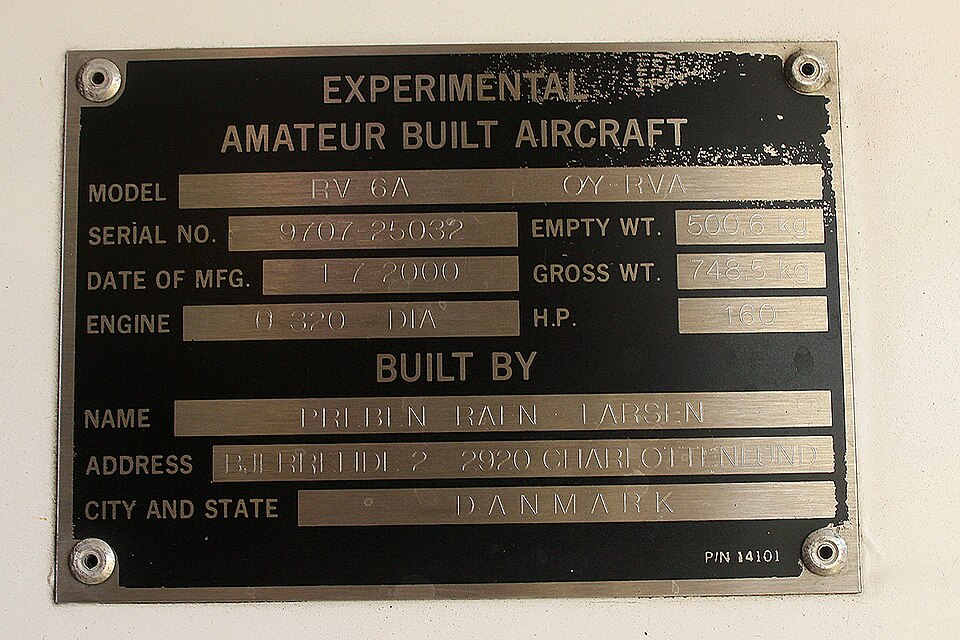
On 27 December 2023 at 10:25 UTC, a Van's Aircraft RV-6A amateur-built aircraft, registration OY-RVA, crashed in Smålandsfarvandet approximately 900 meters south of Glænø, Denmark. The aircraft was destroyed, and the pilot sustained minor injuries. The flight was a private VFR flight from Roskilde Airport (EKRK) to Kalundborg Airport (EKKL). The pilot intended to gain further experience with the aircraft and to refuel at Kalundborg. Another RV-6A, OY-RVP, flew in company.
Flight Sequence
During the pre-flight inspection, the pilot found 7 quarts of oil, approximately 25 liters of fuel in the left tank, and about 60 liters in the right tank. The fuel selector was set to the right tank. After an uneventful engine run-up, both aircraft departed Roskilde, left the control zone via the Borup VFR reporting point, and set course for Vejrø (EKVO). The pilots communicated on an air-to-air frequency and individually contacted Copenhagen Information (COIF), reporting that they were flying together on the same route and requesting traffic information. COIF assigned individual transponder codes and identified the aircraft. The more experienced pilot in OY-RVP had suggested extending the route to overfly Vejrø and perform a low pass, which the pilot of OY-RVA accepted.
Engine Failure and Ditching
According to the investigation, carburetor heat was not activated during the approach to Vejrø. This likely led to carburetor icing, engine problems, and a complete engine stoppage. The pilot was not trained in the aircraft's emergency procedures, which prevented effective troubleshooting and delayed the Mayday call. Insufficient planning resulted in flight over water without sufficient altitude to glide to land. The aircraft's position and altitude at the time of the engine problems necessitated a ditching on the water.
Investigation Conclusions
The Danish Accident Investigation Board (Havarikommissionen) assessed the following factors led to the accident:
- Carburetor heat not activated during approach, likely causing carburetor icing and engine stoppage.
- Pilot lacked training in emergency procedures, hindering troubleshooting and delaying distress call.
- Inadequate planning led to overwater flight without sufficient altitude to reach land.
- Aircraft's position and altitude at engine failure resulted in ditching.
The accident occurred in daylight and under visual meteorological conditions.