History of the Flight
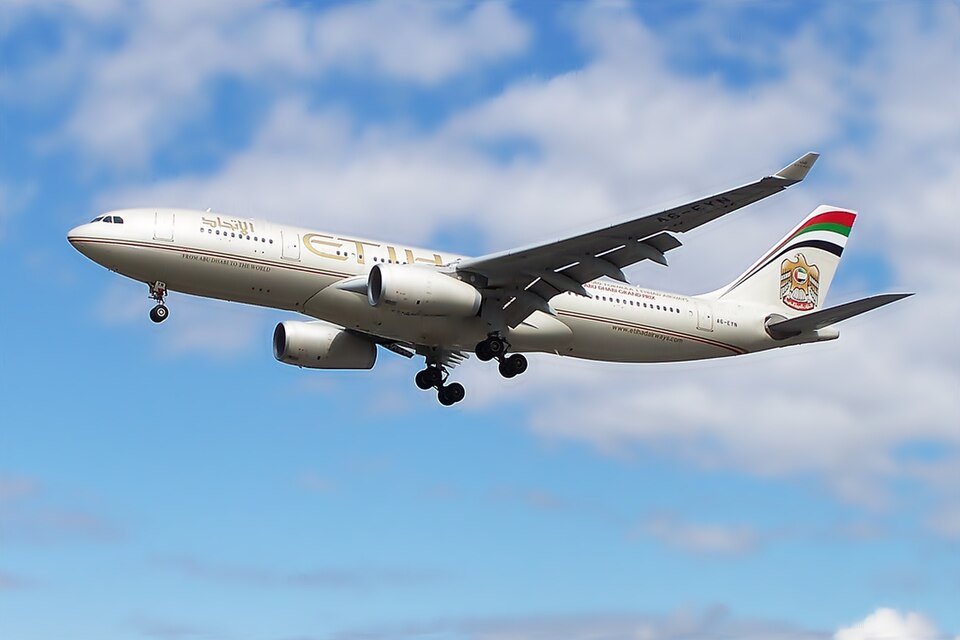
On 29 June 2015, Etihad Airways flight ETD045, an Airbus A330-243 registered as A6-EYN, departed Abu Dhabi International Airport, United Arab Emirates, for Dublin Airport, Ireland, with 212 passengers and crew on board. Approximately 58 minutes after takeoff, while cruising in Iranian airspace, the copilot, who was the pilot monitoring, requested tissue paper from the commander to clear his congested nostrils. After blowing his nose, he noticed traces of blood mixed with mucus. He then informed the commander that he was not feeling well, partially reclined his seat, and lost consciousness for about one minute. The copilot later stated that just before fainting, he experienced a strange tingling sensation all over his body.
Upon realizing the copilot was incapacitated, the commander called the cabin manager to the cockpit, who administered oxygen. After regaining consciousness, the copilot was assisted to the cabin and attended to by a medical doctor who was a passenger. He then occupied a business class seat for the remainder of the flight. The commander declared a PAN-PAN and advised air traffic control that he was returning to Abu Dhabi. An off-duty Boeing 777 captain employed by the operator, who was traveling as a passenger, assisted the commander. The landing at Abu Dhabi was uneventful, and the aircraft taxied to the parking stand. Paramedics attended to the copilot onboard, and he was transferred to the airport clinic, where the on-duty doctor released him as his condition was considered satisfactory.
Injuries
The source states that injuries were none.
Personnel Information
The copilot had 4 days off prior to the incident flight and had used over-the-counter nasal spray up to 24 hours before the flight to alleviate nasal congestion. He had no known medical condition while flying for the operator. Approximately one month after the incident, the copilot returned to active duty.
Medical and Pathological Information
All post-incident medical tests performed on the copilot did not reveal any condition that may have influenced his incapacitation. The investigation was informed that the test results had not identified any medical condition. The Air Accident Investigation Sector could not determine the cause of the copilot fainting after seeing blood upon blowing his nose. Possible contributory factors listed by the investigation include performing flying duties while suffering from nasal congestion, possible side-effects of the over-the-counter nasal spray, medical fitness being affected by his biological clock, the effect of flying in a pressurized aircraft, and the psychological effect of seeing blood after blowing his nose, a condition known as vasovagal syncope.
Safety Recommendations
The final report contains seven safety recommendations: three addressed to the operator (Etihad Airways) and four addressed to the General Civil Aviation Authority of the United Arab Emirates (GCAA).