Accident
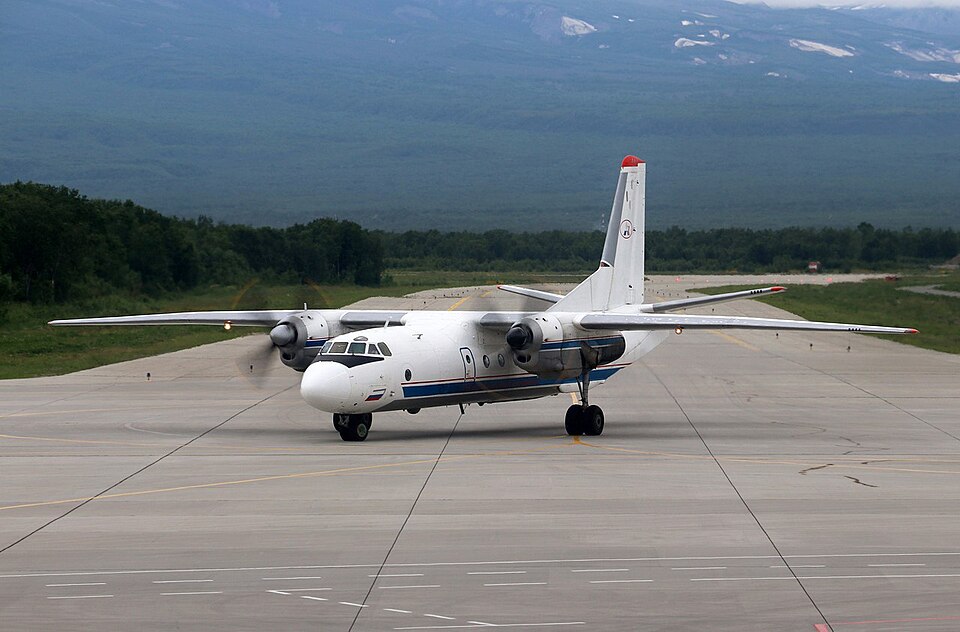
Flight PTK251, an An-26B-100 (registration RA-26085) operated a scheduled service from Petropavlovsk-Kamchatsky Airport to Palana. The aircraft departed at 1257 LT with 22 passengers and 6 crew, including Olga Mokhiriova, chief of the municipality of Palana. At 1439 LT, the crew contacted Palana air traffic control and was cleared to begin descent. They initiated an NDB approach to runway 29. Weather conditions were marginal with fog and a ceiling of 300 meters. The aircraft descended too low and struck terrain approximately 4 km northwest of the airport. The wreckage was discovered in the evening on top of a rocky wall. The aircraft disintegrated upon impact, and debris fell onto the sea bank. All 28 occupants were killed.
Investigation
The official investigation determined the probable cause of the crash.
Probable Cause
The cause of the An-26B-100 RA-26085 aircraft crash was the crew's violation of the established instrument approach procedure to Palana aerodrome, which was manifested in flying with significant deviation from the set route and descent well below the established minimum descent height (MDH) under weather conditions that excluded stable visual contact with ground landmarks, leading to the collision of the aircraft with a coastal cliff in controlled flight, its destruction, and the death of the crew and passengers.
Contributing Factors
The investigation identified several contributing factors:
- The crew's failure to execute a missed approach and acquire the established minimum safety altitude (MSA) when information indicated significant deviation from the approach procedure.
- The absence in the Palana aerodrome dispatcher's work technology of actions to address information about bearing indicating significant deviation, and the dispatcher's passivity when such information was available.
- The lack of warning signals from the early ground proximity warning system under conditions that should have triggered it; the reason for the absence could not be determined.
- Overestimation of barometric altimeter readings in the final phase due to specific airflow around the steep coastline creating a low-pressure zone, and overestimation of variometer readings; the cause of these overestimations could not be determined.