Incident Overview
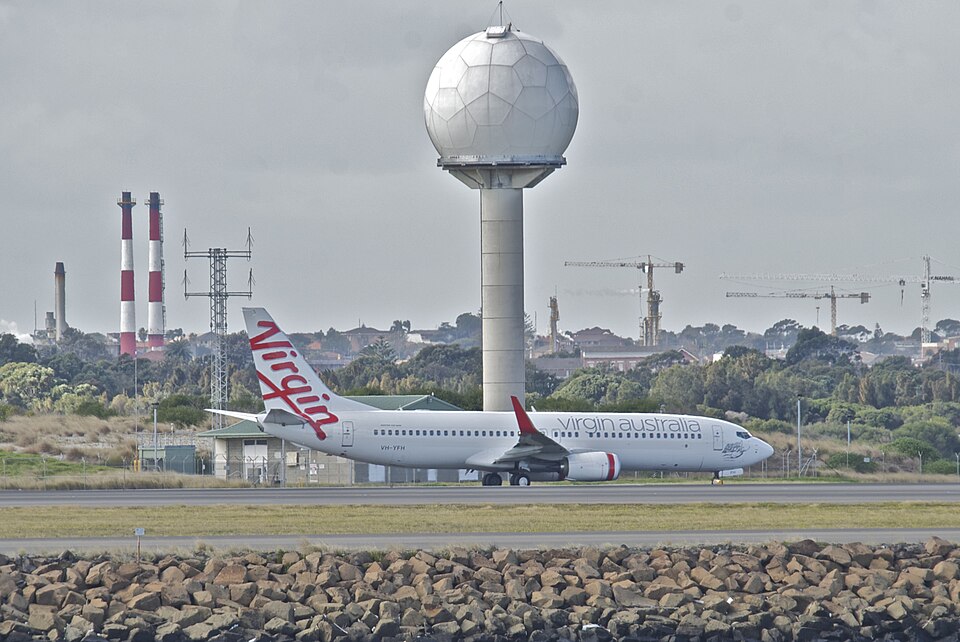
On 30 November 2022, a Boeing 737, registered VH‑YFH and operated by Virgin Australia, commenced its take-off roll from the A3 intersection of Brisbane Airport’s runway 19L. During the take-off, the aircraft briefly entered, and became airborne in, the section of the runway that was closed due to runway works. The aircraft completed the departure and continued to its destination, where a maintenance inspection subsequently cleared the aircraft of any damage.
ATSB Findings
The Australian Transport Safety Bureau (ATSB) investigated the incident. The briefing package for the aircraft’s previous sector from Melbourne to Brisbane included a dispatcher’s note stating that Brisbane runway 01R had a displaced threshold, but without any resultant landing weight performance limitation. It also included a notice to airmen (NOTAM) with the headline "RWY 01R THR DISPLACED," which identified reduced runway distances for take-off and landing on runways 01R/19L, and critical performance data appended to that NOTAM.
The captain misinterpreted the dispatcher’s note to mean that there were no performance requirements for operations on runway 19L. Based on this misunderstanding, the captain dismissed the NOTAM as not relevant for their operation. There was uncertainty about whether the first officer reviewed the dispatcher’s note and NOTAMs in Melbourne, but if they did, the relevance of the note and this NOTAM was probably missed. As a result, neither crew member identified the critical performance data appended to the NOTAM.
The NOTAMs were not reviewed en route or as part of the approach briefing prior to descent into Brisbane, as required by the operations manual. Additionally, the automatic terminal information service (ATIS) advice of the reduced landing distance for runway 19L was not identified and accounted for in the performance calculations for the landing or subsequent departure on that runway. The landing was not affected because the stopping solution was based on the aircraft exiting the runway well before the closed section. The flight crew’s misunderstanding was reinforced by the absence of any visible runway works or other indications of restrictions on the runway during the landing.
Due to the now‑established belief that there were no performance requirements for operations on runway 19L, along with time pressures and distractions from prioritising training needs, the flight crew used the full runway length in the performance data calculation for departure, instead of the reduced length identified in the ATIS and NOTAM. This resulted in a departure with insufficient runway available because the aircraft was overweight for that reduced runway length.
Finally, contrary to the requirements of Part 139 Manual of Standards, the A3/19L intersection departure point take-off run available Movement Area Guidance Sign presented a take-off distance that was more than that available, creating the potential to mislead flight crews about the status of the runway when conducting a departure from that point.
Actions Taken
Virgin Australia implemented several safety management, procedural, and information‑based changes designed to improve flight crew awareness of changes to runway configuration and related aircraft performance criteria.
Brisbane Airport Corporation implemented several safety actions to reduce the risk associated with this type of occurrence. These included changes to departure and arrival procedures associated with runway works, redrafting of the NOTAM to clarify the operational changes to both runways 01R and 19L, procedures to ensure correct runway distance was displayed on movement area guidance signs, and publication of an aeronautical information circular supplement for the works.
Safety Message
Flight crews must ensure they consider possible variations to take-off and/or landing dimensions when determining runway performance data. While this operator’s procedures accounted for such changes through notification of performance requirements within their NOTAM system, due to a combination of distraction and incorrect assumption, they were not identified. When presented with many NOTAMs, flight crews need to be aware that dismissing them based on the headline alone increases the risk that safety relevant data may be overlooked. As an additional defence, flight crews should ensure that the data input into that calculation is in conformance with other relevant information, such as the ATIS.