What happened
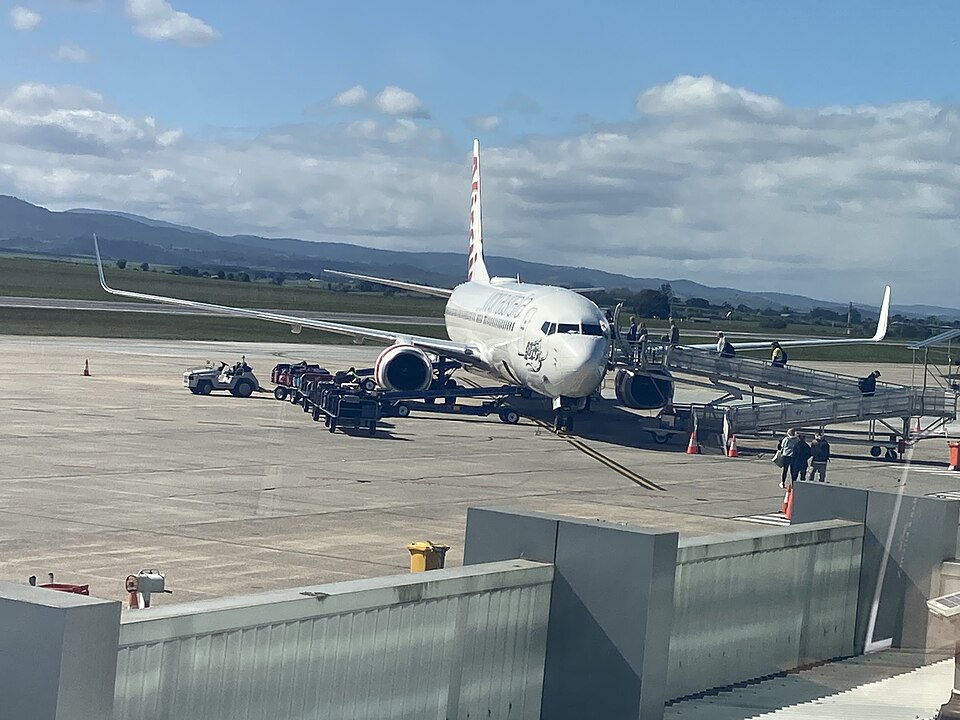
On 6 September 2023, after departing from Brisbane, Queensland, and while approaching cruise altitude, the flight crew of a Boeing 737 (registered VH‑YQR) received a call from the cabin crew requesting entry to the flight deck. The captain, acting as pilot monitoring (PM), reached across the center aisle stand to activate the flight deck door switch. Immediately after, the aircraft momentarily rolled or yawed, but the PM continued to hold the switch while looking at the door. After about 5 seconds, the aircraft began to roll left. The first officer, pilot flying (PF), attempted to correct with autopilot input, then applied a large manual corrective roll input. The bank angle peaked at 42° left, triggering the bank angle alert. The PF needed significant right wing down aileron to maintain wings level. The PM checked the rudder trim and found it displaced left about 5°. The trim was returned to neutral, and the flight continued to Melbourne, Victoria, landing about an hour later. A cabin crew member sustained a minor injury due to the upset.
What the ATSB found
The Australian Transport Safety Bureau (ATSB) investigation found that the PM visually identified the flight deck door unlock switch but, when reaching for it, inadvertently selected and activated the rudder trim control instead. The PM applied full left rudder trim for about 8 seconds. The autopilot responded by applying increasing right wing down aileron, which was replicated on the control wheels. After 5 seconds, the autopilot reached its roll authority limit, and the aircraft began to bank left rapidly, resulting in an inflight upset. The flight crew were unable to promptly identify the left yaw as the primary initiator, delaying recovery.
The mis-selection was consistent with an unintentional slip, possibly due to distraction and attention diversion. The PM looked away from the panel while selecting the switch. The physical similarities and co-location of the door switch and rudder trim switch on the aisle stand panel contributed to the error. However, a previous Boeing human factors examination concluded that changing switch design was unlikely to mitigate risk; instead, emphasis on confirmation of switch selection prior to manipulation was the most effective measure. Boeing had also issued a Flight Operations Technical Bulletin (FOTB) two years prior alerting crews to the risk of unintentional rudder trim application in similar circumstances.
Actions taken
Following the incident, Virgin Australia modified flight deck door entry procedures to limit the time the door unlock switch is held in the unlock position. The airline also briefed flight crews on the event and updated its non-technical skills program to address this type of occurrence.
Safety message
The ATSB emphasized that when selecting any control or switch, flight crew must positively identify the intended control before activating it. Mis-selections should be reported to both the operator and manufacturer to identify potential design errors.