Incident Description
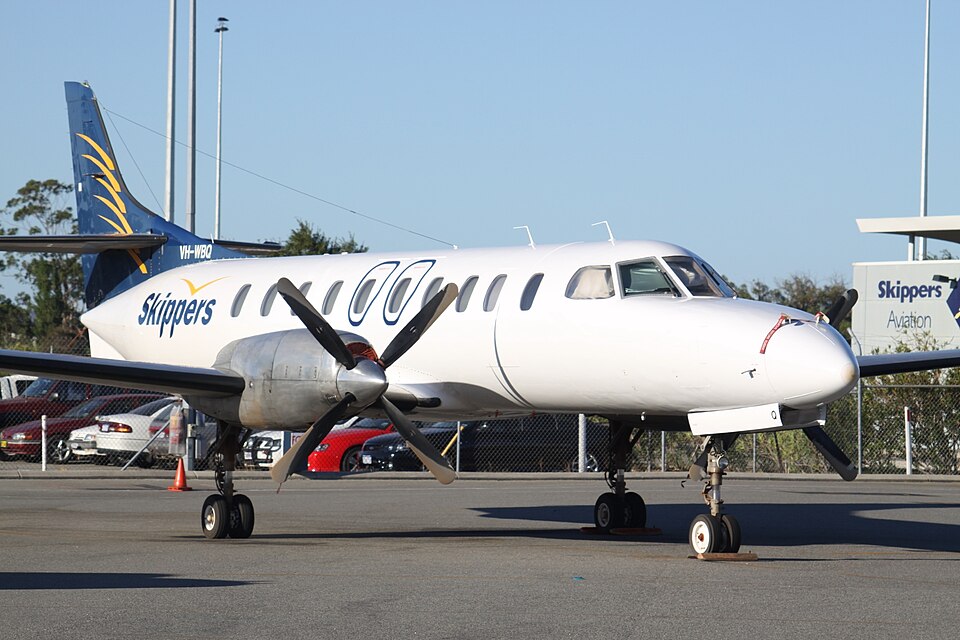
On 15 August 2024, a Fairchild SA227-DC Metroliner 23 operated by Skippers Aviation departed Perth Airport, Western Australia, for a flight to Bronzewing Airport. The aircraft carried 12 passengers and 2 flight crew. During climb, the crew noticed high-temperature air and light smoke from flight deck air vents. The smoke increased rapidly, prompting the crew to initiate the ‘smoke in aircraft’ checklist. However, required items were not completed: the first officer did not don an oxygen mask due to difficulty, and the left bleed air system was not turned off. Instead, the crew prepared to return to Perth. Subsequently, the left wing overheat light illuminated. The crew then actioned the ‘wheel well and wing overheat’ checklist and selected the left bleed air system off, which stopped smoke ingress, but they did not extend the landing gear as required.
During the return, the aircraft deviated from assigned altitude, including a descent to 639 ft below the lowest safe altitude. The crew completed an ILS approach and landed without further incident. The aircraft was not damaged, and there were no crew or passenger injuries.
ATSB Findings
Investigators determined that a failure within the left air cycle machine (ACM) prior to departure caused hot engine bleed air and smoke to enter the cabin. The failure expelled oil from the ACM cooling turbine and allowed unconditioned hot bleed air into the air conditioning system, leading to temperature control issues and smoke emission. Items on the ‘smoke in aircraft’ checklist were not completed, allowing smoke ingress to continue and the left air conditioning duct to overheat, triggering the wing overheat light.
The first officer’s decision not to don an oxygen mask increased the risk of impairment or incapacitation. The decision not to extend the landing gear potentially increased risk if the wing overheat had been associated with a brake fire or wheel well overheat. The workload of the in-flight response adversely affected the crew's performance, leading to errors in flight path adherence, checklist completion, and decision making.
During the return, the first officer misread an altitude instruction as 2,000 ft instead of 2,800 ft AMSL. The controller did not correct the error immediately. After a crew query, it was corrected, but the aircraft later descended below the lowest safe altitude. Air traffic control advised of the deviation but did not use the required ‘safety alert’ wording.
Operational Changes
Following the occurrence, the operator conducted refresher training for flight crew on emergency response briefings, a theory examination on bleed air, pneumatics, pressurisation, and fire warning systems, and practical training on revised emergency procedures and crew oxygen system use. The Metroliner 23 flight crew training program was updated to include revised Line Oriented Flight Training (LOFT) with more comprehensive oxygen system training and a presentation on the aircraft's oxygen system.
Safety Message
This occurrence highlights the importance of careful and methodical checklist completion. Not completing a checklist increased risk and workload, leading to later decision-making and flight path management errors. It also emphasises the need for flight crew to be familiar with emergency equipment, especially breathing equipment in smoke environments.