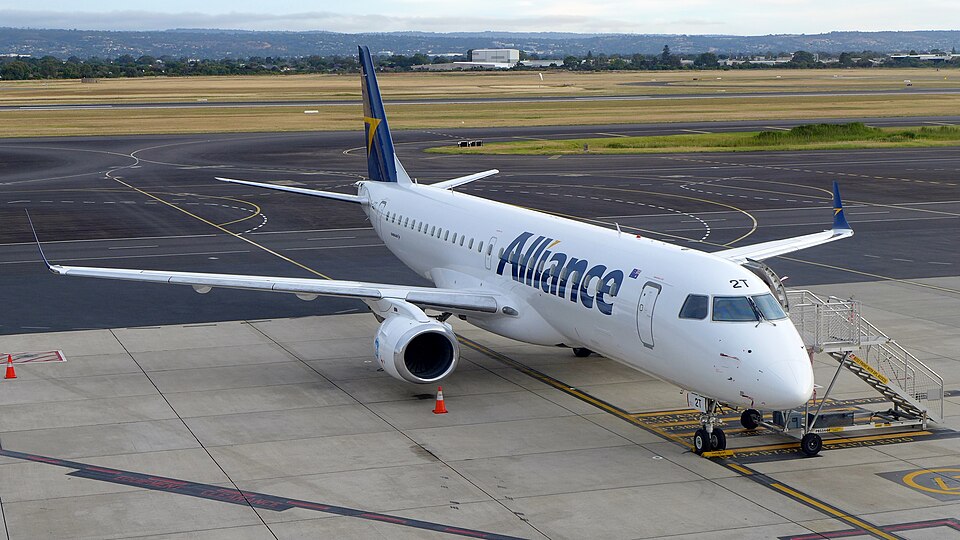
Background
During the takeoff, the first officer rotated the aircraft slower than required, prompting the captain to call for an increase in pitch rate. The captain’s attention then remained focused on monitoring the pitch attitude throughout the rotation to ensure required targets were achieved. Because of this focus, the captain likely did not have sufficient opportunity to move to the next task—verifying the aircraft’s positive rate of climb—before the aircraft passed through 400 ft, the point at which a terrain avoidance turn was to be initiated.
Sequence of Events
Consequently, the task step of verifying and announcing positive climb performance was not fully completed, and the captain did not make the 'positive rate' announcement. In the absence of that announcement, the first officer was not prompted to request landing gear retraction, and the landing gear remained extended. The captain’s announcement of 'pitch rate' at about the same time that the acoustically and semantically similar 'positive rate' announcement would normally be made potentially caused interference in working memory (Lentoor 2023), possibly giving both flight crew a false sense that the latter action had been successfully performed.
During the initial climb—a high workload phase—abnormal radio altimeter alerts and unexpected flight director indications further increased the flight crew’s workload. When the autopilot was engaged, it commenced a right turn toward high terrain in response to an unexpected flight director indication. This prompted the captain’s intervention, and the crew’s attention narrowed to focus on parameters enabling verification of the aircraft’s lateral tracking performance. Attentional tunnelling under conditions of elevated stress and deliberate task focus can cause other task-relevant stimuli to be ignored (Wickens 2009, 2021).
As a result, increasing flight deck wind noise and abnormal Engine Indicating and Crew Alerting System (EICAS) indications—both providing indications of the landing gear’s extended state—were not initially detected. Furthermore, the turn and speed restrictions of the departure likely masked the performance degradation due to the extended landing gear, further reducing the likelihood of identifying that it was still extended.
Detection and Overspeed
As the flight crew’s workload decreased in the latter portion of the departure, the effects of attentional tunnelling reduced, and the noise from the landing gear increased as the aircraft accelerated. The captain (whose headset was not noise-cancelling) then detected the increased cockpit wind noise and was alerted to the misconfiguration of the landing gear. At about the same time, the first officer identified the landing gear extended indication on the EICAS.
Because the aircraft had travelled well beyond the normal gear retraction point and was accelerating, the captain likely perceived some urgency to act upon noticing that the landing gear was still extended and experienced associated increased stress. Under such conditions, research has shown that people often do not make optimal decisions and may act more reflexively (Dismukes and others, 2007). Under time pressure and stress, experts may revert to a recognition primed decision mode (Klein, 2014), making rapid and intuitive interpretations of a situation and selecting actions based on their most familiar experiences.
The landing gear was normally retracted well below the retraction limiting speed, and this speed was not normally checked by the other crew member. Therefore, the captain reverted to their most familiar experience and initiated gear retraction without first confirming the action with the first officer and did not check the gear retraction limiting speed. Consequently, the landing gear retraction was initiated 8 kt above the 235 kt retraction limit speed and the retraction completed 17 kt above that speed.