Incident Overview
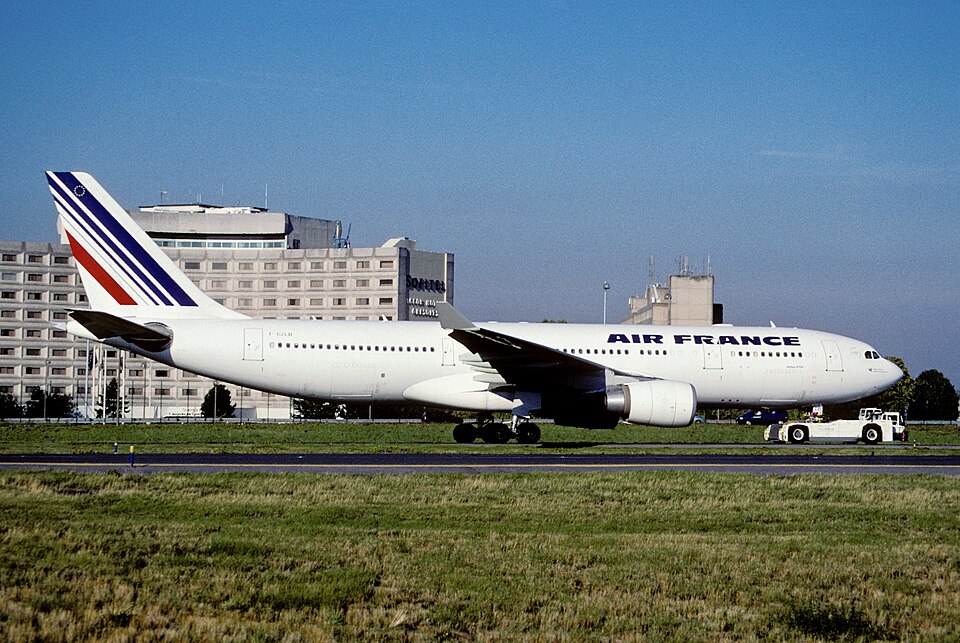
On April 13, 2011, an Air France Airbus A330-211 registered as F-GZCB was operating a scheduled international passenger flight from Paris Charles de Gaulle to Caracas Simón Bolívar International Airport in Venezuela. The aircraft carried 202 passengers and 13 crew members. During the final approach, the flight crew encountered significant wind variations, including crosswinds and gusts, which contributed to an unstable landing configuration.
Landing Dynamics
The captain, acting as pilot flying, executed a manual approach after disengaging the autopilot and autothrust. Despite deviations in speed, roll angle, and vertical speed being announced by the non-flying pilot, the crew did not initiate a go-around. The aircraft touched down with a vertical velocity of approximately -1,200 ft/min and an acceleration of 2.74 g. A GPWS "Sink Rate" alarm was triggered just before touchdown. No windshear alarm was generated during the final phase.
Maintenance Failure
Following the hard landing, the captain logged the event in the Aircraft Technical Log (ATL). However, the on-site maintenance team at Caracas relied on a specific technical note that required an automatic R15 load report to trigger a detailed inspection. No such report was generated or received by the Maintenance Coordination Centre (MCC) due to system criteria not being met. Consequently, the technicians concluded that no further checks were necessary and signed off the aircraft for return service.
Subsequent Events
During the subsequent takeoff attempt back to Paris, the crew was unable to retract the landing gear. Multiple cabin pressurization alarms appeared on the ECAM display. The captain decided to return to Caracas. Upon parking, extensive damage was discovered on the right main landing gear and the fuselage structure, confirming that the aircraft had been released with severe structural compromises.