History of Flight
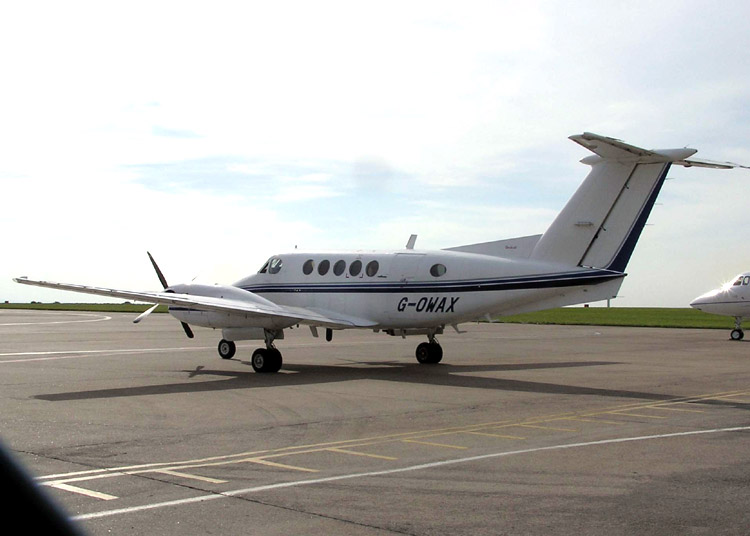
On 23 July 2002, a Beech 200 Super King Air, registration G-OWAX, was cruising at Flight Level 190 en route from Oxford to Amsterdam. The crew heard a sudden bang and hissing noise, and the cabin became fogged. Noting a rapid climb in cabin altitude, they transmitted a PAN call and descended to FL90. Unable to identify the cause of the decompression, the crew returned to Oxford. After landing, the main cabin door could not be opened, so passengers disembarked via the emergency exit.
Emergency Oxygen System
The emergency oxygen system failed to deploy automatically. The commander decided not to manually deploy it, believing the aircraft was already descending and that releasing masks would cause passenger confusion. Post-flight inspection revealed the system had not been armed. The arming knob on G-OWAX differed from other aircraft of the type; it was mounted proud in the OFF position, leading the crew to mistakenly believe it was armed.
Main Cabin Door Examination
Examination of the main cabin door by the repair organisation found that the pin securing the rear upper roller had migrated from its position. This allowed the roller to come out of its plate, removing support from the lock bolt. Cabin pressure then forced the bolt into the surrounding structure, causing the door to open slightly and resulting in loss of pressurisation. The roller was not recovered. The operating rod attached to the lock bolt became distorted during the depressurisation, preventing the door mechanism from opening after landing.
Maintenance Background
The aircraft had entered the UK register in February 2000 and had flown 9,754.4 hours at the time of the incident. The main cabin door lock bolts were replaced at 6,218 hours in May 1992 as required. No maintenance on the cabin door had been performed in the UK. A manufacturer's Service Instruction No 1224 from August 1983 recommended an inspection of the roller assembly for proper staking, but no repeat inspection was required.
Discussion
Components were examined by the AAIB, which found staking marks on the upper plates, but could not determine when the pin began to migrate. It is likely migration occurred over time. Once movement released the roller, differential pressure caused the door to open. Subsequent inspections of two similar aircraft revealed a displaced pin on one, though not enough to release the roller. The manufacturer also reported two cases of pin migration without roller release. The AAIB issued Safety Recommendation 2003-36, urging the FAA and Raytheon to review securing methods or inspection requirements to prevent roller pin migration.