Accident Overview
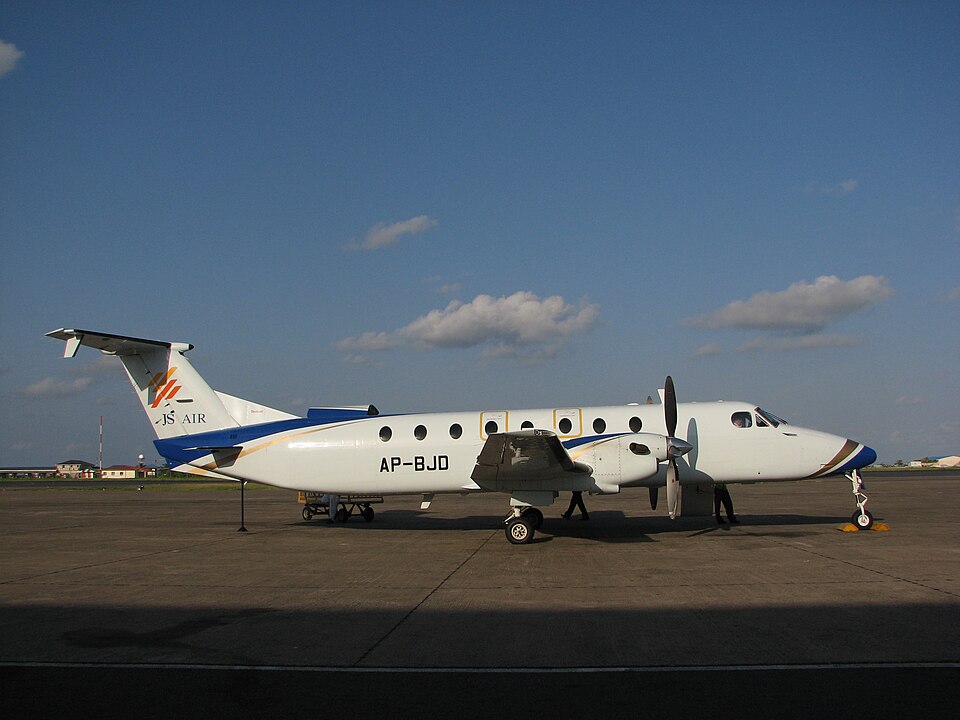
On an unspecified date, a chartered flight operated by an unknown aircraft type, registration AP-BJD, crashed near Jinnah International Airport (JIAP), Karachi, Pakistan. The flight was carrying 17 employees of Eni company, including one Italian national, along with two cockpit crew members, one ground technician, and one security staff member. All 21 persons onboard sustained fatal injuries from the impact and subsequent ground fire.
Flight Details
The aircraft was scheduled to fly from JIAP to Bhit Shah Oil Fields. It took off from Karachi at 02:04:31 UTC. The reported weather conditions were considered suitable for the flight.
Sequence of Events
Shortly after takeoff, the cockpit crew observed abnormal operation of Engine No. 2 (right), which manifested as the propeller feathering on its own. In response, the crew decided to return to JIAP and called for a right-hand downwind approach to runway 25R. While joining the downwind leg, the aircraft could not sustain flight and crashed approximately 1 nautical mile from the beginning of runway 07R at JIAP.
Probable Cause
The official investigation determined that the aircraft experienced a problem with Engine No. 2 immediately after takeoff, indicated by uncommanded propeller feathering. No concrete evidence was found for the propeller malfunction, but a probable cause was wear and tear of the beta valve leading to beta system malfunction. However, this anomaly alone would have resulted only in the loss of one engine, and the aircraft was capable of landing with a single engine. The catastrophic accident was attributed to several crew actions that aggravated the situation. The primary causes included the captain's inappropriate skill level in handling the engine anomaly, failure to raise the landing gear after the anomaly, and execution of remedial actions by the first officer before reaching the minimum safe altitude of 400 feet AGL. These actions constituted non-conformance with OEM procedures. Additionally, lack of situational awareness and crew resource management (CRM) failure directly contributed to ineffective flight deck management.
Contributory Factors
The investigation identified contributory factors related to training and oversight. These included inadequate monitoring of cockpit crew simulator training at both the operator and CAA Pakistan levels, specifically regarding correlation of crew performance and skill levels during simulator sessions. The absence of recurrent or refresher simulator training between two annual simulator checks, as required by ICAO Annex-6 and CAA Pakistan regulations for the specific aircraft type, was also noted.