Flight Details
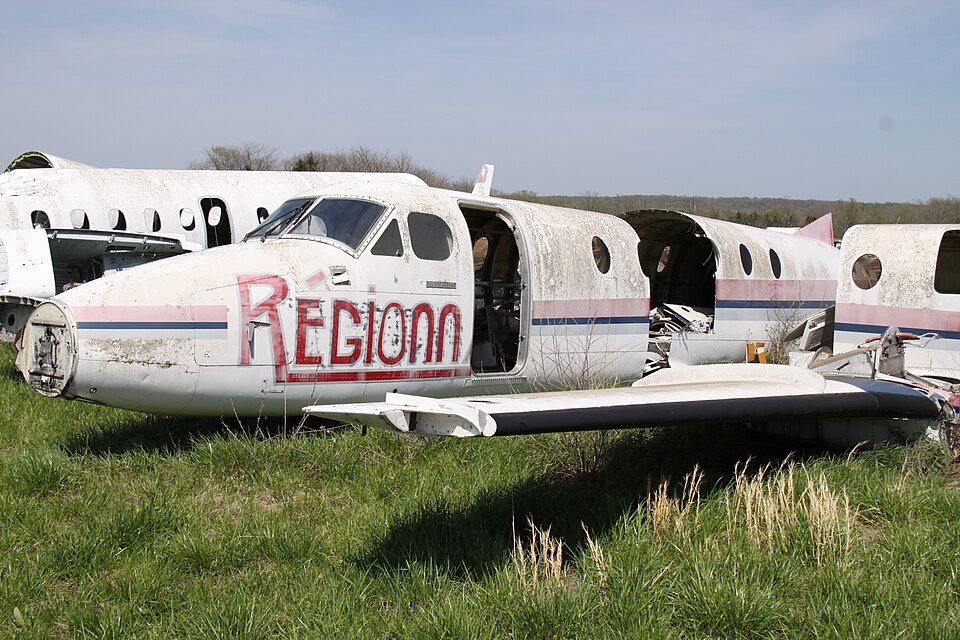
The Régionnair Inc. Beechcraft 1900C, serial number UC-85, was conducting an instrument flight rules (IFR) flight from Lourdes-de-Blanc-Sablon, Quebec, to Saint-Augustin, Quebec. The aircraft carried two pilots and ten passengers.
Approach and Descent
Prior to initiating descent, the Saint-Augustin Airport UNICOM station informed the crew of weather conditions: ceiling 300 feet, visibility one-quarter mile in snow flurries, and winds from the southeast at 15 knots gusting to 20 knots. The crew proceeded with the LOC/DME non-precision approach for runway 20. The approach progressed normally until the minimum descent altitude (MDA). Upon the first officer reporting sighting the ground below the aircraft, the captain decided to continue descending below the MDA.
Accident Sequence
Thirty-five seconds after descending below the MDA, the ground proximity warning system (GPWS) "MINIMUMS" audible alarm sounded. Three seconds later, the aircraft struck the frozen surface of the Saint-Augustin River.
Occupants and Damage
All occupants escaped the accident unharmed. The aircraft sustained heavy damage.
Probable Cause Findings
The official investigation determined several causes and contributing factors: The crew did not follow the company's standard operating procedures for approach briefing and missed approach. The captain failed to specify the MDA or missed approach point during the briefing, and the first officer did not notice these omissions, indicating a lack of coordination. The captain continued descent below the MDA without establishing visual contact with required references. The first officer likely had difficulty perceiving depth due to whiteout conditions. The captain did not effectively monitor flight parameters while attempting to establish visual contact with the runway. The chief pilot (captain of C-FGOI) set a poor example by descending below MDA without visual references and using the GPWS to approach the ground. Additionally, the operations manager failed to effectively supervise air operations; Transport Canada did not detect safety-compromising irregularities before the occurrence; and Régionnair had not developed GPWS standard operating procedures for non-precision approaches. Other findings noted that the GPWS alarm sounded at a height insufficient for recovery given the rate of descent, neither pilot had received PDM or CRM training, the reported ceiling and visibility were below approach chart minima, the approach decision complied with regulations as runway 02/20 was not under an approach ban, and some Régionnair pilots would descend below MDA and use GPWS to approach the ground when visual contact was impossible.