What happened
On October 4, 2007, an Airbus A330-322 was climbing through flight level 105 after departing Düsseldorf for Thessaloniki, Greece. The aircraft was carrying 114 passengers and 11 crew members. During the climb, the crew heard a loud bang accompanied by unusual noises and a slight pushing sensation. At the time, the aircraft had recently increased speed from 250 kt to 350 kt.
While the flight monitoring system (ECAM) showed no immediate errors, the cabin crew subsequently reported that a large portion of the left engine cowling had detached. The crew decided to abort the flight and return to Düsseldorf. Although no emergency was declared, the aircraft sustained significant damage. Upon landing, ground personnel discovered fuel leaking from the left wing. There were no fatalities and no injuries.
The investigation
The BFU examined the wreckage and recovered approximately 90% of the left cowling half and 30% of the right cowling half from the area near Düsseldorf-Dormagen. The investigation focused on the mechanical state of the cowling fasteners and the structural integrity of the composite materials.
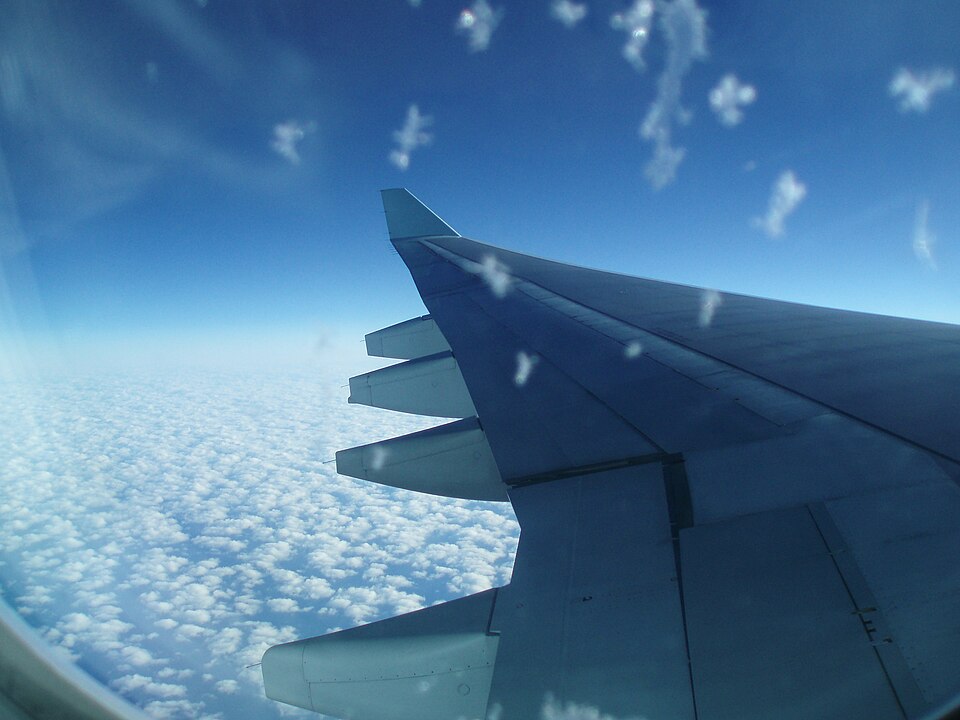
Investigators analyzed the damage to the engine cowlings, the belly fairing, and the wing structure. The impact of the detached cowling parts caused holes in the wing skin, leading to fuel leakage from the integral tanks. Damage was also found on the slats, flap fairings, and two passenger windows. The investigation also reviewed maintenance records, noting that an A-check involving the left engine had been performed the previous night.
Findings
- The primary cause of the accident was that the front two or all three locking mechanisms of the engine cowling were not properly secured.
- Physical evidence from the deformed hooks and housings indicated that the fasteners were in an unlocked or unlatched state when the aerodynamic forces caused the separation.
- The loss of the cowling was facilitated by the fact that the orange warning color on the locking handles was worn or covered in dirt, making it difficult for the crew to visually verify the correct locking status.
- There was no evidence of structural failure in the composite cowling material itself; the failure was mechanical regarding the locking hardware.
- Maintenance of the left engine had occurred the night before the incident, which included opening and closing the cowling.