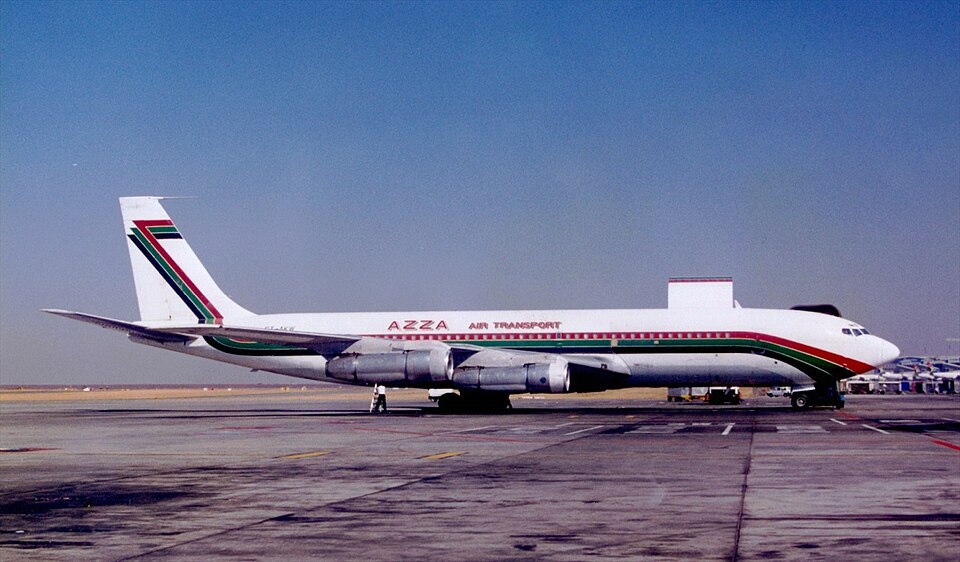
Accident Summary
An aircraft operating a cargo flight from Sharjah International Airport, UAE, to Khartoum International Airport, Sudan, crashed shortly after takeoff. All six persons on board—three flight crew members, a ground engineer, and two load masters—sustained fatal injuries due to the high impact forces. The accident occurred when the aircraft, after becoming airborne, experienced a separation of the No. 4 engine core cowls, leading to a chain of events that culminated in a loss of control.
Sequence of Events
Shortly after liftoff from Sharjah, the core cowls of the No. 4 engine separated and fell onto the departure runway. This separation caused the No. 4 engine Pressure Ratio (EPR) manifold flex line to rupture, resulting in an erroneous reading on the EPR indicator. The crew interpreted this reading as a failure of the No. 4 engine. They declared an engine loss and requested air traffic control to return to the airport. During the return maneuver, the aircraft entered a right turn, banked, and continuously rolled to the right at a high rate. The aircraft then sank and impacted the ground with an approximately 90° right wing down attitude.
Probable Cause and Contributing Factors
The official investigation identified the following causes of the accident: (a) the departure of the No. 4 engine core cowls; (b) the consequent disconnection of the No. 4 engine EPR Pt7 flex line; (c) the probable inappropriate crew response to the perceived No. 4 engine power loss; (d) the aircraft entering a stall after the published maximum bank angle was exceeded; and (e) the aircraft loss of control (LOC) that was not recoverable.
Contributing factors include: (a) improper maintenance of the cowls, which had undergone multiple skin repairs not meeting aviation standards; (b) the operator's maintenance system failure to address issues related to the No. 4 engine cowls' failure to latch; (c) failure of the inspection and maintenance systems of the maintenance organization that performed the last C-Check to address and report damage to the cowl latches before issuing a Certificate of Release to Service; (d) the operator's failure to provide a reporting system for line maintenance personnel to report deficiencies and receive timely guidance; (e) the operator's quality system failure to adequately inspect and prevent poor-quality or incorrectly performed repairs from remaining on the aircraft; and (f) the safety oversight system deficiency by the relevant authority (SCAA) to adequately identify the operator's chronic maintenance, operations, and quality management deficiencies.