Flight Information
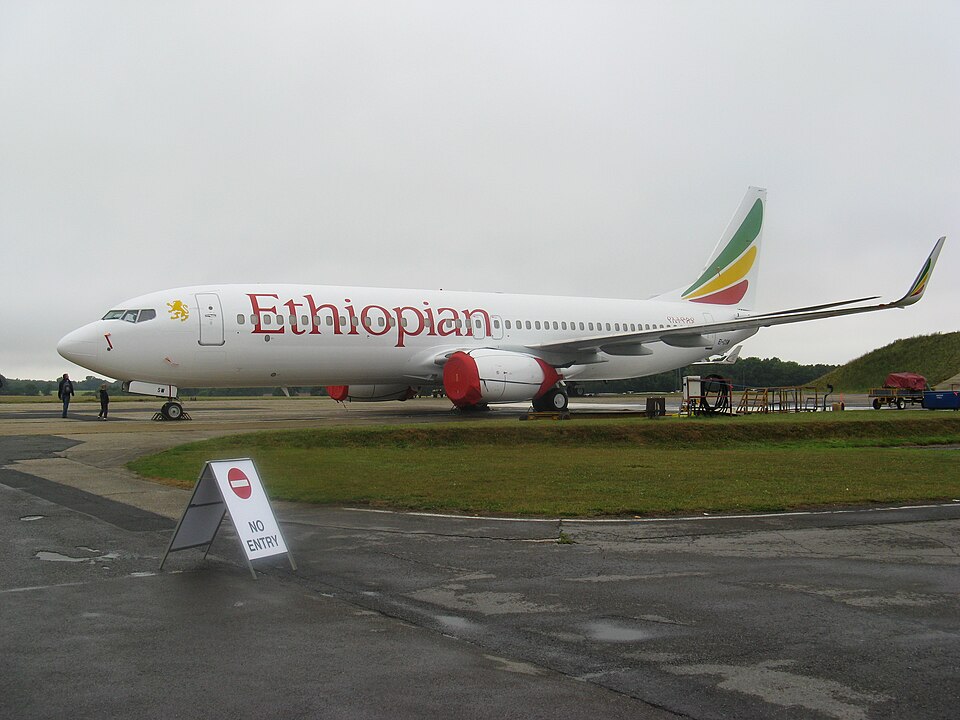
Ethiopian Airlines Flight 409 (ET 409) was a scheduled international passenger flight from Beirut Rafic Hariri International Airport (BRHIA), Lebanon, to Addis Ababa Bole International Airport, Ethiopia. The aircraft, a Boeing 737-800 registered ET-ANB, operated under Ethiopian Civil Aviation Regulations. On board were 90 persons: two flight crew (a captain and a first officer), five cabin crew, an inflight service officer, and 82 passengers. The flight departed at night under an instrument flight plan. Weather conditions included low clouds, isolated cumulonimbus clouds, and thunderstorms.
Sequence of Events
Before takeoff, air traffic control (ATC) initially cleared ET 409 for a LATEB 1 D departure but later changed the clearance to an immediate right turn direct to Chekka. After takeoff, ATC instructed the flight to turn right to a heading of 315°, which the crew acknowledged and selected on the Mode Control Panel. As the aircraft turned right, ATC suggested a heading of 270° due to weather. However, ET 409 continued turning beyond 315°. ATC then instructed an immediate left turn to heading 270°, which the crew acknowledged and selected. The aircraft continued the left turn past 270° despite repeated ATC calls to turn right to 270°. ET 409 reached a southerly track before making a sharp left turn, disappearing from radar, and crashing into the sea approximately 5 nautical miles southwest of BRHIA. The crash occurred 4 minutes and 59 seconds after takeoff roll initiation (4 minutes 17 seconds in the air). All occupants received fatal injuries.
Flight Data and Cockpit Voice Recorder Analysis
Search and rescue operations began immediately. The digital flight data recorder (DFDR) and cockpit voice recorder (CVR) were recovered from the seabed and read at the BEA facility in Le Bourget, France. The DFDR data showed that the aircraft encountered two stick shaker activations lasting 27 and 26 seconds, respectively. Eleven "Bank Angle" aural warnings occurred at various times, and an overspeed clacker activated near the end of the flight. Recorded maximum values included an angle of attack of 32°, a bank angle of 118° left, a speed of 407.5 knots, a G load of 4.76, and a nose-down pitch of 63.1°. The DFDR stopped recording at 00:41:28 UTC with the aircraft at 1,291 feet. The last radar recording, at 00:41:28, showed the aircraft at 1,300 feet. The CVR captured a loud noise just before 00:41:30.
Probable Cause
The official investigation identified the following probable causes and contributing factors. Probable Causes: 1) The flight crew's mismanagement of the aircraft's speed, altitude, headings, and attitude through inconsistent flight control inputs, resulting in a loss of control. 2) The flight crew's failure to adhere to crew resource management principles of mutual support and calling deviations, hindering timely intervention and correction. Contributing Factors: 1) Ineffective manipulation of flight controls, causing undesired aircraft behavior and increased pilot stress. 2) The aircraft being out of trim for most of the flight, increasing pilot workload and control difficulty. 3) Prevailing night weather conditions likely causing spatial disorientation and loss of situational awareness. 4) The flight crew's relative inexperience on the aircraft type and unfamiliarity with the airport, likely increasing workload and stress. 5) Consecutive flying (188 hours in 51 days) on a new type with minimal rest, possibly resulting in chronic fatigue affecting the captain's performance. 6) A heavy meal discussed by the crew before takeoff, affecting sleep quality prior to the flight. 7) The 11 bank angle warnings, two stalls, and final spiral dive increasing crew workload and stress. 8) Symptoms similar to subtle incapacitation identified, possibly explaining some causes, but no factual evidence confirmed this. 9) The first officer's reluctance to intervene did not help confirm subtle incapacitation or take over control as per operator standard operating procedures.