Accident Overview
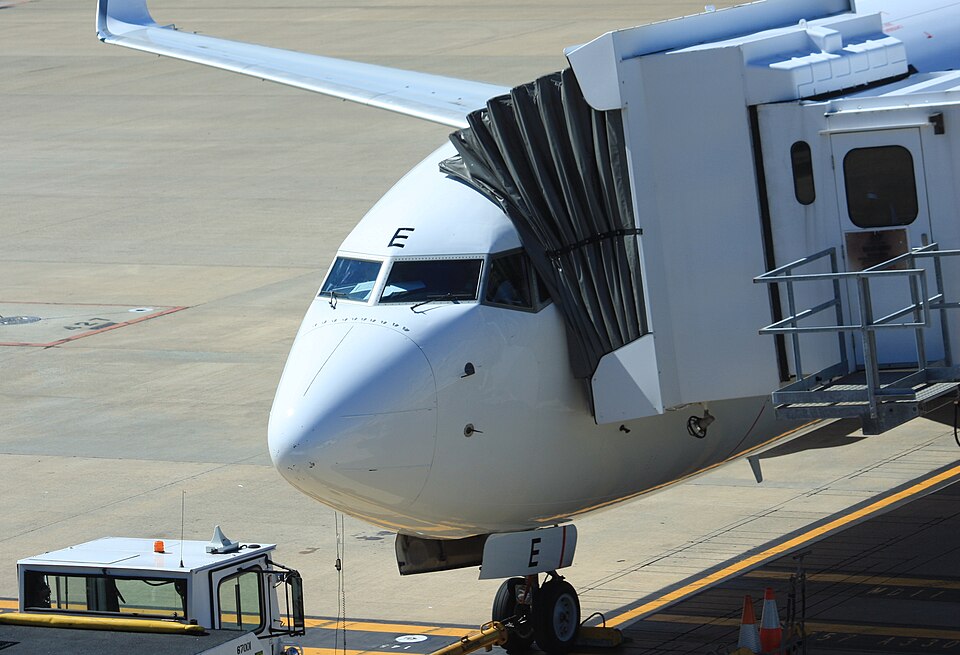
On 28 September 2018, at 23:24:19 UTC (09:24 local time), a Boeing 737-8BK aircraft registered P2-PXE, operated by Air Niugini Limited, was conducting scheduled passenger flight PX073 from Pohnpei to Chuuk in the Federated States of Micronesia. During final approach, the aircraft impacted the water of Chuuk Lagoon approximately 1,500 ft (460 m) short of the threshold of runway 04. The aircraft deflected across the water several times before settling and turning clockwise through 210 degrees, eventually drifting 460 ft (140 m) southeast of the runway 04 extended centerline with the nose pointing about 265 degrees.
Crew and Rescue
The pilot in command (PIC) was the pilot flying, and the copilot served as the support/monitoring pilot. An Aircraft Maintenance Engineer occupied the cockpit jump seat and filmed the final approach on his iPhone. Local boaters rescued 28 passengers and two cabin crew from the left over-wing exits. Two cabin crew, both pilots, and the engineer were rescued from the forward door 1L. One life raft was launched from the left aft over-wing exit by a cabin crew member with assistance from a passenger. US Navy divers rescued six passengers, four cabin crew, and the Load Master from the right aft over-wing exit. All injured passengers were evacuated from the left over-wing exits. One passenger sustained fatal injuries; local divers located his body in the aircraft three days after the accident.
Investigation Findings
The Government of the Federated States of Micronesia initiated the investigation and delegated it entirely to the PNG Accident Investigation Commission on 14 February 2019. The investigation determined that the flight crew’s level of compliance with Air Niugini Standard Operating Procedures Manual (SOPM) was not at a standard that would promote safe aircraft operations. The PIC intended to conduct an RNAV GPS approach to runway 04 and briefed the copilot accordingly. The descent and approach began in Visual Meteorological Conditions (VMC) but transitioned to Instrument Meteorological Conditions (IMC) from 546 ft (600 ft). The flight crew did not adhere to the SOPM or the approach and pre-landing checklists. The RNAV approach chart procedure was not adequately briefed. The approach specified a flight path descent angle guide of 3 degrees, but the aircraft was flown at a high rate of descent with a steep variable flight path angle averaging 4.5 degrees, with lateral over-controlling; the approach was unstabilized.
Alerts and Crew Actions
The Flight Data Recorder recorded 17 Enhanced Ground Proximity Warning System (EGPWS) alerts: eight “Sink Rate” and nine “Glideslope”. The Cockpit Voice Recorder captured 14 EGPWS aural alerts after passing the Minimum Descent Altitude (MDA), between 307 ft (364 ft) and impact, including seven “Glideslope” and six “Sink Rate” alerts (with one overridden by the “100 ft” advisory). The flight crew disregarded these alerts and did not acknowledge the “minimums” and 100 ft alerts, indicating fixation and channelised attention. The crew were fixated on landing cues and control inputs due to the extension of 40° flap. Both pilots lacked situational awareness and did not recognize the developing unsafe condition after passing the Missed Approach Point (MAP) when the aircraft entered a storm cell and heavy rain. The weather radar on the PIC’s Navigation Display showed a large red area indicating a storm cell between the MAP and the runway.
Copilot and Procedures
The copilot, as the support/monitoring pilot, was ineffective and oblivious to the rapidly unfolding unsafe situation. He did not recognize the unsafe condition and thus did not challenge the PIC or take control as required by the Air Niugini SOPM. The SOPM instructs a non-flying pilot to take control and restore safe flight when an unsafe condition persists. Records showed the copilot had been checked in the simulator for EGPWS alert responses, but there was no evidence of simulator sessions covering vital actions for sustained unstabilized approaches below 1,000 ft amsl in IMC. The PIC did not conduct a missed approach at the MAP despite criteria for visually continuing the approach not being met, including visual acquisition of the runway or PAPI. After passing the MAP and MDA, the PIC did not execute a go-around despite the aircraft entering IMC, an unstable approach, a rapid glideslope deviation from half-dot low to two-dots high in nine seconds, a high and increasing rate of descent (over 1,000 ft/min), EGPWS aural alerts, and a visual “PULL UP” warning on the Primary Flight Display.
Safety Deficiencies and Recommendations
The report noted that deviations from recommended practice and SOPs increase the risk of approach and landing accidents, and that crew coordination is less effective when members do not work as an integrated team. It also found that the Civil Aviation Safety Authority of PNG (CASA PNG) accepted rather than approved manuals, placing a burden on the regulator to ensure accuracy and safety standards. CASA PNG did not meet the required standard of evidence-based assessment, resulting in deficiencies in Air Niugini's manuals. The PNG AIC issued several safety recommendations, including one to Honeywell Aerospace and the US FAA regarding a potential contributing factor. None of the safety deficiencies brought to Air Niugini's attention caused the accident, but they highlighted areas for improvement. Air Niugini promptly addressed all 12 safety recommendations issued to it, with an average response time of 23 days. The AIC closed all recommendations issued to Air Niugini.
Aftermath
No further details were provided.