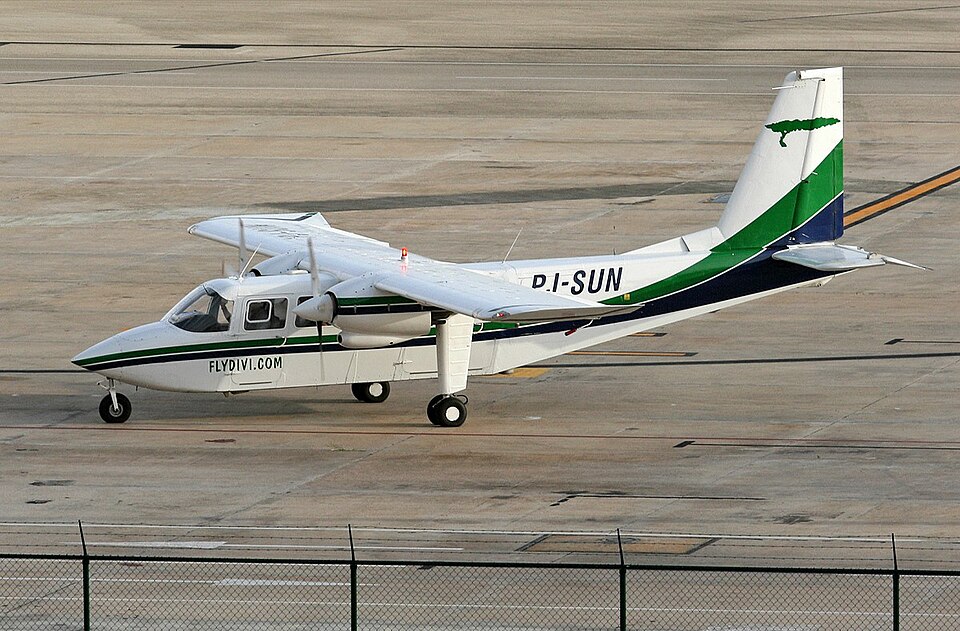
Flight Preparation
On 22 October, the pilot of aircraft PJ-SUN woke at 05:00 and drove to Curaçao International Airport (Hato Airport) at about 05:30. After preparing the aircraft, he completed two return flights to Bonaire International Airport (Flamingo Airport) without incident. The next flight, DVR014, was scheduled for 09:30. Nine passengers waited while the pilot arranged refueling between 09:28 and 09:38. Luggage and cargo were already loaded. The pilot welcomed passengers and gave safety instructions, though not all passengers heard them. The pilot and front-seat passenger fastened their waist and shoulder belts.
Engine Failure
Around 09:47, after receiving clearance from Hato Tower, PJ-SUN took off under visual flight rules (VFR) for Bonaire, climbing to flight level 035 (FL035). After leveling off and reducing power, the engine failed as the pilot adjusted levers on the throttle quadrant. Some passengers felt a jolt; others heard the engine sputter. No mechanical noise or smoke was detected. The pilot increased power to the left engine, feathered the right propeller, and trimmed rudder pedals to compensate for the right engine failure. He attempted to restart the right engine two or three times unsuccessfully.
Descent and Ditching
At 09:52, the pilot reported to Hato Tower: "Divi 014 ... have lost one of the engines." He continued toward Bonaire on the left engine, contacting Flamingo Tower at 09:57, stating: "I got one engine out, so we are landing with one engine, no emergency at this stage, I’m maintaining altitude at 3000 feet, we request priority to landing runway 10." The controller authorized approach. The aircraft descended at about 140 feet per minute on average. Passengers noted a higher-than-usual pitch attitude and lower indicated airspeed. The pilot did not inform passengers of the engine failure or his intentions. Some passengers put on life jackets; the front-seat passenger could not find his, and others had difficulty opening the plastic bags. They agreed on an emergency egress plan.
At 10:08, the pilot reported being 10 nautical miles out at 1000 feet, expecting to land in 10 minutes. At 10:12, he reported 8 nautical miles at 600 feet and losing altitude. At 10:14, he was 6 nautical miles at 300 feet. The last radio contact at 10:15 indicated 5 nautical miles at 200 feet, still descending. The pilot turned left toward Klein Bonaire for an emergency landing. With hand signals, he gave a thumbs-up to ask passengers if they were ready. The stall warning activated intermittently, then continuously until impact.
At 10:17, the aircraft hit the water approximately 0.7 nautical miles from Klein Bonaire and 3.5 nautical miles west of Bonaire. The left front door broke off and the windscreen shattered. The cabin quickly filled with water. The passenger behind the pilot became trapped but freed herself. All nine passengers exited through the left front door opening or emergency exits without assistance. Some briefly sat on the wings before the aircraft sank. Passengers without life jackets held onto others. One passenger reported that the pilot hit his head on the cockpit frame or instrument panel, losing consciousness. Attempts by one or two passengers to free the pilot from his seat were unsuccessful. The aircraft sank with the pilot still on board.
Aftermath
Approximately five minutes after the emergency landing, two boats arrived and rescued the passengers. The pilot was not recovered.