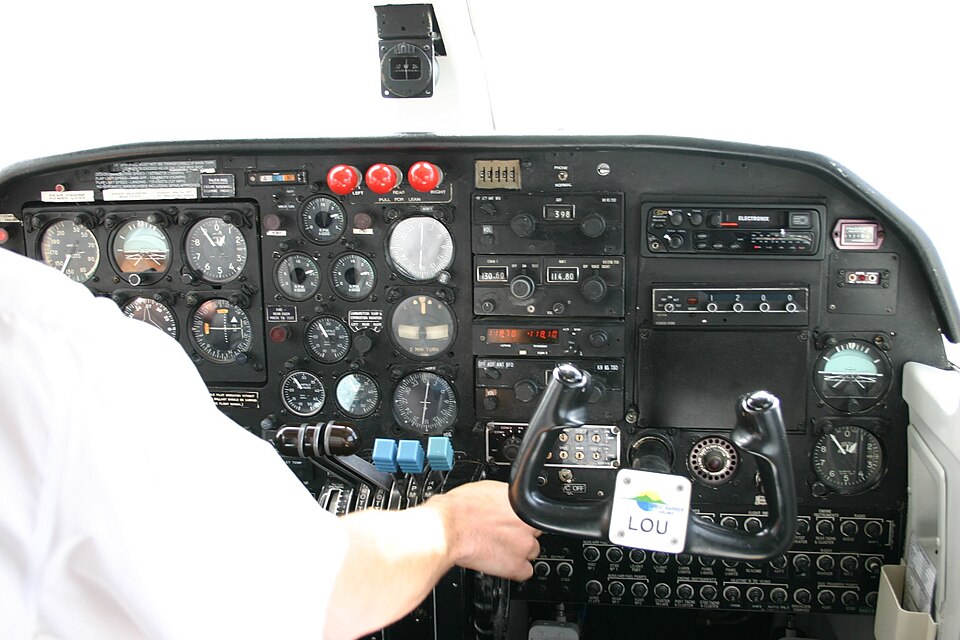
Flight
At approximately 1300 on Sunday, 5 July 2009, ZK-LOU, a three-engined Britten Norman BN2A Mk III Trislander operated by Great Barrier Airlines, departed from Great Barrier Aerodrome at Claris on Great Barrier Island. The flight was a regular service to Auckland International Airport, carrying 10 passengers and a pilot, all wearing seat belts. The pilot had earlier flown a different Trislander from Auckland to Claris and swapped aircraft for the return trip. The aircraft had been flown to Claris from North Shore Aerodrome that morning by another company pilot, who performed a full engine run-up before the first departure and noted nothing unusual during the 30-minute flight.
Incident
After normal after-start checks and taxi to the start of runway 28, the pilot applied full power while holding the brakes, verified normal engine gauge indications, and commenced the takeoff roll. The takeoff was uneventful. However, while climbing through about 500 feet, the pilot heard an unusual pattering sound and noticed the propellers going out of synchronization. He attempted to resynchronize them and observed that the right engine manifold pressure and rotation speed had dropped. As he adjusted controls to increase power, a loud bang occurred, and a passenger screamed. Looking to the right, the pilot saw the entire propeller assembly missing from the right engine, with extensive oil spray around the cowling.
Response
The pilot turned left, performed engine failure and shutdown checks, and transmitted a distress call on the local area frequency. He requested another company pilot airborne behind him to alert the local office of the return. That pilot had seen what appeared as white smoke and debris emanating from ZK-LOU, initially suspecting a bird strike. Despite the failure, ZK-LOU continued to climb, so the pilot leveled at about 800 feet, reduced power on the two serviceable engines, and positioned for a right downwind landing on runway 28. Conditions included scattered cloud at 2500 feet, a few showers, wind 15-20 knots along the runway, and good visibility. The pilot elected a flapless landing with increased power and speed due to possible wind shear. After landing, he stopped on the runway, checked passengers, and taxied to the apron, where he shut down the other engines and assisted passengers to the terminal. Drinks were offered, and the company chief executive and a local doctor attended to the passengers.
Injuries and Damage
Three passengers sustained minor abrasions and scrapes from shattered Perspex and broken interior lining when the propeller struck the side of the fuselage.
Investigation Findings
The official investigation identified that the engine propeller assembly separated from the right engine due to crankshaft failure at the flange connecting it to the propeller hub. High-cycle fatigue cracking from undetected corrosion had progressed to a critical stage, causing overload failure. The crankshaft had inadvertently exceeded its overhaul service life by approximately 11% due to an anomaly in recorded overseas service hours prior to importation to New Zealand. The crankshaft was of an older design with flanges prone to cracking, and no specific periodic crack check was required at the time. The Civil Aviation Authority subsequently issued a Continuing Airworthiness Notice addressing this issue. The investigation also noted that an audit of the company had examined engine overhaul periods but could not have detected the overseas-hour anomaly.