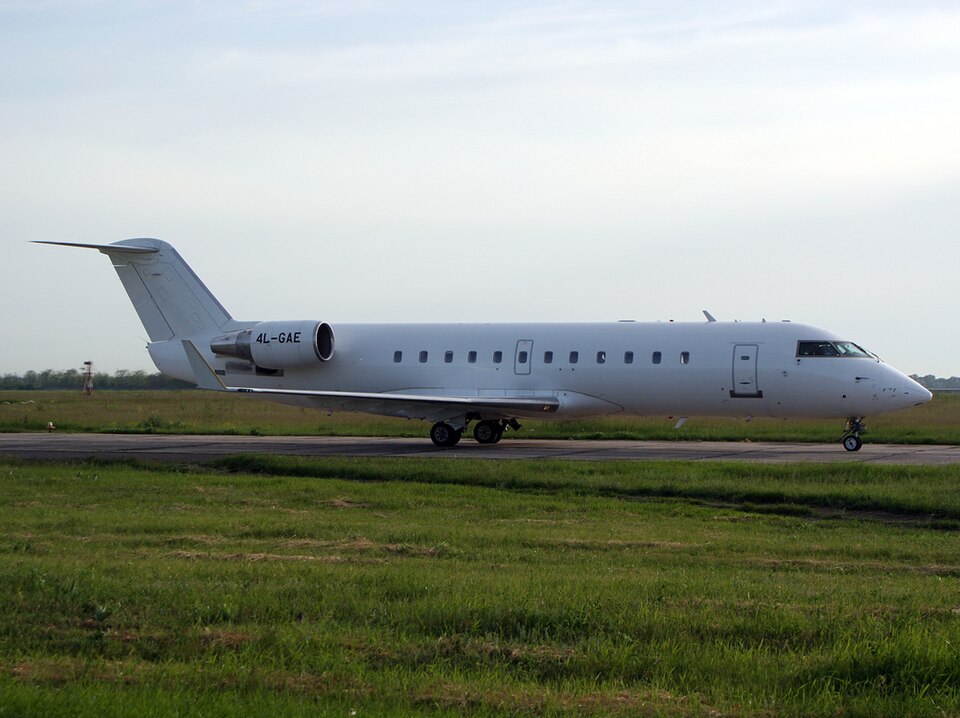
Accident Details
The aircraft was performing a special flight from Kisangani to Kinshasa on behalf of the United Nations Organization Stabilization Mission in the Democratic Republic of the Congo (MONUSCO). While on final approach to Kinshasa-N'Djili Airport's runway 24, the crew encountered very poor weather conditions and decided to execute a go-around. Approximately 12 seconds into the climb, the aircraft nosed down. At a speed of 180 knots, it impacted the ground 170 meters to the left of the displaced threshold of runway 24. The aircraft slid for about 400 meters before coming to rest upside down and engulfed in flames.
Three passengers sustained serious injuries and were evacuated from the wreckage; ultimately, only one passenger survived the accident.
Weather Conditions
At the time of the accident, weather conditions were described as marginal. There was storm activity, heavy rain showers, scattered clouds at 2,200 feet, and cumulonimbus clouds at 1,500 feet.
Survivor Account
The sole survivor reported that the aircraft suddenly plunged into the earth while on final approach.
Investigation Findings
Investigators determined that the most probable cause of the accident was that the aircraft encountered a very dangerous meteorological phenomenon similar to a microburst at a very low altitude during the overshoot process. The dangerous vertical downdraft and gust caused a sudden and remarkable change in the aircraft's attitude and a substantial loss of altitude. Given the very low altitude, recovery from such a disturbance was not possible.
The investigation also noted that weather in Kinshasa was bad, air traffic control did not inform the crew about the degradation of weather conditions, and the runway in use was not closed despite visibility below minima. The crew continued an unstable approach with excessive speed (180 knots). Additional contributing factors included the crew ignoring published approach procedures, improper crew resource management, inadequate pilot training, and insufficient oversight by the Georgian Civil Aviation Authority. However, these factors were considered contributory rather than the primary cause.