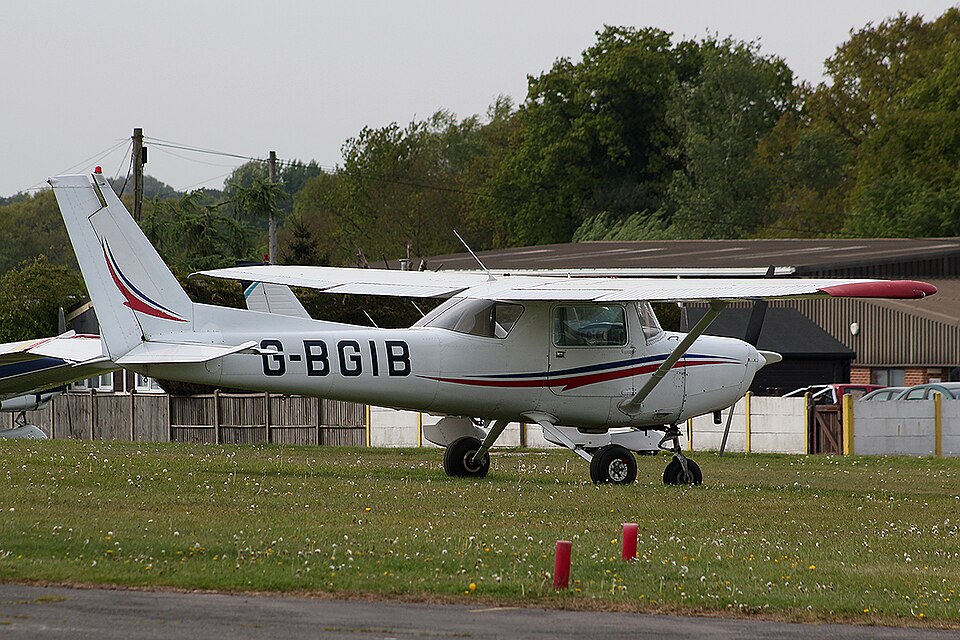
History of the Flight
The student pilot, who had accumulated seven hours of solo flying, arrived at Redhill Airfield and discussed the conditions with his instructor. He waited until the 1450 hrs Automatic Terminal Information System broadcast before deciding whether to fly. The instructor briefed him on handling gusty conditions and how to deal with bouncing during landing.
The pilot decided to fly but planned to land after the first circuit if conditions proved too difficult. He completed six touch-and-go landings without incident.
The Accident
The seventh approach was normal. The aircraft was lined up for Runway 26R with two stages of flap selected and a speed of 65 kt as it crossed the airfield boundary. During the flare, the aircraft lost height and bounced twice on the runway. The nose wheel fork detached before the pilot could apply power. The nose gear leg dug into the grass, and the aircraft came to a stop on the runway ahead of the intersection with Runway 18/36. The pilot was unhurt and vacated the aircraft normally.
Damage
The nosewheel fork detached from the gear leg. Damage also occurred to the nose gear leg and surrounding structure. The engine was shock-loaded and the propeller bent.
Weather
The actual weather at the time agreed with the forecast. Visibility was good, and it was dry. The wind was from 240° at 15 kt, variable in strength, with direction varying from 190° to 270°.
Discussion
The pilot was briefed about the gusty conditions. However, it appears that the aircraft encountered a gust too severe for his level of experience.