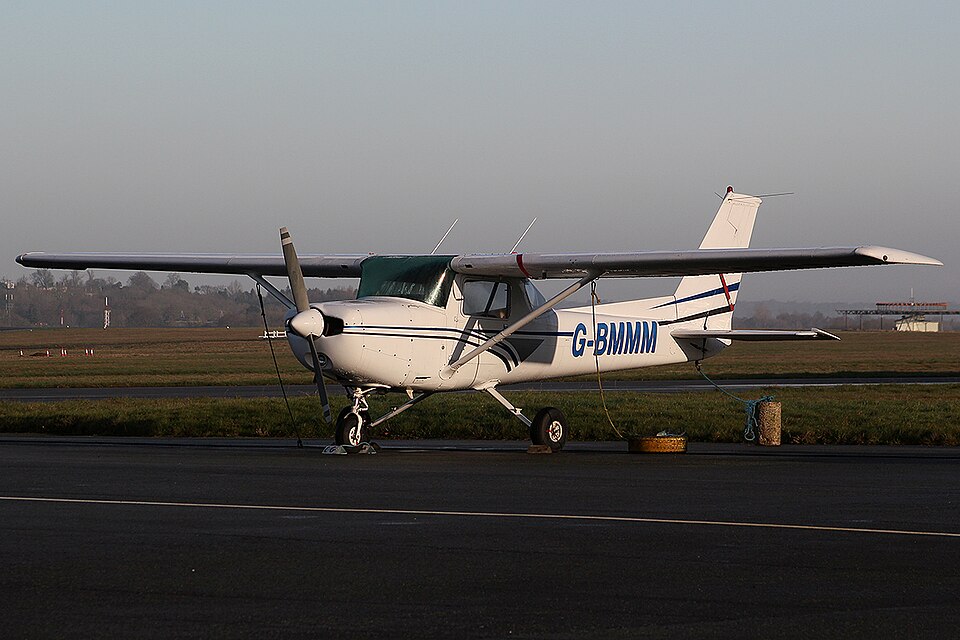
Accident Details
At 1640 hours UTC on 24 May 1998, a Cessna 152, registration G-BMMM, was involved in an accident during landing at Biggin Hill Airport in Kent. The aircraft was manufactured in 1981 and powered by a single Lycoming O-235-L2C piston engine. The commander held a Private Pilot's Licence and was 39 years old with a total flying experience of 124 hours, including 36 hours on the Cessna 152 type. In the previous 90 days, he had flown 3 hours, all within the last 28 days. One passenger was on board; neither the pilot nor the passenger sustained any injuries.
Flight History
The pilot had rented the aircraft for a round trip from Biggin Hill to Southend and back. The weather was fine with a north-easterly surface wind of about 10 knots. The flight to Southend, the landing there, and the return flight were all uneventful until the touchdown at Biggin Hill.
Landing Sequence
On final approach to tarmac Runway 29, the surface wind was reported as 300 degrees at 10 knots. The approach proceeded normally. During the landing, the pilot felt the mainwheels touchdown before he deliberately lowered the nosewheel. As the nosewheel made contact, the pilot immediately experienced directional control difficulties. Instinctively, he pulled back on the control column to raise the nosewheel off the runway, causing the aircraft to balloon into the air. When the mainwheels touched down again, the aircraft was no longer aligned with the runway and it ran off the side onto the grass. The nosewheel collapsed, the propeller struck the grass, and the aircraft stopped quickly.
Aftermath
The pilot made the aircraft switches safe before he and his passenger vacated the aircraft through the normal exit doors. The crosswind component on landing was described as insignificant, and the pilot could offer no explanation for the loss of control. The nature of the damage was limited to the collapsed nosewheel and propeller strike on the grass.