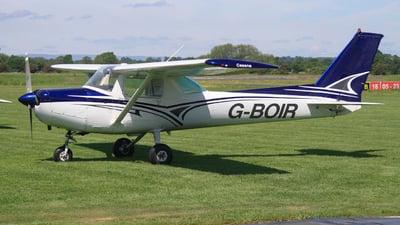
Accident Details
On 5 April 2011 at 1220 UTC, a Cessna 152, registration G-BOIR, was involved in an accident on Runway 23 at Sleap Airfield, Shropshire. The aircraft was being used for training purposes, with a student pilot on board and no passengers. The student pilot was the sole occupant and was uninjured.
Aircraft Information
The aircraft was a Cessna 152, manufactured in 1979, powered by one Lycoming O-235-L2C piston engine.
Pilot Information
The commander was a 50-year-old student pilot with a total flying experience of 22 hours, all on the Cessna 152. In the previous 90 days, he had flown 21 hours, and in the last 28 days, 6 hours.
Sequence of Events
After satisfactorily completing two circuits on Runway 23 with an instructor, the student pilot was released to continue with a solo circuit consolidation exercise. During the landing flare of the first solo circuit, the aircraft appeared to experience a gust of wind, causing it to rise a few feet. The aircraft then contacted the runway nosewheel first and bounced, followed by a second touchdown on the nosewheel, which resulted in the collapse of the nose landing gear. The student pilot was able to vacate the aircraft unaided.
Damage
The accident caused the nose landing leg to collapse, a propeller strike, and scuffing to the underside of the engine cowlings.
Weather
The wind was forecast to be from 220° at 15 knots with gusts to 25 knots. The actual wind at the time of the accident was reported as from 220° at 18 knots. The student pilot reported that the wind had become noticeably stronger and gustier during his solo circuit.