History of the Flight
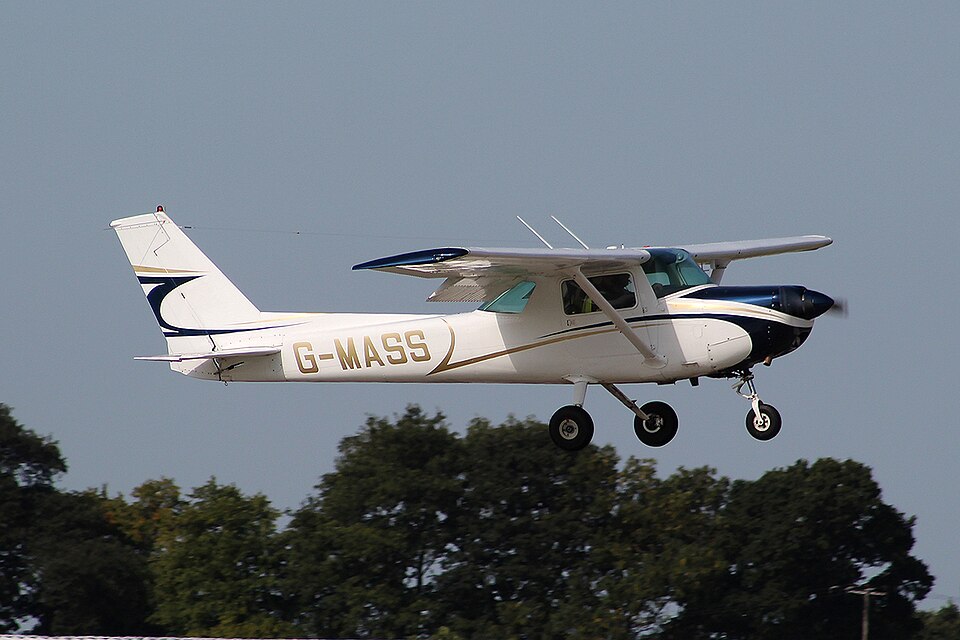
The commander, a flying instructor, reported that the aircraft departed from Denham on a dual training flight. After climbing to 1,000 feet on the Denham QNH, the aircraft climbed further to 1,900 feet over Amersham. The instructor selected carburettor air hot and reduced power from 2,100 RPM to 1,800 RPM to begin a descent. A routine check (FREDA) showed normal engine indications. The Denham QFE was set, and when the aircraft was about 5 nm north of Denham, the instructor noted the aircraft was slightly high. The student reduced power to approximately 1,700 RPM. Shortly afterward, the engine lost power, decreasing to about 1,000–1,100 RPM. The student opened the throttle with no response; the instructor also operated the throttle with little effect, as the engine spluttered and increased by 50–100 RPM. The instructor took over, turned away from built-up areas, tried various throttle settings with carburettor heat in hot and cold positions, but could not increase power. He transmitted a distress call, selected a field, established a right-hand base leg, selected 20 degrees of flap, turned final, and selected full flap. He flew over a low fence and executed a normal touch-down with the stall warner sounding; the aircraft came to a halt despite the downslope. The engine was found operating at idle power, so the instructor shut it down and the aircraft was vacated.
Meteorological Conditions
An aftercast from the Met Office estimated surface conditions near Amersham/Maple Cross at the time: wind variable 3–5 kt, temperature +18°C, dewpoint +11°C, relative humidity 64%. At 1,000 feet, temperature +14°C, wind VRB 8 kt; at 2,000 feet, +10°C, VRB 10 kt; at 5,000 feet, +05°C, VRB 5 kt. Cloud base estimated 3,000–3,500 feet amsl. METARs from Northolt (8 nm southeast) showed cloud base rising from 2,000 to 2,600 feet amsl just after the event.
Examination and Engine Testing
After preliminary examination, the engine was ground-run extensively in the field without initial problems. After about 40 minutes, it began running roughly at 1,800 RPM. The grass was long and wet, requiring cutting before moving the aircraft. Subsequent examination focused on the induction system. The only significant defect found was a deteriorated O-ring seal in the fuel priming pump, which was replaced. The engine then ran successfully and the aircraft was flown out.
Design of the Priming System
The primer pump is supplied with fuel via a small-diameter pipe from upstream of the carburettor and delivers spray through nozzles into each induction port. The pump includes inlet and outlet galleries with spring-loaded non-return valves. A piston sealed by O-rings in two grooves is operated by a hand rod. A spring-loaded needle valve on the piston bears on a seating when locked. The needle restricts airflow from the operating cylinder to the exit gallery.
Certification of Induction Hot Air Systems
Type certification requires a minimum induction air temperature rise of 90°F (50°C) when carburettor heat is selected from 'COLD' to 'HOT' at 75% power in an atmosphere at 30°F without visible moisture. The certification does not establish effectiveness during prolonged operation at reduced power with carburettor heat on, as lower power reduces exhaust heat exchanger temperatures and the ability to prevent ice.
Tests
Tests showed that during a descent in a Cessna 152 at about 85 kt and 1,800 RPM, the throttle angle is similar to that for 1,300 RPM in a stationary ground run. In flight, the greater airflow likely results in a slightly lower exhaust temperature than during static ground run at 1,300 RPM.
Analysis
The maintenance engineer considered that air leakage via the deteriorated seal in the priming pump could allow extra air into the cylinders, causing an excessively lean mixture. The instructor also believed this and discounted carburettor icing, noting that pre-takeoff power checks were normal. However, the ground run for about 40 minutes under conditions conducive to carburettor icing showed symptoms consistent with icing. Thus, either the defective seal or induction icing could have been the primary cause of the power loss. The primer's design limits airflow even if O-rings leak; the bore sizes of priming pipes and nozzles also restrict excess air entry. Most light aircraft engines have carburettor settings richer than optimum, and mixture can be manually leaned without immediate effect.