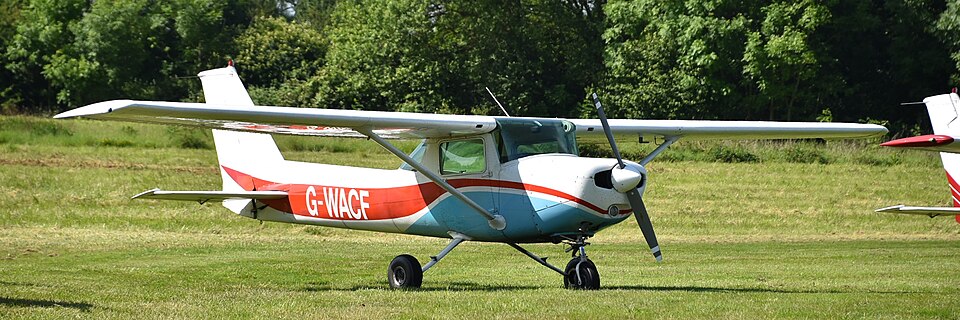
Event
On 20 August 2007 at 1334 UTC, a Cessna 152 (registration G-WACF) sustained damage during a landing on Runway 06 at Wycombe Airfield. The aircraft, manufactured in 1980 and powered by a single Lycoming O-235-L2C piston engine, was being flown by a 64-year-old student pilot on his fourth solo flight. There were no passengers on board, and the pilot reported no injuries. The damage included a bent propeller and right wingtip, a creased firewall, and shock-loading to the engine.
Pilot and Flight History
The student pilot had accumulated 27 hours of flying experience, all on the Cessna 152. In the previous 90 days, he had flown 13 hours, with 6 hours in the last 28 days, of which two were in command. The flight was a circuit consolidation exercise. Prior to this solo flight, the student completed three circuits with his instructor, who was satisfied with his performance. The student then flew four solo circuits without incident. All his previous solo circuits had been conducted on Runway 24, but on this day Runway 06 was in use.
Approach and Landing
During the fifth approach, the student realized he was high and fast despite a low power setting. To lose height, he lowered the nose. The student reported that he had never landed on Runway 06 before and found that adhering to noise abatement procedures required flying the aircraft closer to the runway than he was accustomed, resulting in a higher than normal approach.
Sequence of Events
According to the tower controller, the student had bounced on his four previous solo circuits. On the fifth circuit, the controller observed the aircraft land heavily in a nose-down attitude. As the aircraft bounced back into the air, the nose landing gear was seen to be bent rearwards. On the second touchdown, the nose gear collapsed, and the propeller and right wingtip contacted the runway. The student later stated that, in hindsight, he should have executed a go-around rather than attempt to land given the fast and high approach.
Damage
The aircraft sustained damage to the propeller, right wingtip, firewall (creased), and the engine was shock-loaded. No injuries occurred.