What happened
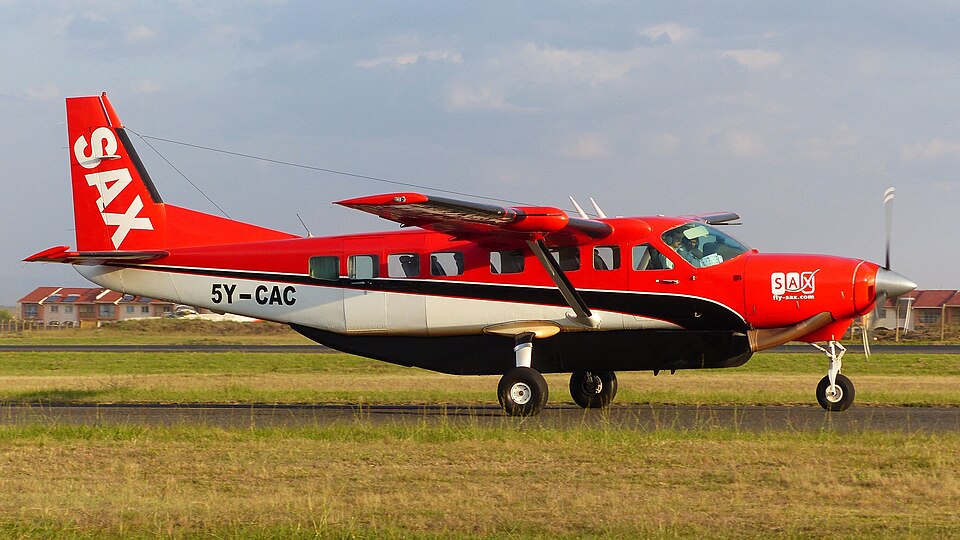
On May 6, 2018, an aircraft departed from Kitale Airstrip (HKKT) at 16:05, bound for Jomo Kenyatta International Airport (HKJK). The flight was carrying ten occupants. After reaching a flight level of 11,000 feet, the aircraft maintained this altitude with some minor fluctuations in track and groundspeed. During the flight, the altitude above ground level fluctuated between approximately 1,102 feet and 4,187 feet.
Radar data indicated that one minute prior to the accident, the aircraft was traveling at 159 knots on a radial of 338 NV. Shortly before the radar signal disappeared at 17:02, the aircraft was recorded at an altitude of 11,200 feet with a groundspeed of 156 knots. GPS data confirmed the final recorded position at an elevation of 3,555.57 meters. The aircraft eventually struck bamboo-covered terrain at an elevation of 3,645 meters. The impact forces caused the total destruction of the airframe, and all 10 occupants were killed.
Findings
Investigations determined that the primary cause was controlled flight into terrain (CFIT). This occurred because the crew chose to operate under instrument flight rules at an altitude lower than the published Minimum Sector Altitude while flying in instrument meteorological conditions. Additionally, the crew did not execute an escape maneuver after receiving a TAWS alert.
Several contributing factors were identified:
- The operator lacked sufficient training in crew resource management and had inadequate procedures for flight release and operational control.
- There was a lack of specialized CFIT-avoidance ground training for the crew tailored to company operations.
- Air traffic control provided clearance to fly below the published minimum sector altitude using undocumented procedures.
- The radar safety controller demonstrated a lack of situational awareness while monitoring the airspace.
- Regulatory oversight by the Kenya Civil Aviation Authority was insufficient in holding the operator accountable for known operational deficiencies.