Accident
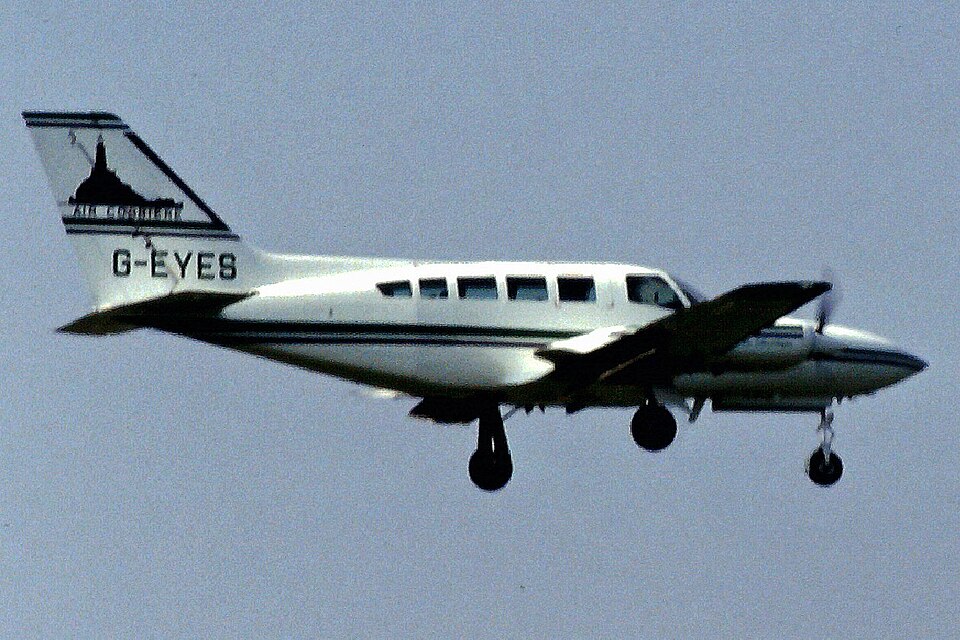
On an unspecified date, a Cessna 402C aircraft registered G-EYES was engaged in flight calibration training and was conducting an ILS approach to Runway 23 at Coventry Airport. Simultaneously, a Rand KR-2 aircraft registered G-BOLZ was operating in the visual circuit. The two aircraft collided in mid-air in Class G (uncontrolled) airspace. The four occupants of G-EYES and the single occupant of G-BOLZ received fatal injuries.
Investigation
The official investigation into the accident identified primary causal and contributory factors. The investigation determined that the two aircraft collided because their respective pilots either did not see the other aircraft, or did not see it in time to take effective avoiding action. The following contributory factors were identified:
1. The likelihood that the crew of G-EYES would see G-BOLZ in time to carry out effective avoiding action was reduced by the small size of G-BOLZ, its position relative to G-EYES, and the high rate of closure between the aircraft. 2. Insufficient or inaccurate information was provided to the pilots, which did not assist them in fulfilling their duty to take all possible measures to avoid collisions with other aircraft. 3. The Aerodrome Controller’s sequencing plan, which was based on an incomplete understanding of the nature of G-EYES’ flight, was unlikely to have been successful. By the time the risk of a collision was identified, it was too late to devise an effective method of resolving the situation. 4. There were no effective measures in place to give G-EYES priority over traffic in the visual circuit.
Probable Cause
The investigation identified the following primary causal factor: The two aircraft collided because their respective pilots either did not see the other aircraft, or did not see it in time to take effective avoiding action. The contributory factors are listed above.