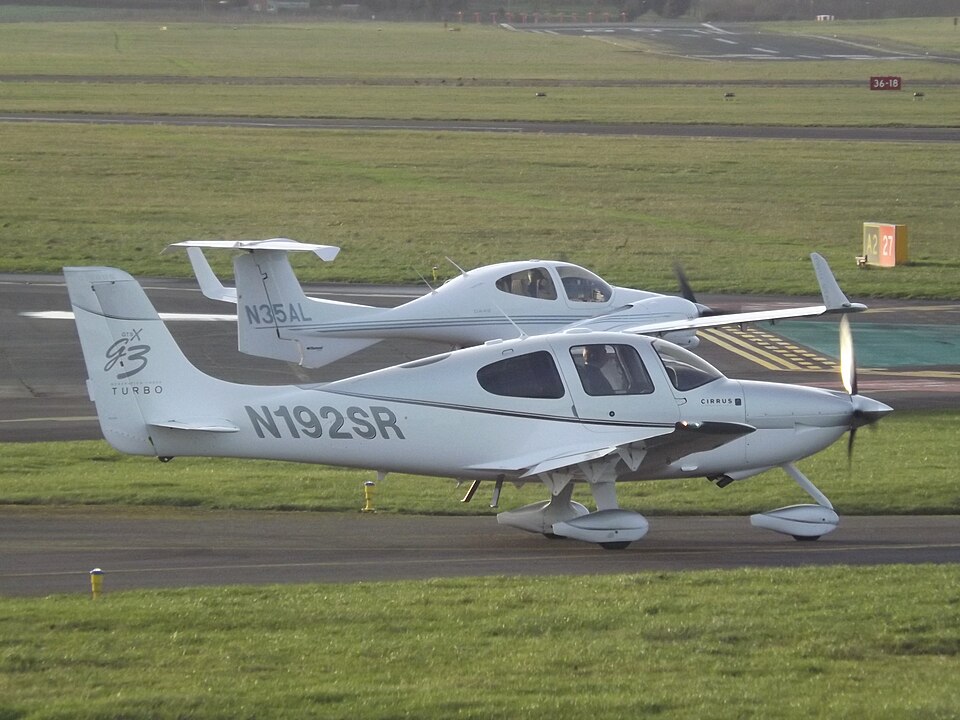
Synopsis
The aircraft touched down smoothly on Runway 24 at Goodwood Aerodrome, but the pilot applied forward side stick controller input consistent with techniques used on a different aircraft type. This resulted in a lower nose-down attitude than usual, leading to damage to the propeller blade tips and nose landing gear.
History of the Flight
The Cirrus SR22, registration N192SR, was returning to Goodwood after an uneventful local flight over the Isle of Wight. Weather conditions were good, with calm surface wind, CAVOK, and an outside air temperature of 18°C. The aircraft joined overhead the aerodrome and entered the downwind leg of the right-hand circuit for the grass Runway 24. The runway is 855 meters long and 44 meters wide.
The Landing
The pilot established the aircraft on final approach with landing flap selected and an approach speed of 80 knots indicated airspeed. He flared at a normal height, and the aircraft touched down smoothly with the throttle closed. Immediately after touchdown, the pilot applied forward input on the side stick controller—a device that controls elevator and ailerons in place of a conventional control column. This action lowered the nose landing gear onto the runway. The aircraft adopted an untidy and lower-than-usual nose-down attitude, but the pilot heard no unusual noises or changes in engine RPM. He then taxied the aircraft to the parking area and shut down.
Damage Discovery
While inserting the nosewheel chocks, the pilot noticed damage to the tips of the propeller. Further inspection revealed damage to the nose landing gear oleo. The aircraft sustained damage to the propeller blade tips and nose landing gear; no injuries to the crew or passenger were reported.
Pilot's Assessment
The pilot, who held a Private Pilot's Licence with 804 hours total flying experience (28 on type), considered that his application of excessive forward side stick controller during the landing—rather than allowing the nose to lower naturally onto the runway—had led to the damage. Prior to flying the Cirrus, the pilot had flown a Piper Aztec on his last four flights, where the landing technique involved moving the control column fully forward on touchdown to enable nosewheel steering.