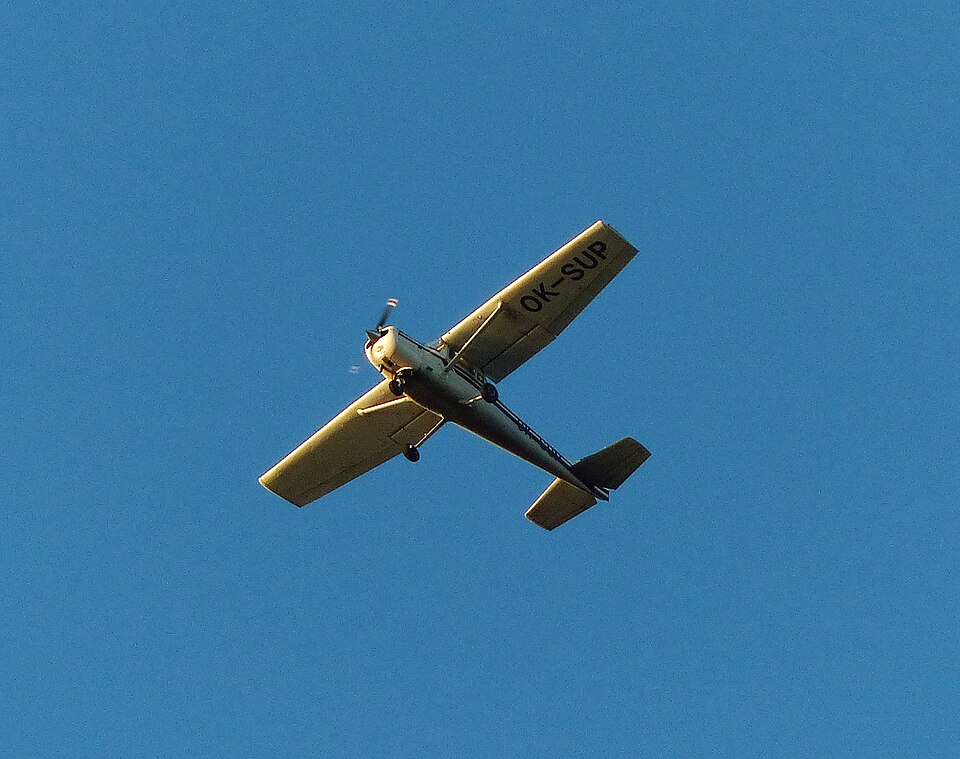
Accident Details
On June 3, 2019, at 14:15 UTC, a Cessna 152 (registration OK-SUP) was involved in an accident during landing at runway 05 of Letňany Airport (LKLT). The aircraft was operated by FLYING ACADEMY, s.r.o. The student pilot, who had been cleared for his first solo flight following a check with an instructor, conducted a circuit. During the landing approach, the aircraft made a hard touchdown on the runway. The pilot then initiated a go-around procedure. During the go-around, the nose landing gear collapsed and the engine stopped forcibly.
Airport personnel assisted the pilot in exiting the aircraft. An ambulance was called and transported the pilot to a hospital for a check-up. The pilot was not injured. The aircraft was extensively damaged.
Pilot Information
The pilot was a student pilot undertaking his first solo flight. He had been examined by an instructor prior to the flight. According to the training organization, the student's training was assessed as standard. No issues with the pilot's medical fitness were reported.
Aircraft Information
The aircraft was a Cessna 152, serial number not specified in the report. It was maintained according to the manufacturer's instructions. The weight and balance were within limits. The fuel system was standard. The aircraft had no known pre-existing defects that could have contributed to the accident.
Investigation and Findings
The investigation was conducted by the Czech Accident Investigation Institute (ÚZPLN). Witness statements included those of the student, the instructor, and an AFIS dispatcher. Video analysis of the critical phase was performed. A simulation of a landing with a go-around was also conducted. The investigation found that the weather was not a factor. The runway at LKLT was asphalt, dimensions not relevant. The accident occurred in daylight.
Cause
The investigation determined that the cause of the accident was the student pilot's failure to manage the landing, which resulted in a hard touchdown and the subsequent go-around. During the go-around, the nose gear collapsed and the engine stopped forcibly. No safety recommendations were issued by the institute as the operator had already taken corrective measures.