Incident Overview
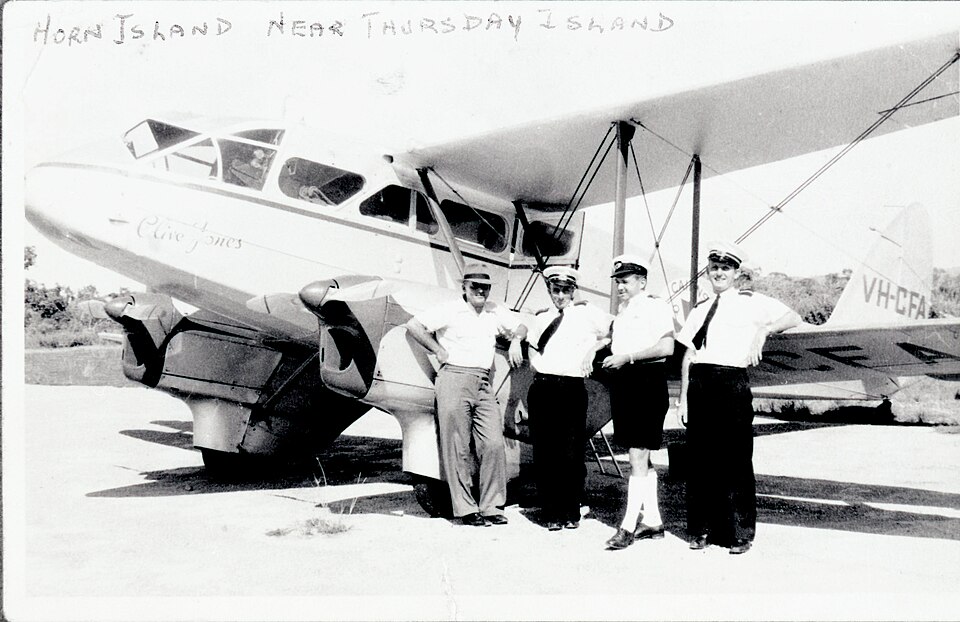
An Australian National Airways (ANA) ambulance flight ended in a water landing near Brooke Island, north of Hinchinbrook Island, after the aircraft exhausted its fuel. The de Havilland Rapide had been dispatched from Cairns to collect a patient from Iron Range on Cape York. On board were pilot Captain Dick Brampton, an ambulance bearer, and the patient, an aboriginal stockman who had been bitten by a snake.
Sequence of Events
Captain Brampton took off from Iron Range late in the day. North of Cairns, he encountered very low, thick cloud. The Rapide was equipped for visual flight only and lacked instrument capability. Unable to obtain a fix on Cairns, he was redirected further south. Approximately two hours after his estimated arrival time in Townsville, a radio call was received at 9:48 PM stating "Lost, low fuel." At 9:55 PM, a further call indicated the aircraft was being ditched.
Rescue Efforts
Within an hour of the last message, a Royal Australian Air Force Lincoln from Townsville and an ANA DC-3 from Cairns began searching near Hinchinbrook Island, about 20 miles north of Ingham. The ambulance bearer was uninjured and escaped the aircraft. Captain Brampton sustained leg injuries. The patient went down with the plane, which did not remain afloat for long. Captain Brampton survived for a period in the water but was unable to stay afloat due to his injuries; he was not wearing a life jacket. The ambulance bearer was picked up six hours later by a passing coastal freighter. Neither Captain Brampton's body nor any parts of the aircraft were ever found.
Official Finding
The probable cause of the accident was fuel exhaustion.