18 fatalities

2008-10-08: De Havilland DHC-6 Twin Otter (9N-AFE) — Yeti Airlines — Lukla-Tenzing-Hillary, Nepal

Lukla-Tenzing-Hillary, NepalLanding (descent or approach)

On October 8, 2008, a De Havilland DHC-6 Twin Otter (registration 9N-AFE) operated by Yeti Airlines was involved in an aviation accident near Lukla-Tenzing-Hillary, Nepal during landing or approach. 18 people were killed. Investigators recorded the probable cause as: Controlled flight into terrain after the captain decided to continue the approach under VFR mode in IMC conditions. This summary draws on records from the Bureau of Aircraft Accidents Archives (B3A); 4 related events involving the same aircraft type or operator are linked below.

Sourcesthe Bureau of Aircraft Accidents Archives (B3A)Primary reportUpdated 1781197135Data APIEditorial standards
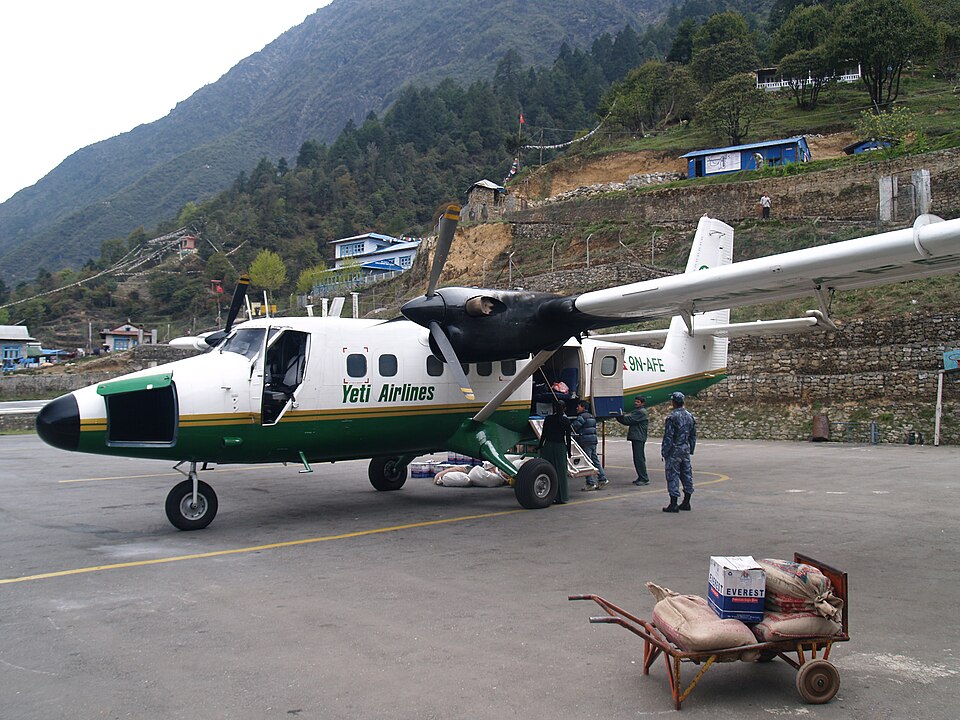
Aircraft registered 9N-AFE
Aircraft registered 9N-AFE. Photo: Steve Hicks / CC BY 2.0, via Wikimedia Commons

During approach to Lukla's runway 06 in foggy conditions, the aircraft struck a rock and crashed just below the threshold, bursting into flames. The captain was seriously injured; 18 occupants, including 12 Germans, 2 Australians, and 5 Nepalese, were killed.

Background

The aircraft was operating a regularly scheduled flight from Kathmandu-Tribhuvan Airport to Lukla-Tenzing-Hillary Airport. Departure occurred at 0651 local time.

Approach and Accident

Upon arrival at Lukla, the flight crew initiated an approach to runway 06. Weather conditions included fog, which significantly reduced visibility. The captain did not achieve any visual reference with the ground during the approach. Despite this, the approach was continued. While on short final, the aircraft struck a rock and crashed just below the threshold of runway 06. The impact caused the aircraft to burst into flames.

Casualties

The captain sustained serious injuries. The remaining 18 individuals on board, comprising 12 German, 2 Australian, and 5 Nepalese nationals, were killed.

Probable Cause

According to the official investigation, the accident was attributed to controlled flight into terrain. The determining factor was the captain's decision to continue the approach under visual flight rules (VFR) in instrument meteorological conditions (IMC).