History of the Flight
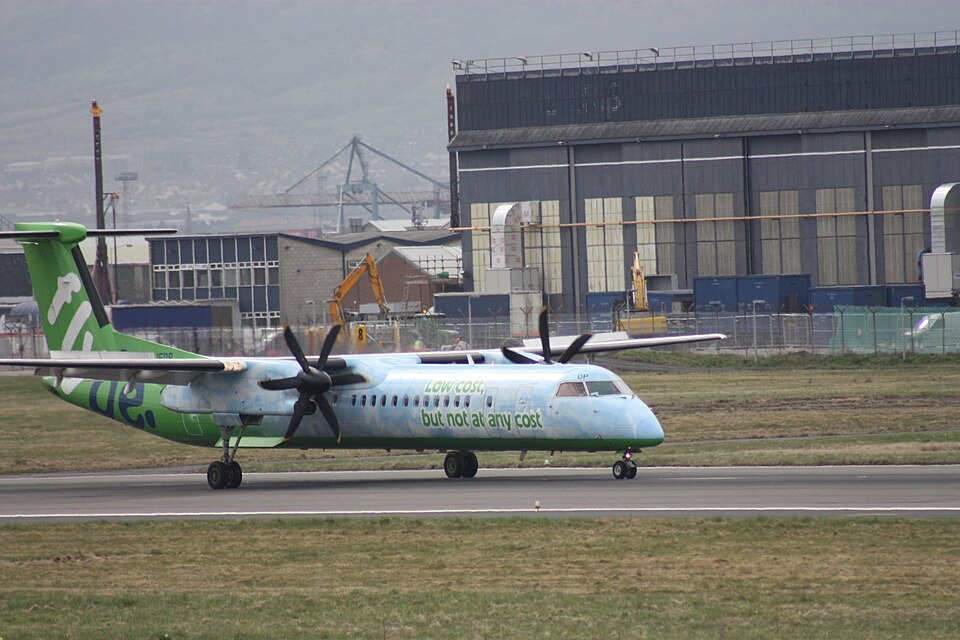
The aircraft was operating a scheduled passenger flight from Glasgow to Birmingham. As it began its takeoff run on Runway 23, the take-off configuration warning horn sounded. The takeoff was rejected at approximately 10 knots, and the aircraft vacated the runway. The pilots checked all settings and found them correct. The co-pilot performed after-landing and taxi checks, and the aircraft taxied back toward the holding point. The engine bleeds were selected ON during this procedure, and shortly afterward a burning smell was noticed on the flight deck. Both cabin attendants reported a smell of burning and grey or charcoal smoke from left-hand cabin air vents. The commander stopped the aircraft on the taxiway and asked the co-pilot to switch off the engine bleeds to determine if the smoke was water vapour, but the cabin crew confirmed continued smoke and smell. The commander then shut down both engines.
Rather than a full evacuation, the commander decided to vacate the aircraft normally but expeditiously. The aircraft had two passenger doors on the left side. The commander chose not to use the rear door due to previous difficulties with the air stairs and a faulty door seal. All passengers safely vacated using the forward passenger door. The left propeller, though feathered, was rotating at high speed in strong winds and could not be stopped before disembarkation. The co-pilot led passengers away from the propeller, and the commander performed a total shutdown. Fire crew assessed the cabin with thermal imaging and found no fire but noted left-hand lockers were warmer than right. Maintenance could not reproduce the condition in ground tests.
The following day, after landing at Glasgow, cabin crew on the same aircraft reported an unusual smell during descent. All cabin crew suffered headaches, and one vomited; pilots were aware of smell but not adversely affected.
Engineering Investigation
After the second event, maintenance inspected the engines and found cracking of inter-compressor case struts. The right engine was removed and inspected with Pratt & Whitney Canada. They found a piece of the compressor inner support (CIS), approximately 38 mm long, had become detached. Investigation identified a probable failure sequence: the fit of the CIS to the low-pressure (LP) compressor stator caused aerodynamic excitation, leading to fretting and cracking, and eventually a piece broke away. In some cases, the piece fell into the LP axial compressor drum, causing vibration that damaged the bearing and air/oil seal, allowing oil to enter the compressor airflow. Bleed air for cabin conditioning is taken from the high-pressure centrifugal compressor downstream of the LP compressor, so oil in the gas path contaminated cabin air. Shutting off bleed air would prevent further oil entry, but residual oil could continue producing smoke.
The operator’s normal practice was to take off with engine bleeds OFF. After the rejected takeoff, bleeds were selected ON, allowing oil to enter the air conditioning system. Had the aircraft taken off at the first attempt, smoke would have entered in flight.
Follow-up Action
Pratt & Whitney Canada issued Service Bulletin 35158 (revised to 35158R1 in July 2005) for borescope inspection of the CIS. If cracking is found, re-inspection within 65 hours; if a piece is missing, engine replacement. The operator carried out these inspections. The CIS has been redesigned with different material and fit relocation to reduce fretting and vibration.
Conclusion
No cause could be found for activation of the take-off configuration warning. Smoke in the cockpit and cabin was caused by oil contamination of the air conditioning system due to a detached piece of the right engine compressor inner support that damaged a compressor oil seal.