Incident Overview
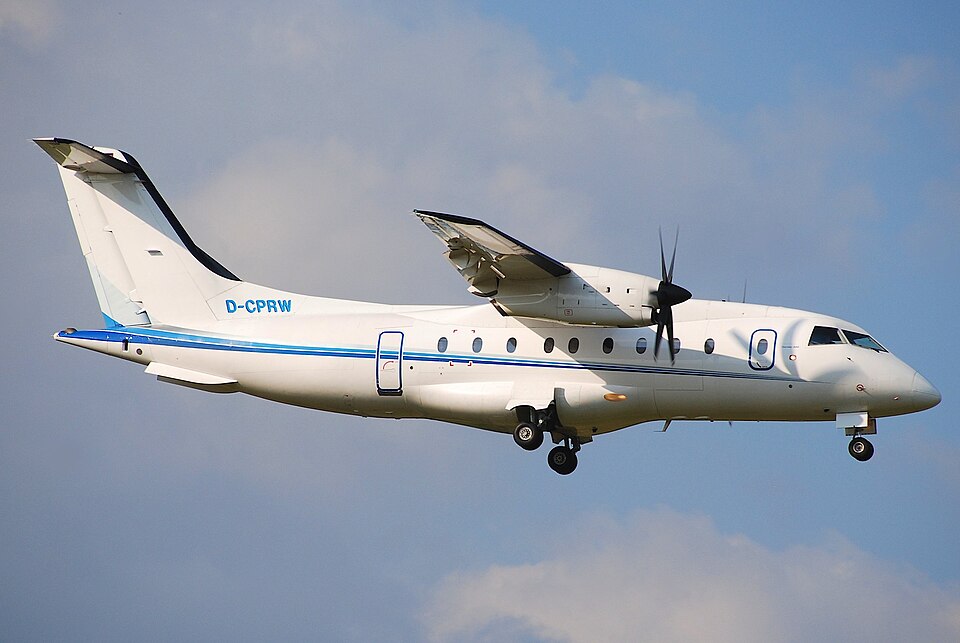
On 28 November 2005, a Dornier 328-110 (registration D-CPRW) operated by a public transport carrier was preparing for departure from Isle of Man (Ronaldsway) Airport. The aircraft had a covering of hoar frost, particularly on the central areas of the wing and tailplane upper surfaces, with a depth of 1 to 2 mm. In accordance with company procedures, the commander requested de-icing/anti-icing. The aircraft was the fifth to be treated that morning. At 0833 UTC, a vehicle-mounted articulated work platform arrived, and the aircraft was de-iced/anti-iced using a one-step process with a heated mixture of 75% Type II+ fluid and 25% water. The ground handler sprayed from the trailing edge of the wings and horizontal tail, and also from the rear of the vertical tail. The operation was completed by 0844 UTC. The commander monitored the process from outside.
Flight and Takeoff Attempt
The crew completed pre-start checks, including a full and free check of the flying controls during taxi. Loading confirmed the aircraft was within mass and balance limits (Takeoff Gross Mass 12,396 kg, centre of gravity at 24.5% MAC). The flaps were set at 12°, and trim was set to the nose-down edge of the green band. The ATIS at 0850 UTC indicated runway 26, surface wind 360°/09 kt, visibility 10 km, cloud few at 2,500 ft, outside air temperature +4°C, dew point -4°C, QNH 1002 hPa.
At 0922 UTC, the aircraft was lined up on Runway 26. The configuration check showed no abnormalities. With takeoff clearance, the commander (Pilot Flying) smoothly advanced the power levers. The config warning illuminated briefly but ceased when power levers were retarded; then power was advanced with no warning. The Pilot Not Flying called speeds. At 109 kt (the calculated V1/VR under normal conditions), the commander pulled the control column aft for rotation. The aircraft did not respond. He immediately selected power levers to idle, applied heavy braking, and selected maximum reverse thrust. The aircraft stopped on the runway. The only abnormal indication was high wheel brake temperatures. The aircraft taxied back to parking. After discussion with fire service, passengers disembarked. The pilots performed an elevator movement check, finding full and free movement with no restriction.
Personnel Background
The commander, aged 53, held an Airline Transport Pilot’s Licence with 5,575 total hours (310 on type). He joined the operator in April 2005, completed type conversion in May 2005, and had been a commander since July 2005. The co-pilot had 1,305 total hours (63 on type) and completed type conversion in August 2005, starting line training in September 2005.
De-icing and Speed Considerations
According to the Aeroplane Flight Manual, a note states that if the aeroplane was treated with Type II or IV fluids, icing speeds (V1, Vr, V2, Vsec) must be used irrespective of ambient conditions. For the Dornier 328, icing speeds are typically about 20 kt higher than non-icing speeds. The ground handler had 12 years of experience and had completed winterisation training. He noted that there had been debate about spraying from the trailing edge versus leading edge, with claimed benefits of warmer application, better access, and increased speed. The source indicates that the incorrect V1/VR speed was selected, and the aircraft failed to rotate at that speed. Contamination must have been present on tail surfaces, but it was not determined whether it was ice or thickened fluid.
Probable Cause
The probable cause of the incident was the incorrect V1/VR speed selected.