2 fatalities

2024-04-23: Douglas C-54 Skymaster (N3054V) — Alaska Air Fuel — Fairbanks, United States of America

Fairbanks, United States of AmericaTakeoff (climb)

On April 23, 2024, a Douglas C-54 Skymaster (registration N3054V) operated by Alaska Air Fuel was involved in an aviation accident near Fairbanks, United States of America during takeoff. 2 people were killed. Investigators recorded the probable cause as: A loss of power of the No. 1 engine for reasons that could not be determined, and the incorrect installation of a B-nut fitting in the propeller feathering system, which allowed engine oil to spray onto the exhaust system when the propeller was feathered… This summary draws on records from the Bureau of Aircraft Accidents Archives (B3A); 1 related events involving the same aircraft type or operator are linked below.

Sourcesthe Bureau of Aircraft Accidents Archives (B3A)Primary reportUpdated 1781188922Data APIEditorial standards
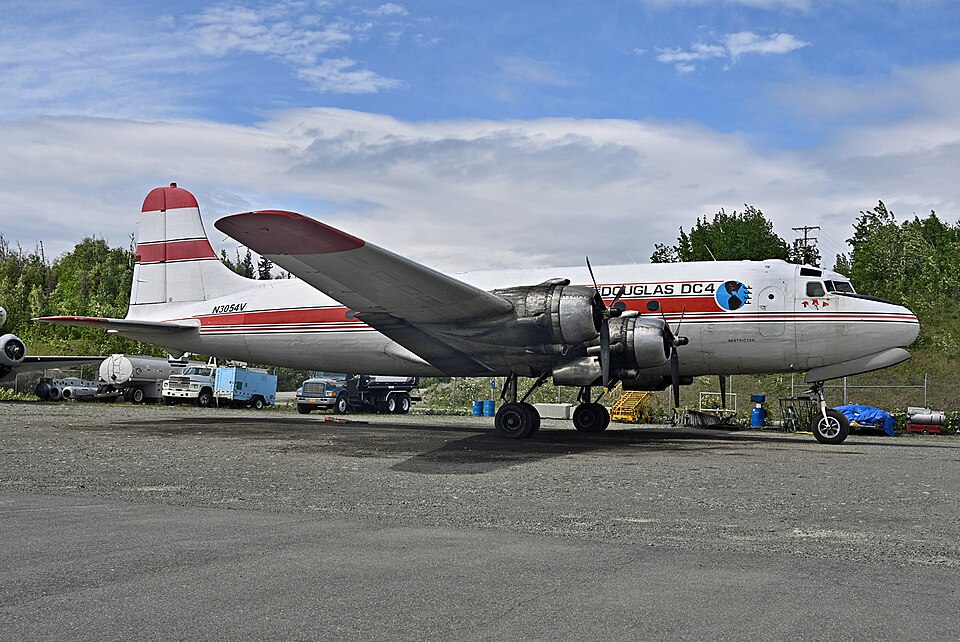
Aircraft registered N3054V
Aircraft registered N3054V. Photo: King Hui / CC BY-SA 2.0, via Wikimedia Commons

A cargo plane transporting fuel and propane tanks crashed shortly after takeoff from Fairbanks, Alaska, following an engine fire and explosion. Both crew members were fatally injured.

Accident Overview

On the morning of the accident, a cargo airplane departed Fairbanks International Airport (FAI) at approximately 0955 on a flight to Kobuk Airport (OBU) in Kobuk, Alaska. The aircraft was carrying 3,400 gallons of unleaded fuel and two 100-gallon propane tanks.

Sequence of Events

An eyewitness reported seeing the airplane flying west with the far left engine not running, accompanied by a small white plume of smoke from that engine. The airplane began turning south, at which point the witness noticed the engine was on fire. About three minutes after departure, the pilot informed air traffic control of an onboard fire and initiated a left turn back toward the airport.

Video surveillance captured white smoke developing behind the No. 1 engine, followed by flames. Seconds later, a bright white explosion occurred just behind the No. 1 engine. The airplane entered an uncontrolled, descending left turn and impacted terrain. The No. 1 engine separated from the wing approximately 100 feet above the ground and landed on a frozen river. Approximately two minutes after impact, a large explosion was observed.

Scientific Detection

The University of Alaska Fairbanks (UAF) detected multiple low-frequency sound signals (infrasound) associated with the accident. Analysis of the data indicated the first explosion occurred at 1001, the airplane impacted terrain at 1003, and the second explosion occurred at 1006.

Damage and Injuries

The airplane was totally destroyed by impact forces and a post-crash fire. Both crew members were fatally injured.

Probable cause

A loss of power of the No. 1 engine for reasons that could not be determined, and the incorrect installation of a B-nut fitting in the propeller feathering system, which allowed engine oil to spray onto the exhaust system when the propeller was feathered following the loss of engine power. Contributing to the accident was an incorrectly repaired fuel leak, which resulted in an explosion that separated the aileron bell housing that resulted in a loss of control and subsequent impact with terrain.