Introduction
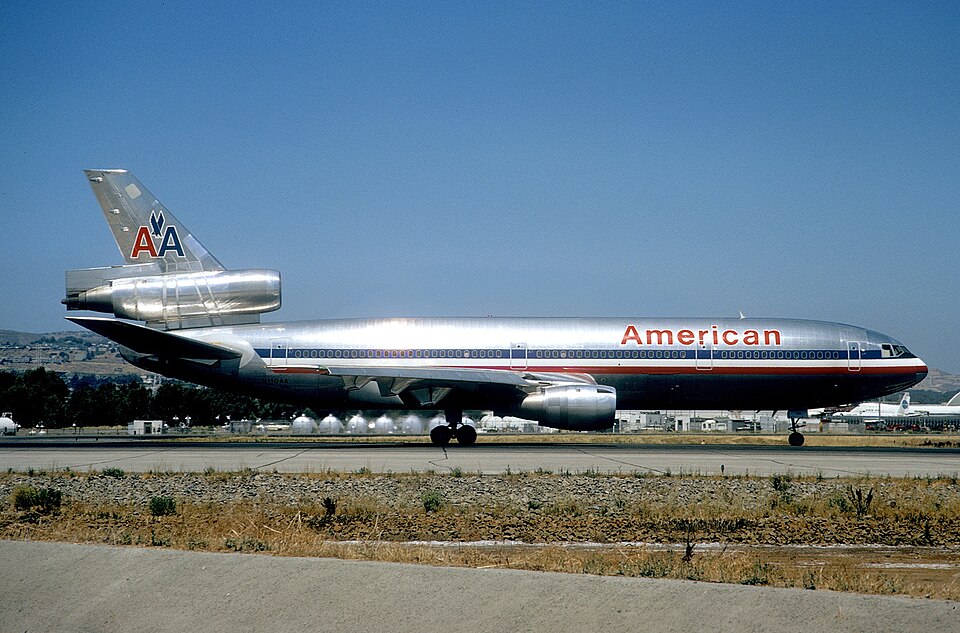
On May 25, 1979, American Airlines Flight 191, a McDonnell-Douglas DC-10-10, crashed during takeoff from Chicago-O'Hare International Airport, Illinois. The aircraft was destroyed, and all 271 occupants—258 passengers and 13 crew members—were killed. Two persons on the ground sustained fatal injuries.
Sequence of Events
At 14:59 local time, Flight 191 taxied from the gate at O'Hare Airport, bound for Los Angeles, California. Maintenance personnel who monitored the engine start, push-back, and start of taxi observed nothing out of the ordinary. The weather at departure was clear, with surface wind from 020° at 22 knots. The flight was cleared to taxi to runway 32R for takeoff.
According to the company's Takeoff Data Card, the stabilizer trim setting was 5° nose up, takeoff flap setting was 10°, and takeoff gross weight was 379,000 lbs. The target N1 rpm was 99.4%, V1 was 139 KIAS, VR was 145 KIAS, and V2 was 153 KIAS.
At 15:02:38, the flight was cleared for takeoff. At 15:02:46, the captain acknowledged, "American one ninety-one under way." The takeoff roll was normal until just before rotation, when sections of the No. 1 (left) engine pylon structure separated from the aircraft. Witnesses saw white smoke or vapor from that area. During rotation, the entire No. 1 engine and pylon separated, went over the wing, and fell to the runway.
Flight 191 lifted off about 6,000 ft down runway 32R and climbed in a wings-level attitude. Approximately nine seconds after liftoff, the aircraft had accelerated to 172 knots and reached 140 ft altitude. As the climb continued, it began to decelerate at about one knot per second. Twenty seconds after liftoff, at 325 ft altitude, airspeed had reduced to 159 knots. The aircraft then began to roll left, countered by rudder and aileron inputs. The roll continued until impact 31 seconds after liftoff, at a left roll of 112° and a nose-down pitch of 21°. At 15:04, the aircraft crashed in an open field and trailer park about 4,600 ft northwest of the departure end of runway 32R. The aircraft was demolished by impact, explosion, and ground fire.
Cause Determination
The No. 1 engine pylon failure during takeoff was determined to have been caused by unintended structural damage that occurred during engine/pylon reinstallation using a forklift. The removal and reinstallation were conducted to implement two DC-10 Service Bulletins that required pylon removal and recommended doing so with the engines removed. The Service Bulletin instructions assumed separate removal of engines and pylons and did not provide instructions for removing them as a unit. Additionally, removing the engine and pylon as a unit was not an approved Maintenance Manual procedure. The lack of precision associated with the forklift, combined with tight clearances between the pylon flange and wing clevis, resulted in damage to the part that had just been inspected. Inspections of other DC-10 pylon mounts following the accident identified nine additional cracked mounts.