Incident
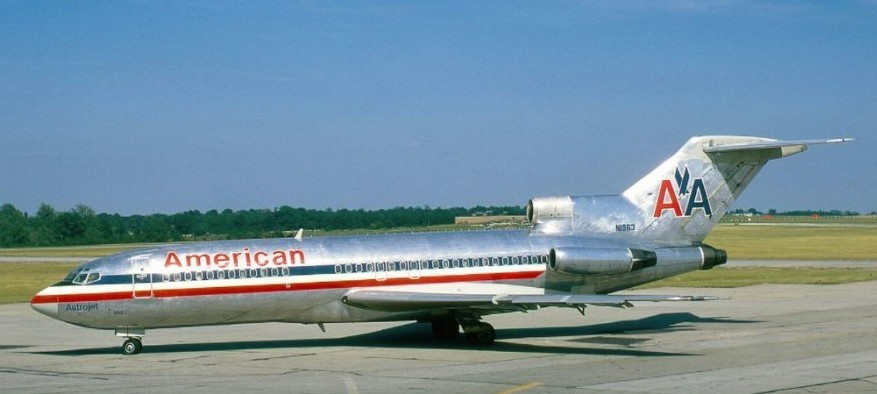
American Airlines Flight 625 was a scheduled flight from Providence Airport (PVD) to St. Thomas (STT) with an intermediate stop at New York (JFK). The aircraft was a Boeing 727. The flight departed New York at 12:00 Atlantic Standard Time (AST).
Sequence of Events
On approach to St. Thomas at 15:04, the flight crew cancelled their IFR flight plan and proceeded under visual flight rules (VFR). The captain chose to use the instrument landing system (ILS) for runway 09 for vertical guidance. The glide slope was intercepted at 1,500 feet mean sea level (MSL) with flaps at 15 degrees and an indicated airspeed of 160 knots (KIAS). The flaps were subsequently extended to 25 and then 30 degrees; the company-prescribed 40 degrees was never selected. The aircraft passed the runway threshold at an estimated altitude of 30 to 40 feet, with speed still 10 KIAS above the reference speed (Vref).
Approximately 1,000 feet down the runway, while initiating the flare, turbulence caused the right wing to drop. The wings were leveled, and the aircraft floated for a while before touching down at about 2,200 to 2,300 feet down the runway. The captain determined that the aircraft could not be stopped on the remaining runway and immediately initiated a go-around. Because there was no sensation of power application or aircraft acceleration, the throttles were closed again. The aircraft, in an 11-degree nose-up attitude, ran off the runway and struck a localizer antenna. The right wingtip then clipped a hillside just south of the antenna. The aircraft continued, hit an embankment, became airborne, and contacted the ground on the opposite side of the perimeter road. It continued and came to rest 83 feet past the perimeter road, bursting into flames.
Probable Cause
The official probable cause stated: "The captain's actions and his judgment in initiating a go-around maneuver with insufficient runway remaining after a long touchdown. The long touchdown is attributed to a deviation from prescribed landing techniques and an encounter with an adverse wind condition, common at the airport. The non-availability of information about the aircraft's go-around performance capabilities may have been a factor in the captain's abortive attempt to go-around a long landing."