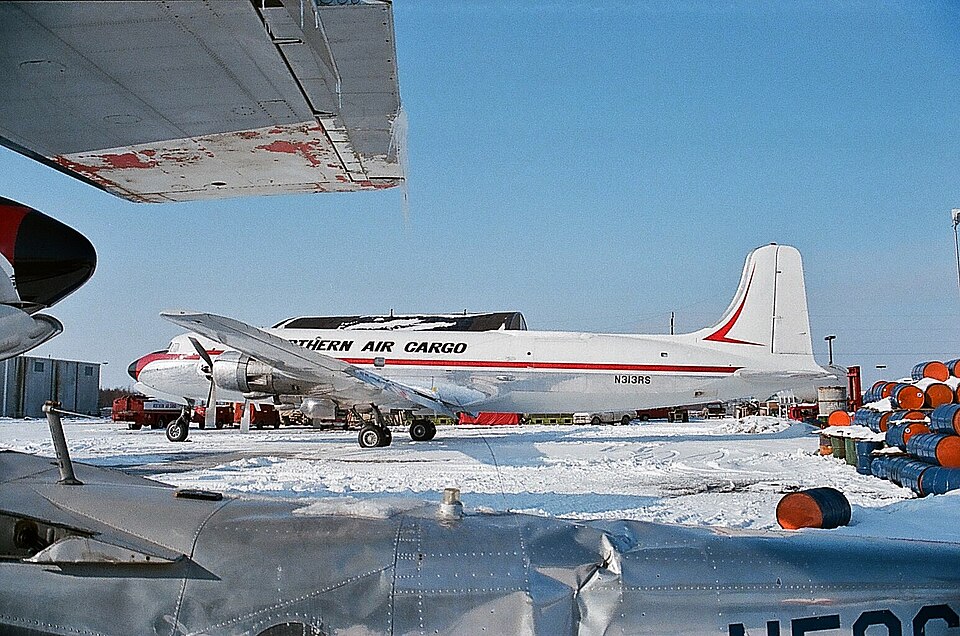
Incident Overview
A cargo flight experienced an engine fire during en route operations. The fire originated in or near the #3 engine. In response, the flight crew pulled the fire handle before feathering the propeller, contrary to the prescribed emergency checklist and operator training procedures. The fire did not extinguish.
Attempted Landing and Crash
During an attempt to land at a rural, intermediate airstrip, while the airplane was in the traffic pattern, witnesses observed fire emanating from the area of the #3 engine. They reported that the right wing buckled upward, after which the airplane crashed.
Wreckage Examination
Examination of the wreckage revealed a failure of the master rod in the front bank of cylinders of the #3 engine. Metallurgical tests identified a crack in the top of the master rod head, which had resulted from corrosion pits. Additionally, the side of the master rod head was out of round, and the master rod shank had fractured due to fatigue.
Emergency Procedure Deviation
The operator's training procedures and the Douglas Aircraft emergency checklist required that the engine's propeller be feathered first, followed by activation of the fire extinguishing system. According to information derived from the airplane's cockpit voice recorder, the flight crew reversed this order, pulling the fire handle before feathering the propeller. The effectiveness of the fire suppression system is diminished if the propeller is not feathered first.
Probable Cause
The probable cause, as determined by the official investigation, was a fatigue failure of the master connecting rod, which originated from corrosion pitting, subsequently compromised the engine crankcase, and resulted in a fire; and failure of the flight crew to follow emergency procedures by pulling the fire handle before feathering the propeller, which diminished the effectiveness of the fire suppression system.