Flight History
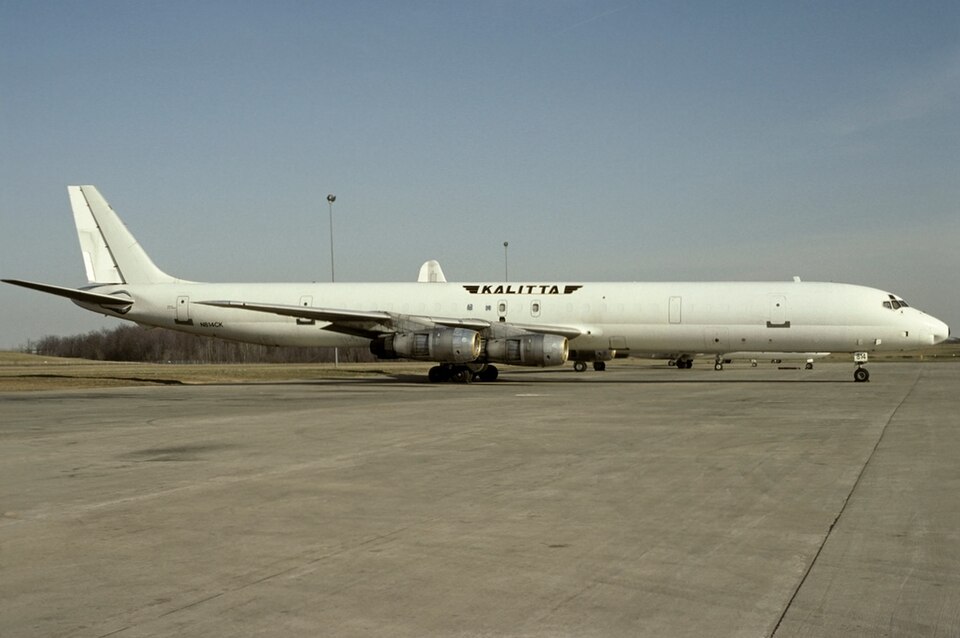
Flight 808, a cargo service operated by American International Airways, departed Norfolk at 14:13 local time bound for Guantánamo Bay. The flight proceeded uneventfully into the Guantánamo terminal area. At 16:34, while descending from flight level 320, the crew established radio contact with the Guantánamo radar controller. The controller directed the flight to maintain visual flight rules (VFR) 12 miles off the Cuban coast and to report at East Point. The active runway was 10.
Approach and Accident
The crew originally requested an approach to runway 28 but changed their request to runway 10 a few minutes later. Clearance was issued at 16:46; wind was reported as 200 degrees at 7 knots. The threshold of runway 10 was situated 0.75 miles east of Cuban airspace, marked by a strobe light mounted on a Marine Corps guard tower at the corner of the Cuban border and the shoreline. On the day of the accident, that strobe light was not operational, a fact unknown to both the controller and the flight crew.
The aircraft approached from the south and initiated a right turn to align with runway 10, with its angle of bank increasing. At an altitude of 200 to 300 feet above ground level, the wings began to rock toward level and the nose pitched up. The right wing appeared to stall, and the aircraft rolled to a 90-degree angle of bank while the nose pitched down. Subsequently, the aircraft struck level terrain 1,400 feet west of the approach end of the runway and 200 feet north of the extended centerline.
Probable Cause
The official investigation determined the probable cause to be: "The impaired judgement, decision-making, and flying abilities of the captain and flight crew due to the effects of fatigue; the captain's failure to properly assess the conditions for landing and maintaining vigilant situational awareness of the airplane while manoeuvring onto final approach; his failure to prevent the loss of airspeed and avoid a stall while in the steep bank turn; and his failure to execute immediate action to recover from a stall. Additional factors contributing to the cause were the inadequacy of the flight and duty time regulations applied to 14 CFR, Part 121, Supplemental Air Carrier, international operations, and the circumstances that resulted in the extended flight/duty hours and fatigue of the flight crew members. Also contributing were the inadequate crew resource management training and the inadequate training and guidance by American International Airways, Inc., to the flight crew for operations at special airports such as Guantanamo Bay; and the Navy's failure to provide a system that would assure that local tower controller was aware of the inoperative strobe light so as to provide the flight crew with such information."